REVIEW · ROSTOCK
Warnemünde Shore Excursion: Private Highlights Tour of Berlin with Minivan
Book on Viator →Operated by Sightseeing Point GmbH · Bookable on Viator
Berlin history hits hard, fast. This private Berlin shore tour from Warnemünde keeps your day focused on the city’s most important turning points, from Nazi Germany to the divided Cold War. I like that you can customize the day around your interests, and I like the comfort of a private setup with a guide who ties the stops together into one story.
The biggest thing to consider is time. Even though it’s only 7–10 stops on the map, the overall experience is a long day because you’re traveling from the port area to Berlin and back.
By the time you reach the Reichstag area and then head toward Nikolaiviertel for food and a slower pace, you’ll have a clear sense of why Berlin became what it is today: dramatic, complicated, and very human.
In This Review
- Key takeaways before you go
- From Warnemünde to Berlin: what that 12-hour day really feels like
- Brandenburg Gate and the Prussian-era boulevard: an easy start with heavy symbolism
- Walking the Holocaust Memorial: why a guide matters here
- Checkpoint Charlie and the Berlin Wall memorial: a Cold War story you can stand inside
- Topography of Terror and the Reichstag dome: seeing power before it was repackaged
- Nikolaiviertel for lunch and breathing room
- Personalizing the day: what “private” changes in practice
- Price and value: what you’re really paying for at $300
- Who should book this Berlin highlights tour from Warnemünde
- Should you book the Berlin Highlights from Warnemünde?
- FAQ
- How long is the Berlin Highlights shore excursion?
- Where do we meet for pickup in Warnemünde?
- Is this tour private?
- What transport is included?
- Which stops are included in the tour?
- Is admission free at the main sites listed?
- Are food and drinks included?
- What is the cancellation window for a full refund?
Key takeaways before you go
- Private minivan + port pickup: fewer headaches than trying to self-navigate from a cruise dock
- Customize on the fly: you’re not locked into a script of rapid photo stops
- Holocaust Memorial walk-through: the guide leads the experience, not just a photo op
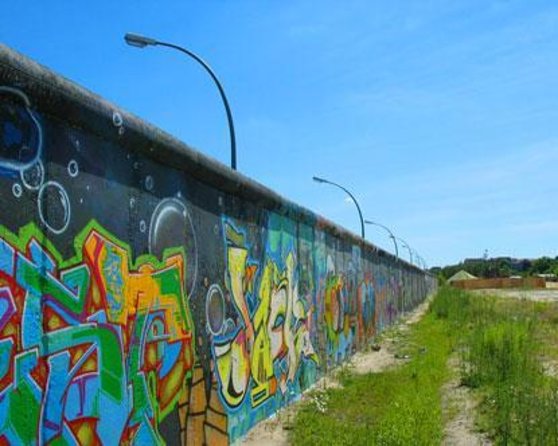
- Wall death-strip context: you see the former border area with real explanation, not vague signage
- Big political contrasts: Topography of Terror and the Reichstag sit in the same day, side by side
- Time to reset in Nikolaiviertel: a practical lunch window in a historic neighborhood
From Warnemünde to Berlin: what that 12-hour day really feels like
This is built for cruise-day logistics. You start at the Parking and Sea Parking at the Cruise Center Warnemünde (Am Passagierkai 3, 18119 Rostock), and the tour ends back at the same meeting point. You’re not only paying for sightseeing—you’re paying for the smooth transport and the fact that someone coordinates the timing so you can focus on the sites.
The total duration is listed as about 12 hours. That means you should expect a day with a real rhythm: travel time in the morning and late afternoon, then concentrated visits in Berlin. One group noted the transfer as roughly a little over two hours each way, so if you’re the type who hates sitting in traffic or prefers to stay unhurried, plan for that upfront.
The upside is that you’re not guessing. You’ll have a local guide and an air-conditioned minivan, plus a private format where only your group joins the day. That tends to make a difference when the topic is heavy—because you can ask questions without feeling like you’re holding up a large bus.
You can also read our reviews of more private tours in Rostock

Brandenburg Gate and the Prussian-era boulevard: an easy start with heavy symbolism
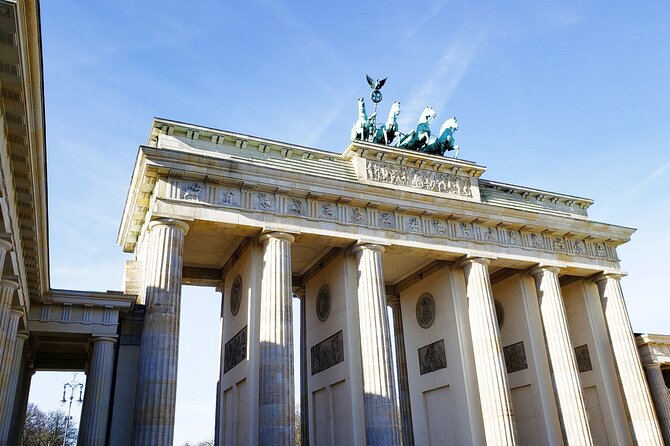
You begin at Brandenburg Gate, the famous former city gate that later became a symbol of a reunited Germany. You get about 20 minutes here, which is short, but it’s enough time to orient yourself and understand the meaning before you move on.
Right after that, you’ll pass through a historic central boulevard area with buildings dating to the 19th century under Prussian kings—one key landmark mentioned is the State Opera House area. This is a smart early move. Before you hit WWII and Cold War sites, Berlin needs a baseline: this city was building, governing, and shaping itself long before the 20th century tragedies.
Then the route also includes a shopping stretch described as a Berlin boulevard with exclusive stores. Even if you don’t plan to shop much, it helps break up the intensity. It’s a practical reset between monumental memorials.
What to watch for: with the tour keeping a steady pace, you’ll want to have your photo setup ready. You won’t have a full hour to wander at each stop, so it helps to decide what you care about most before the day starts.
Walking the Holocaust Memorial: why a guide matters here
Next comes the Memorial to the Murdered Jews of Europe, and you’re not just looking from the sidewalk. The tour includes a guided walk through the memorial, with about 20 minutes allotted.
This stop is powerful partly because the site doesn’t behave like a typical attraction. It’s designed to slow you down and make you feel how disorienting it can be to lose people, place, and safety. Having a guide matters because they can connect what you’re seeing to the history and purpose behind it—without turning the memorial into a checkbox.
Admission is listed as free for this stop, so you’re not paying extra for access. What you’re paying for is context and pacing. The guide helps you move through at a human tempo instead of rushing for photos.
Possible consideration: because the topic is emotionally heavy, it can be a lot for visitors who prefer lighter sightseeing. If you know you get overwhelmed easily, tell your guide early so they can adjust the tone and give you breathing room.
Checkpoint Charlie and the Berlin Wall memorial: a Cold War story you can stand inside
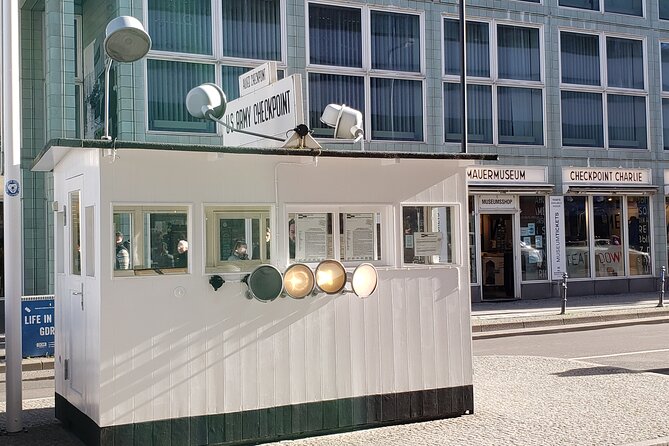
After the Holocaust Memorial, the day turns to the mechanics of division. You hit Checkpoint Charlie (about 20 minutes), a former checkpoint between Allied and Soviet sectors when the city was divided by the Wall. It’s recognizable from films and photos, but the guided framing helps you understand what it meant day-to-day—who could cross, who couldn’t, and why this spot carried so much tension.
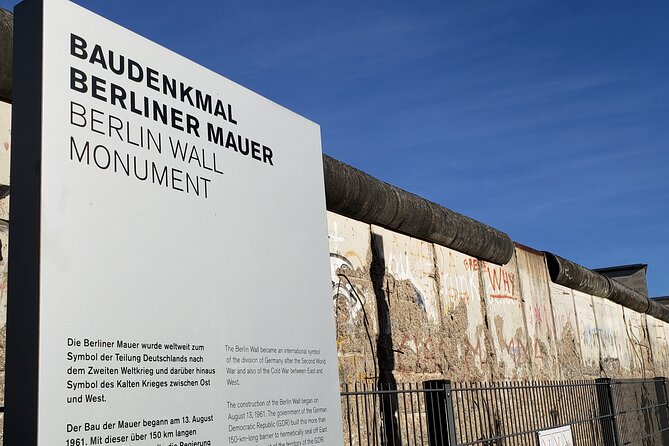
Then you move to the Memorial of the Berlin Wall, which is described as open-air documentation. Here you’ll walk on the site of the former death strip, the area where people tried to flee to the West—sometimes with tunnels. Again, you’re not only seeing a wall section or a marker. You’re walking through the space where danger was built into the geography.
Admission is listed as free for these stops too. That’s a nice bonus, but the real value is the guided explanation of terms like sectors, border zones, and why escape attempts were so risky. Without that context, the area can feel like “just an outdoor exhibit.” With it, it becomes a lived reality.
What I like about this sequencing: you go from genocide memory to the physical reality of the Cold War. That makes the larger lesson clearer: Berlin didn’t just have different politics—it had walls, controlled movement, and fear made visible.
Topography of Terror and the Reichstag dome: seeing power before it was repackaged
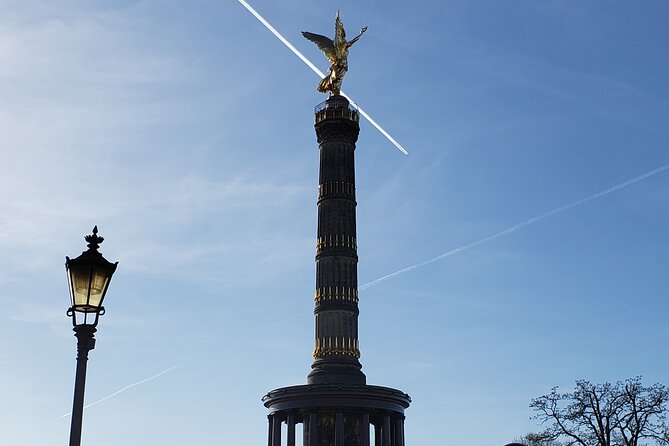
Topography of Terror is one of the most direct “show me the evidence” stops on the route. The tour notes that you’ll see the site of the former headquarters of the Nazi terror regime, and today there’s an exhibition you’ll visit (about 20 minutes). Admission is listed as free for this activity slot.
This is not a quick glance museum. Even at 20 minutes, it gives you a starting point: you’re shown that this wasn’t just propaganda from a distance—there was an infrastructure for terror, and it had physical roots in Berlin.
Then you shift to modern symbolism with the Reichstag Building. You’ll see the seat of the German parliament and the glass dome area (again, about 20 minutes). Even if you’ve seen the Reichstag in pictures, standing near it is a contrast moment. The day has been about regimes that controlled people; now you’re in a space meant to represent governance and public accountability.
What to watch for: time. This tour is designed to fit a lot in. If you’re the type who likes to read every caption or spend extra minutes inside an exhibition, you may have to choose where to linger. The guide can usually help you decide, but you should go in knowing the day is structured.
A few more Rostock tours and experiences worth a look
Nikolaiviertel for lunch and breathing room
By the time you reach Nikolaiviertel, you’re in a different mood on purpose. The tour describes it as Berlin’s historical city center area with lots of restaurants offering local cuisine. You get about 30 minutes, which is a practical window for lunch—or at least for a proper sit-down break.
This is also one of the spots where the tour’s flexibility can show. The overall experience includes time to eat, drink, and shop, and you’re told you can explore the city at your own pace. In other words, Nikolaiviertel is where you can soften the day and make it feel less like a parade of checkpoints.
If you want a simple strategy: choose something not too far from the main area so you’re not racing back to the meeting time. Your guide can also help you pick what’s efficient based on what you still want to see.
Personalizing the day: what “private” changes in practice
A private tour sounds like a marketing phrase until you see the payoff in how the day flows. With a private guide, you can steer the conversation in real time—especially because this tour is explicitly positioned as customizable around your interests.
The best part is how the guide connects eras. In past experiences on this route, guides such as Tankred, Stefan, and Axel were praised for being engaging and enthusiastic, and for bringing perspectives on Berlin’s past and present. That’s more than charisma. It’s what turns the visit from a set of famous names into an understanding of how the city works.
You also get the value of having your driver in the background. One example mentioned Frank doing a strong job getting the group from the pier to Berlin efficiently and then bringing everyone back on schedule. That matters more than you’d think when you’re visiting from a port dock, not from a hotel downtown.
If you’re someone who likes to ask questions, this tour format makes it easier. You won’t have to wait for a bus group to catch up, and you can adjust your pace after the heavier stops like the memorials and exhibitions.
Price and value: what you’re really paying for at $300
At $300, this isn’t a budget day trip. But it’s also not just paying for entry tickets you can access on your own. The price includes a local guide, a private tour, transport by air-conditioned minivan, and port pickup and drop-off.
The value math usually works best when you care about three things at once:
1) You want guidance for complex history
2) You want transport handled from the cruise port area
3) Your time window is tight
That’s exactly this scenario. You’re also told there are group discounts, so if you’re traveling with others (or can share the private arrangement), the per-person cost can feel more reasonable.
Admission is listed as free at multiple stops in the route you’ll visit (Brandenburg Gate, Holocaust Memorial, Checkpoint Charlie, Berlin Wall memorial, Topography of Terror, Reichstag Building). So the major cost isn’t tickets—it’s the service, time, and coordination.
My balanced take: if Berlin history isn’t your main interest, you may feel the day is heavy and structured. If it is your interest, this pricing is easier to justify because you’re paying for interpretation, not just movement.
Who should book this Berlin highlights tour from Warnemünde
This is a great fit if you:
- Want a guided walk through key WWII and Cold War sites
- Prefer a private pace over a large-group tour
- Are visiting Berlin from a cruise dock and want fewer logistics worries
- Like the idea of both memorial-focused stops and time for lunch and shopping
It’s also a reasonable match if you don’t want to hunt down sites one by one. The route already strings together major landmarks: Brandenburg Gate, the Holocaust Memorial, Checkpoint Charlie, the Berlin Wall memorial area, Topography of Terror, the Reichstag, and then Nikolaiviertel.
It may be less ideal if you:
- Strongly prefer modern Berlin neighborhoods only and want to avoid WWII-era context
- Hate long travel days and would rather stay closer to your port
- Need long unstructured wandering time at every stop (this tour moves with set visit windows)
Should you book the Berlin Highlights from Warnemünde?
If your goal is to understand Berlin in one full, well-timed day, I’d say this tour is worth considering. The private setup helps you get value from the hardest stops, and the itinerary balances heavy history with practical breaks like Nikolaiviertel.
Book it if you want guided context and smooth cruise-day logistics. Skip it if you’re looking for a relaxed, mostly free-form day or you don’t want the WWII/Cold War focus.
If you do book, bring a little patience for the long-day rhythm, and do one useful thing: tell your guide what you care about most when you start. That’s where the customization can make your day feel personal rather than “just a list.”
FAQ
How long is the Berlin Highlights shore excursion?
It lasts about 12 hours.
Where do we meet for pickup in Warnemünde?
The meeting point is Parking and Sea Parking at the Cruise Center Warnemünde, Am Passagierkai 3, 18119 Rostock, Germany.
Is this tour private?
Yes. It’s a private tour, and only your group participates.
What transport is included?
Transport by air-conditioned minivan is included, along with port pickup and drop-off.
Which stops are included in the tour?
The tour includes Brandenburg Gate, the Holocaust Memorial, Checkpoint Charlie, the Berlin Wall Memorial, Topography of Terror, the Reichstag Building, and Nikolaiviertel.
Is admission free at the main sites listed?
Admission is listed as free for the stops included in the schedule (including Brandenburg Gate, Holocaust Memorial, Checkpoint Charlie, Berlin Wall Memorial, Topography of Terror, and the Reichstag Building).
Are food and drinks included?
No. Food and drinks aren’t included.
What is the cancellation window for a full refund?
You can cancel up to 24 hours in advance for a full refund.
If you want, tell me your travel party size and whether you prefer a heavier history day or more photo-shopping time, and I’ll suggest how to pace your priorities inside this itinerary.