REVIEW · ROSTOCK
Lovely Rostock and Warnemünde Shore Excursion for Cruise Ships
Book on Viator →Operated by Vexperio · Bookable on Viator
Warnemünde and Rostock in one focused day. What makes this shore excursion work is the simple flow: you start right at the pier in Warnemünde, then use public transport to reach Rostock without playing navigation games. I especially like the small-group feel (max 20) and the way the day is structured around walking plus clear transit steps.
The big plus for me is the pay-off at St. Marienkirche (St. Mary’s Church), where entry is included and the famous astronomical clock is part of the visit. The main consideration is that you’ll be on your feet for a moderate amount of walking, and Germany’s trains and trams mean you’ll also do some standing, so it’s not ideal for anyone with limited mobility.
In This Review
- Key points worth knowing before you go
- A 5-hour Rostock and Warnemünde shore excursion that stays efficient
- Getting there without stress: the Warnemünde dock rule
- Stop 1: Warnemünde on foot, from fisher village to beach
- The public train ride to Rostock: using local transit like a local
- Rostock old town on a guided walk: the landmarks you’ll remember
- St. Mary’s Church and the astronomical clock stop
- Using your free time in Rostock without derailing the plan
- Why the guides matter: stories you carry home
- Price and value: what $58.87 really buys you
- Who should book this tour, and who should skip it
- A practical packing checklist for a smooth day
- Should you book Lovely Rostock and Warnemünde?
- FAQ
- Where does this shore excursion start?
- What time does the tour begin?
- Is this tour offered if my ship docks in Rostock?
- How do you get from Warnemünde to Rostock?
- Is the St. Mary’s Church visit included?
- Do I need to buy tickets for the tour?
- How much walking is involved?
- What money should I bring?
Key points worth knowing before you go
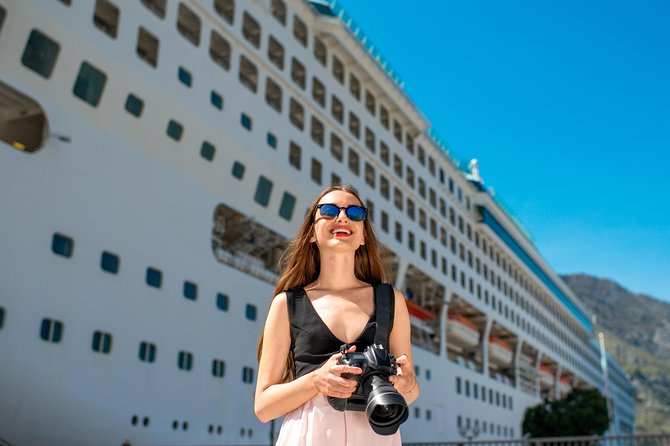
- Pier-to-old-town timing: If your ship docks in Warnemünde, you avoid the usual headache of getting oriented in a new port.
- Public train and tram between cities: It’s part of the experience, not a stressful detour.
- Marienkirche entry included: You get inside St. Mary’s Church without worrying about extra fees.
- Warnemünde’s classic waterfront sights: Half-timbered gabled houses, the Old Stream canal, and the 1898 lighthouse.
- Guides bring the area to life: You may hear standout stories from guides like Tobias, Yvonne, and Andreas.
- Plan on some walking and standing: Comfortable shoes matter more than fancy outfits.
A 5-hour Rostock and Warnemünde shore excursion that stays efficient
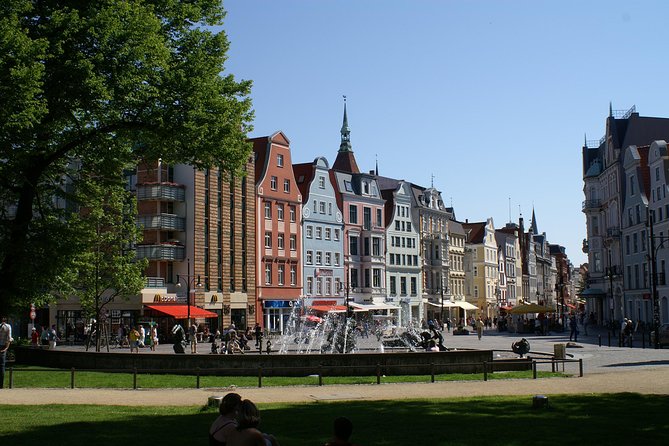
This is a great pick when you want a real taste of northern Germany but you do not want to lose your whole day to buses. At about 5 hours, you get two distinct places in one go: the seaside atmosphere of Warnemünde and the Hanseatic street life of Rostock.
At $58.87 per person, the price makes sense because you’re paying for a licensed-style local guide, guided walking time in both towns, and public transportation between them. You also get an included church visit, which helps keep the total cost from creeping up once you’re on land.
You can also read our reviews of more boat tours in Rostock
Getting there without stress: the Warnemünde dock rule
This tour has one major “make or break” detail: it runs only when your ship docks in Warnemünde (not Rostock proper, and not the Überseehafen). If your ship is in Rostock instead, you’re out of luck with this specific itinerary because the route depends on access to the local transit network from Warnemünde.
The meeting point is straightforward: Warnemünde Cruise Center, 18119 Rostock, Germany. The start time is typically 9:00 AM, but it adapts to ship timing (for example, if your ship docks at 9:30 AM, departure shifts later). If your ship is delayed, the starting time is postponed to within 30 minutes after docking, and if you’re not with the guide at that moment, you should call the provided contact number right away.
Stop 1: Warnemünde on foot, from fisher village to beach
Start in Warnemünde with a guided walk that shows you what this port area is really like: a mix of working harbor edge and classic seaside town charm. Your guide leads you through the old-town core, then toward the highlights you’d otherwise miss if you just wandered on your own.
Here’s what you can expect to see:
- Gabled houses from the 18th and 19th centuries, including half-timbered façades and decorative door and gable details
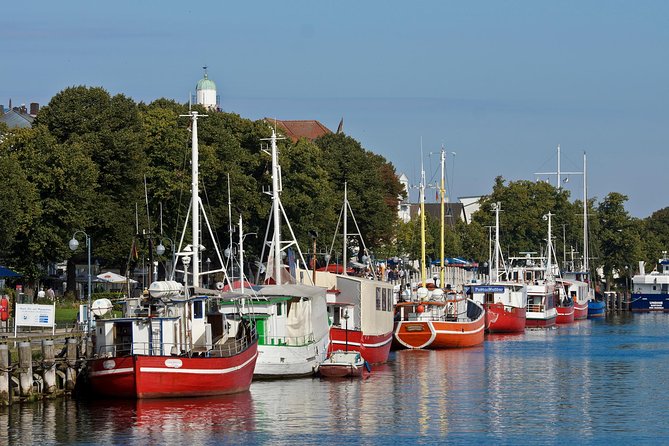
- The Old Stream canal, with fisher boats, shops, cafés, and occasional street-art style performance moments
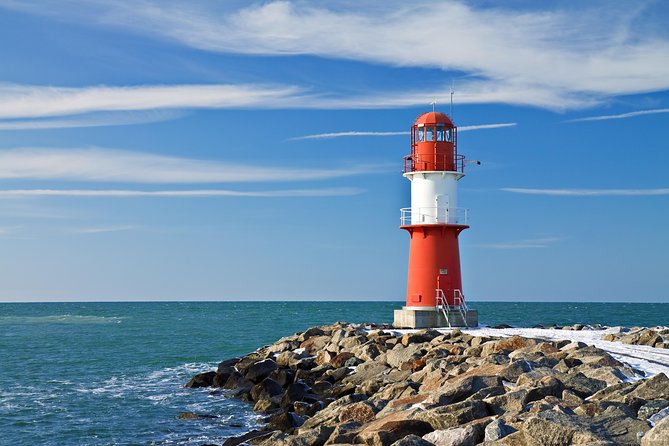
- The lighthouse from 1898 and, not far from there, the sandy beach vibe you came for
This is the part of the day that feels most “different” from the typical Baltic cruise stop. Warnemünde is small enough to absorb quickly, but the canal and lighthouse give it that postcard shape you can actually enjoy without rushing.
Practical note: the tour is built around walking, so you’ll want comfortable shoes. On rainy or windy days, you’ll still be able to enjoy the history and architecture, but you may spend more time adjusting coats and hats than taking photos.
The public train ride to Rostock: using local transit like a local
After your Warnemünde walk, you head to Rostock via public train and tram. The train segment is short—about 30 minutes—so it feels like a quick hop rather than a long transfer.
This matters more than it sounds. When a shore excursion uses local transit, you get two benefits:
1) you see how people actually move around, and
2) the schedule is usually easier to adjust than a private vehicle that depends on traffic.
Once you reach Rostock, your guide keeps you moving at a steady pace and handles the “okay, get off here” moments, which is especially helpful if you’re not comfortable reading German station signage.
Rostock old town on a guided walk: the landmarks you’ll remember
Rostock’s center is where the day shifts from seaside to city. You’ll see the places that define the old Hanseatic and university identity of Mecklenburg’s best-known town, and you’ll get context that helps the buildings make sense.
During the guided walk, you’ll cover major photo stops like:
- the splendid town hall and nearby market square
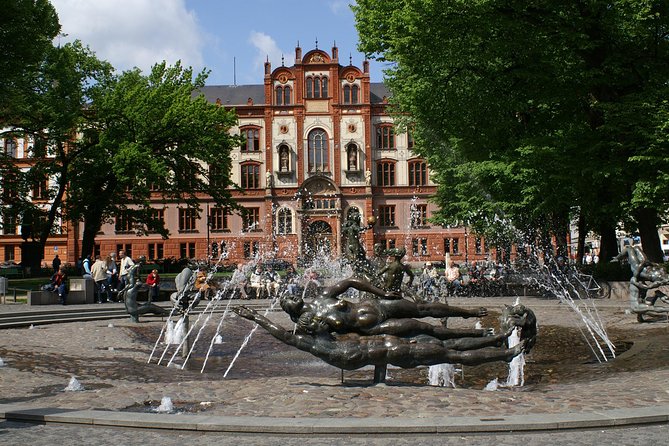
- Rostock University and the broader university area
- the medieval monastery of the Holy Cross
- Kroepeliner Strasse, a lively boulevard for people-watching
- the brick Gothic town wall and its mighty gates
This walking loop is the “core value” of the Rostock part. Even if you’ve never heard of Rostock before, you’ll leave with a mental map: what to point at, what to remember, and what to build on if you return later.
One thing to keep in mind: city centers involve some time with your feet. You should expect to stand for explanations and photo stops, then walk again when the group keeps rolling.
A few more Rostock tours and experiences worth a look



St. Mary’s Church and the astronomical clock stop
This is the moment most people remember. The visit is inside St. Marienkirche, and entry is included. You get about 15 minutes in the church, so it’s not a long, slow museum experience, but it’s enough time to appreciate what’s special and to get your bearings.
What makes this stop worth it is the astronomical clock. It’s not just a decorative object. It’s a working piece of history tied to how time was tracked and shown in medieval Europe—so you get the “this matters” feeling, not just a quick look at an old building.
If your timing lines up (especially around midday), you may even catch a short mechanical display sequence described as part of the clock’s regular show, including figures associated with the 12 Apostles. Since cruise schedules vary, treat that as a bonus, not a guarantee—but it’s exactly the kind of payoff that turns a church stop into the highlight of the whole morning.
Using your free time in Rostock without derailing the plan
After the main guided sights, there’s time to breathe and do what you want—typically shopping or a snack—before returning to the port by tram and train. This is your chance to get something local without feeling locked into a long lunch plan.
My advice: pick one simple goal for your free time.
- If you want a snack, grab something quick near the route you already walked.
- If you want shopping, set a “turn-around time” in your head so you’re not sprinting back when the group regroups.
On days when the weather isn’t great, short free time is still useful because you can stay flexible. On sunny days, it’s where you can linger for one extra photo and still make the return ride smoothly.
Why the guides matter: stories you carry home
A walking tour is only half architecture. The other half is the human explanations—why a place looks the way it does, and what life was like.
This tour consistently gets praised for guides with strong English and strong storytelling. Names you might hear include Tobias, Yvonne, Andreas, Bernard, Berndt, Evelyn, and Sylvia. The common thread: they connect what you see to how the region lived through major changes in the 20th century.
One pattern that shows up in the tour experience is the way East Germany and West Germany differences get explained in plain, day-to-day terms. That helps you understand why certain buildings and streets feel “the same” at a glance, but “different” once you know the timeline.
You also get clear group management—helpful transit guidance, where to stand, and what to watch for—so the walking feels organized rather than chaotic.
Price and value: what $58.87 really buys you
Let’s break down value in the way you actually feel it on a cruise day.
You’re paying for:
- a professional guide
- a guided walking tour in both Warnemünde and Rostock
- transport by public transportation between the towns
- an included church entry at St. Marienkirche
Compared to cruise-line tours that often send you into larger groups and rely on a bus, this kind of structure can feel better and cost less. And because the group limit is 20 travelers, it’s easier to ask questions and stay together.
There’s one more hidden value: you’re not burning time figuring things out. When a ship docks, you want your day to start with a plan already in place.
Who should book this tour, and who should skip it
This tour is ideal for you if:
- you want a quick hit of both a seaside town and a classic city center
- you like guided walking but still want the efficiency of organized transit
- you enjoy the mix of architecture and cultural context, not just a list of sights
- you’d rather spend your time exploring than locked into a long vehicle ride
I’d think twice if:
- you have difficulty with walking or you tire quickly, because the route includes a moderate amount of walking and you’ll likely stand during explanations and transit steps
- you need step-by-step accessibility accommodations, since the itinerary depends on public transit flow and timed coordination
If you’re traveling with kids, it can still work, but keep expectations realistic. Short stops and steady walking matter when a child needs to slow down or take frequent breaks.
A practical packing checklist for a smooth day
You do not need special gear, but a few basics prevent common cruise-day annoyances.
Bring:
- EUR change for toilet stops, drinks, and lunch (US dollars are not accepted in Germany)
- comfortable shoes for walking
- a way to handle wind or rain, since the Baltic coast can be brisk
- your patience for a day that runs on ship docking times
Also, if you’re late for any reason and you do not contact the tour team, the policy is that they cannot wait and refunds may not apply. In plain terms: treat the start time as firm, and keep an eye on where your group needs to be.
Should you book Lovely Rostock and Warnemünde?
Book it if you want a shore excursion that feels local, not staged, and you’re lucky enough to have your ship dock in Warnemünde. The combination of Warnemünde’s canal and lighthouse mood plus Rostock’s Hanseatic streets and St. Mary’s astronomical clock is a strong use of limited cruise time.
Skip it only if your priorities are different: if you want a long, slow lunch day, or if walking and standing are a problem for you. Otherwise, this is the kind of tour that helps you leave with a real sense of place—and a clock stop you’ll likely remember long after you’re back on the ship.
FAQ
Where does this shore excursion start?
It starts at Warnemünde Cruise Center, 18119 Rostock, Germany, and it also ends back at the same meeting point.
What time does the tour begin?
The start time is typically 9:00 AM, but it’s adjusted to match your ship’s docking time.
Is this tour offered if my ship docks in Rostock?
No. This tour is offered only when ships dock in Warnemünde. It cannot be offered from ships docking in Rostock or Überseehafen.
How do you get from Warnemünde to Rostock?
You use public transportation, including a train and tram, with the ride to Rostock taking about 30 minutes.
Is the St. Mary’s Church visit included?
Yes. There is an included indoor visit to St. Marienkirche (St. Mary’s Church), and the entrance ticket is part of the tour.
Do I need to buy tickets for the tour?
You receive a mobile ticket, and the included admissions (like St. Mary’s Church) are handled as part of the excursion.
How much walking is involved?
There is moderate walking involved, and it is not recommended for passengers with walking difficulties.
What money should I bring?
Bring some change in EUR for toilet stops, beverages, and lunch. US dollars are not accepted in Germany.