REVIEW · LIVERPOOL
Liverpool Heritage,History & Culture Walking Shore Excursion
Book on GetYourGuide →Operated by Liverpool Famous Walking Tours- Purple Tours · Bookable on GetYourGuide
Liverpool tells its story on foot. This 2-hour Heritage and Culture walk turns Liverpool’s landmarks into real-life scenes with a guide who talks like a local. You’ll connect King John to the modern city as you move from squares, to waterfront history, and then straight into Beatles territory.
I especially love the local guide storytelling—you get personal explanations, not just dates. And I really liked how the route links maritime history to the docks you can still see today, including Royal Albert Dock and the Three Graces.
One thing to plan for: you’ll be walking through busy areas and cobbles, and there’s no food or drink included, so bring water and comfy shoes.
In This Review
- Key points you’ll care about
- Two Hours of Beatles, Docks, and Derby Square Stories
- Meeting at the Cruise Welcome Area (and Finding Your Purple Guide Fast)
- Derby Square to Queen Victoria: Where Liverpool Castle Once Stood
- The First Dry Dock and the Waterfront: Maritime History You Can Walk Along
- Royal Albert Dock and the Three Graces: Cunard, Port of Liverpool, and Liver Building
- Exchange Flags Courtyard and Town Hall Time Travel to the 1500s
- Mathew Street, the Cavern Club Footsteps, and a Beatles Statue Moment
- Price and Value for a $31 Two-Hour Walk
- Who Should Book (and Who Might Want Another Plan)
- Should You Book This Liverpool Heritage Walking Tour?
- FAQ
- How long is the Liverpool Heritage, History & Culture walking shore excursion?
- How much does the tour cost?
- Where do I meet my guide if I’m on a cruise?
- Is the tour wheelchair accessible?
- Are dogs allowed?
- Is food or drink included?
- What language is the tour guide?
Key points you’ll care about
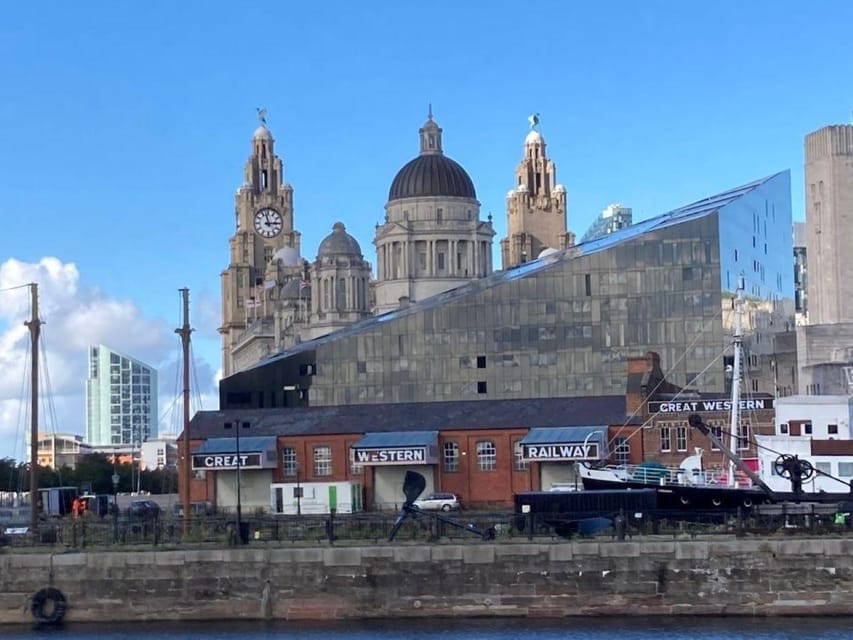
- Royal Albert Dock + the Three Graces: landmark architecture tied to real working-dock history
- Maritime links beyond the postcard: you’ll hear how Liverpool connects to the slave trade
- Derby Square and Liverpool Castle’s former site: a vanished castle location with a Victoria monument nearby
- Mathew Street to the Cavern Club area: Beatles streets without over-hype
- Easy walking, but cobbles happen: wheelchair and stroller access is possible, with uneven surfaces in spots
- Private-feeling moments may happen: if the group is small, the guide can go at your pace
Two Hours of Beatles, Docks, and Derby Square Stories
This tour is short on purpose. In two hours, you’ll cover a lot of Liverpool’s “greatest hits,” but with a twist: the walk doesn’t treat the waterfront as separate from the city streets. It ties together the city’s development, the docks, and the buildings you can photograph right now.
You’ll start with civic history around Derby Square and the Town Hall area, then shift into Liverpool’s maritime world—including the role Liverpool played in the slave trade. After that comes the music trail: Mathew Street, the Cavern Club area, and a stop where you can take a Beatles-style selfie with the statue.
If you like history you can see with your own eyes—buildings, docks, and street layouts—this works well. If you’re expecting a fast museum-style ride with lots of inside entries, you might feel like you want more time. You’ll mainly be outdoors, on streets and waterfront paths.
You can also read our reviews of more walking tours in Liverpool

Meeting at the Cruise Welcome Area (and Finding Your Purple Guide Fast)
If you’re on a cruise, the meeting point is straightforward but it helps to arrive early. You’ll disembark from your ship, walk up the covered ramp into the white cruise welcome building area, and look for your guide in purple holding a sign for Liverpool Famous Walking Tours.
From a practical standpoint, this matters because the tour runs in a group. If you’re late, you can miss the start of the story—especially around the early stops near Derby Square and the Town Hall area.
What to wear: plan for a walking tour that can include uneven ground. Strollers and wheelchairs are workable in accessible spots, but you’ll still pass cobbles at times. In Liverpool, weather can change fast, so a light layer and shoes with good grip are a smart move.
And since there’s no food or drink included, I’d treat this as a walk before dinner or after lunch, not a full-day outing. Grab water beforehand.
Derby Square to Queen Victoria: Where Liverpool Castle Once Stood
Your tour begins in the city-center style, where history hides in plain sight. One of the first lessons you’ll get is about Derby Square—it once sat on the site of Liverpool Castle, which is no longer there. Instead, you’ll see an imposing monument to Queen Victoria nearby, and the guide explains how the city’s layout has changed over time.
What I like about this part is that it trains your eyes. After the guide points it out, you start seeing Liverpool as a layered city: what’s standing now sits on top of what came before. That makes the later dock buildings and waterfront features feel more connected, not random.
It’s also a good warm-up stretch. You’re not yet walking the waterfront, but you’re already building context: how Liverpool’s civic power grew, how the city redeveloped key areas, and why landmarks still matter when their original purposes are gone.
The First Dry Dock and the Waterfront: Maritime History You Can Walk Along
Once you move toward the waterfront, the tour starts telling a different kind of Liverpool story—one tied to trade, shipping, and industry. You’ll learn about the site of Liverpool’s first dry dock. There’s also a large water fountain capturing this maritime connection, which gives you a quick visual anchor while the guide talks.
This is also where you’ll hear about Liverpool’s role in the slave trade. It’s not presented as a detached fact. The guide frames it as part of how the city’s shipping and commerce shaped its growth. If you’re sensitive to heavy topics, it’s good to know it’s part of the experience, and you’ll want to be ready for that conversation while you’re out walking in public spaces.
Then the waterfront story expands to include how the famous Titanic story became an internal part of Liverpool’s maritime identity. The guide helps you understand why docks and shipbuilding weren’t just background—they helped drive jobs, investment, and the city’s global reputation.
By the time you reach the dock area, you won’t just be looking at impressive architecture. You’ll understand what those structures represent in the big system of Liverpool’s rise.
Royal Albert Dock and the Three Graces: Cunard, Port of Liverpool, and Liver Building
Royal Albert Dock is the star here, and the tour builds toward it step by step. As you walk, you’ll hear how the docks played an important role in the development of the city. That matters because dock buildings can look like pure “heritage scenery” from a distance. The guide helps you connect them to function—what they were for and why they mattered.
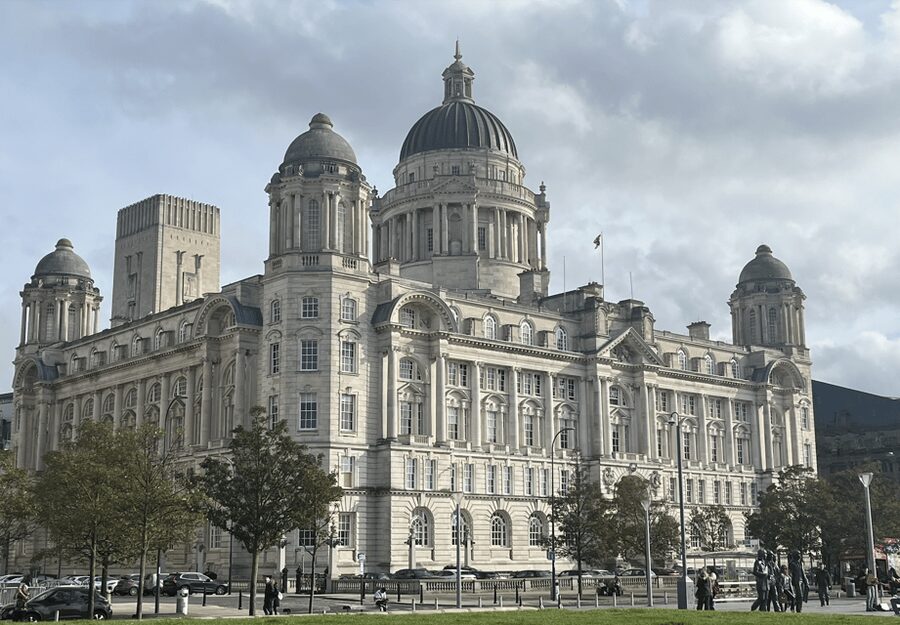
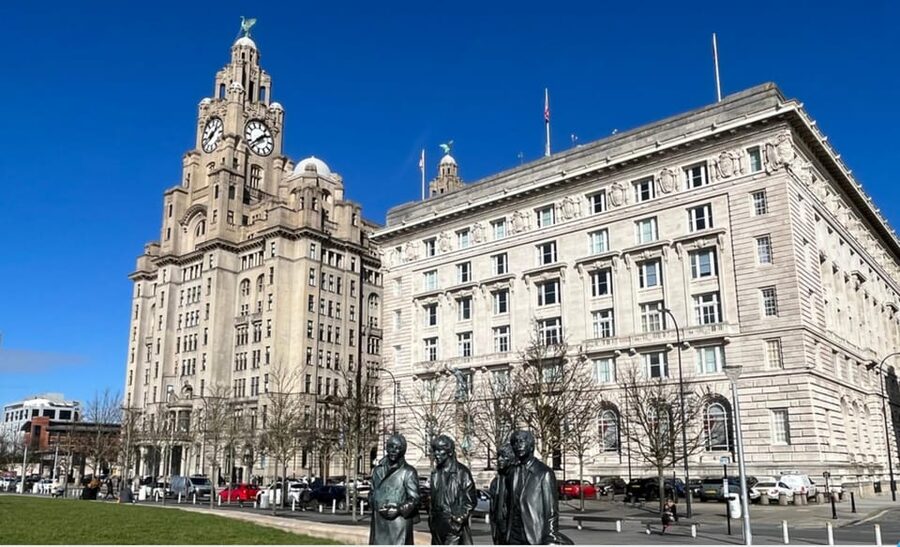
Then come the Three Graces: you’ll learn the story behind three major Grade II listed buildings:
- Cunard Building
- Port of Liverpool Building
- Liver Building
These aren’t just named for convenience. The guide connects their identity to Liverpool’s maritime era and the city’s commercial ambitions. Even if you’ve seen photos of them before, this is the kind of stop that makes you look again—at proportions, at details, and at how the buildings sit together as a waterfront silhouette.
One practical tip: this is a great area for photos, but it can be busy around landmark angles. If you want clean shots, you’ll get better results if you’re patient while the guide keeps the group moving.




Exchange Flags Courtyard and Town Hall Time Travel to the 1500s
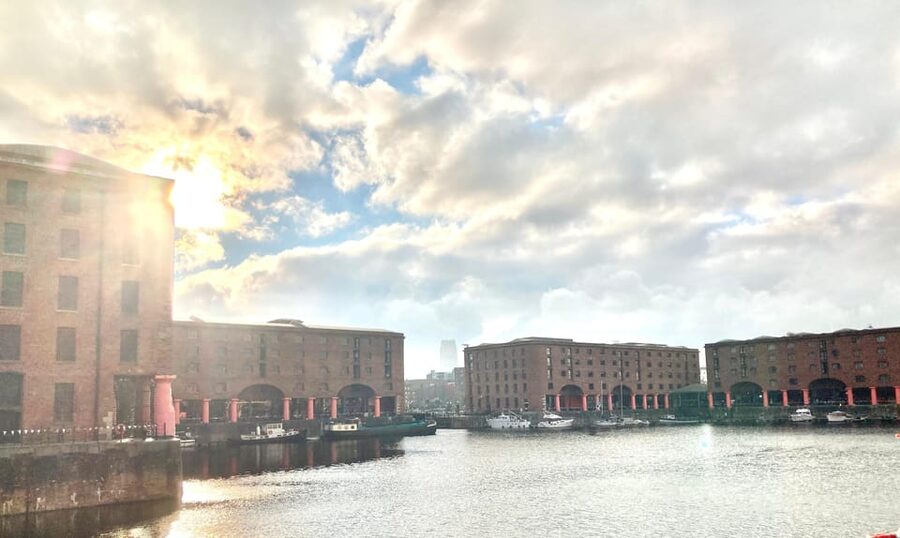
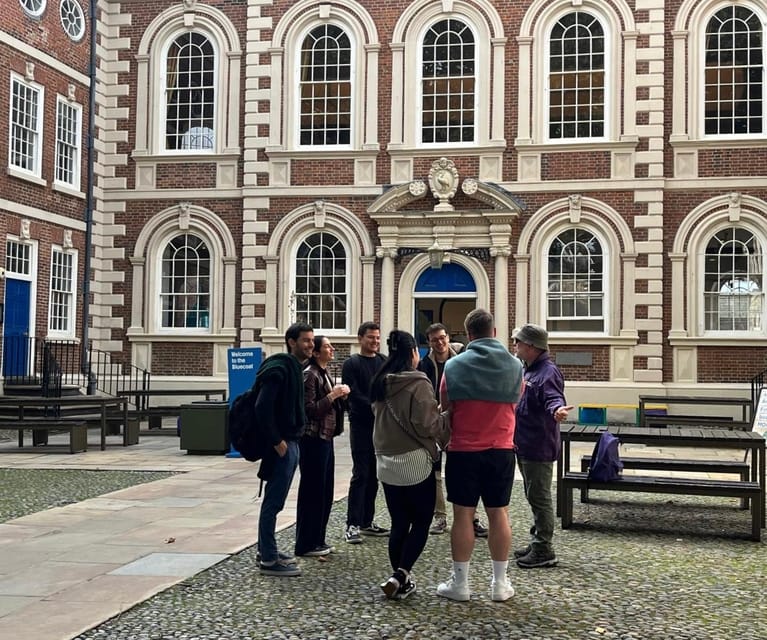
After the dock section, you’ll shift back toward civic grandeur. You’ll stop at Exchange Flags, a Grade II listed area, where the surrounding buildings form a courtyard facing the Town Hall.
The Town Hall is Grade I listed, and the guide explains why it’s considered one of the finest surviving 18th-century town halls in England. But the really interesting part is the timeline: you’ll hear about predecessors that date back to the 1500s. So you’re not only learning about the building you see now—you’re learning that the location has been a center of city power for centuries.
This is where the tour does a good job keeping you mentally switched on. The guide isn’t just reciting facts; they connect earlier civic history to what Liverpool became as an international port. It gives you a fuller sense of how the city’s global role translated back into local governance and public identity.
And yes, you’ll likely pass through areas where you can pause briefly for selfies. If you’re traveling with others, this is an easy moment to regroup.
Mathew Street, the Cavern Club Footsteps, and a Beatles Statue Moment
Then the walk turns into music geography. You’ll head into Mathew Street, one of the best-known music streets in the world, closely associated with the Cavern Club. As you walk, you’ll hear how the route connects to the legacy of the Beatles—often described as walking in the footsteps of The Fab Four.
What helps here is that the guide doesn’t treat it as a theme park. The history connects back to the people and the city identity you heard earlier. You can see how Liverpool’s cultural swagger grew alongside its maritime and industrial development.
You’ll also see a Beatles Statue sculpted by Andrew Edwards, and there’s a chance to grab a selfie as you pass by. If you’re a fan, this is the photo stop that feels the most “instant payoff.” If you’re not, it’s still a strong landmark because it anchors Liverpool’s modern identity in a specific spot you can revisit later.
One more fun detail: you’ll notice an oversized LIVERPOOL selfie sign with colors that change based on season or events. It’s an easy, quick moment of color—plus it gives you something to spot in photos even if the street scene gets crowded.
Price and Value for a $31 Two-Hour Walk
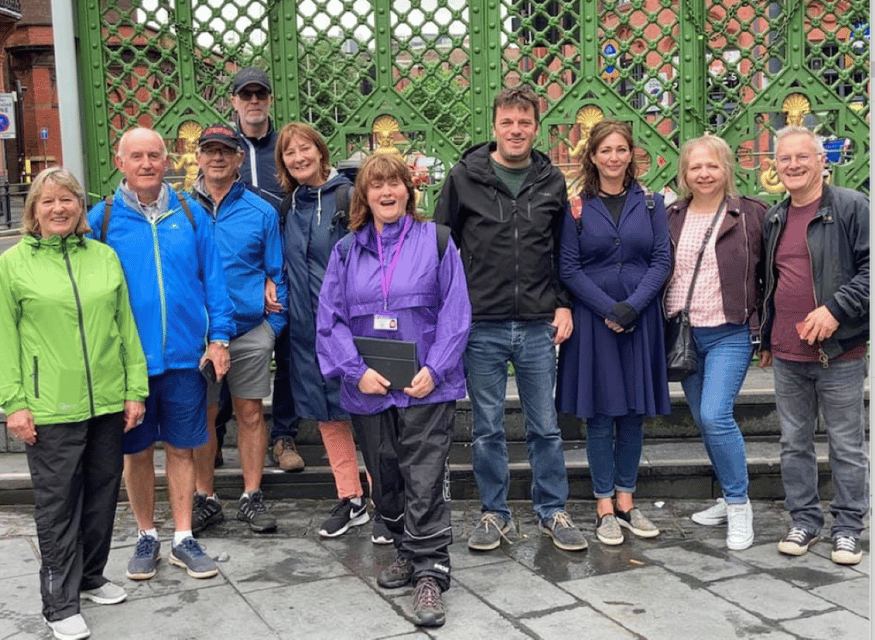
At $31 per person for about two hours, this tour is priced like a solid “port day” or “short city intro” activity. The value comes from the combination of:
- Local Liverpool experienced guides
- A route that hits major landmarks without requiring museum tickets
- Multiple big themes in one walk: civic history, maritime trade, and music culture
It’s also good value because you’re not paying extra for attractions during the walk. The “included” part is mostly the guiding and the easy walking format, which suits people who want to get grounded quickly when time is limited.
The one trade-off is that there’s no food or drink included. That’s not a dealbreaker, but it changes how you plan the day. If you tend to get hungry while walking, stop for a drink before you meet your guide.
Also, because it’s a group walk in busy areas, you’ll get the best experience if you show up on time and come ready to move.
I’ll also mention something practical from real experiences: when the group is very small—like just two people—the tour can feel more personal and the guide can tailor pacing better. Even if you end up in a regular group, the overall format is still flexible enough to ask basic questions if you keep it moving.
And if you need interpretation or a slower pace for communication reasons, the guide experience can be accommodating. One experience described extra time and slower delivery for a deaf guest, which is exactly the kind of detail that matters in real life.
Who Should Book (and Who Might Want Another Plan)
This tour is a strong fit if you:
- Want a fast, guided orientation to Liverpool’s key landmarks
- Like stories that connect places, not just stand-alone sightseeing
- Care about understanding Liverpool’s maritime identity, including the difficult parts like the slave trade role
- Want Beatles culture in a walk-through format, not a ticketed museum day
You might want to consider a different option if you:
- Prefer long, inside-the-building history experiences
- Want a tour that includes food stops or more extended breaks
- Struggle with cobbles or don’t feel comfortable in crowded public areas
Because it’s only two hours, it’s also ideal as a first day activity or a cruise shore excursion. You’ll leave with “where to go next” ideas for follow-up time on your own.
Should You Book This Liverpool Heritage Walking Tour?
If you want a compact way to understand Liverpool—civic power, dock life, and Beatles streets—this is a smart book. The route balances major landmarks with context you can actually use later when you’re exploring on your own. And the guide-led approach is the real engine: they connect the dots between buildings, waterfront features, and the stories behind them.
I’d book it if your travel style is part history, part street-level culture, and you’re okay walking outdoors for two hours. If you’re short on time, this tour gives you enough structure to stop you from wandering aimlessly through the city.
If you want, tell me your cruise port or hotel area and your travel dates. I can suggest the best order for pairing this with nearby self-guided stops so you don’t waste time backtracking.
FAQ
How long is the Liverpool Heritage, History & Culture walking shore excursion?
The tour lasts 2 hours.
How much does the tour cost?
It’s listed at $31 per person.
Where do I meet my guide if I’m on a cruise?
Disembark from your cruise ship and walk up the covered ramp into the white cruise welcome building area. Your guide will be wearing purple and holding a welcome sign for Liverpool Famous Walking Tours.
Is the tour wheelchair accessible?
Yes. Locations are accessible for wheelchairs and strollers, but you should expect some uneven surfaces such as cobbles and busy areas at times.
Are dogs allowed?
Yes, well-behaved dogs are welcome, but you’ll be walking in a group and in busy areas.
Is food or drink included?
No. There’s no food or drink included, so you’ll want to plan for your own snacks and water.
What language is the tour guide?
The tour is guided in English, and it is a live guide experience.