REVIEW · LIVERPOOL
Liverpool Heritage, History, Culture Walking Tour-Shore Excursion
Book on Viator →Operated by Liverpool Famous Walking Tours · Bookable on Viator
Liverpool tells its story best on foot. What I like most is that this shore excursion starts right at the cruise terminal, so you skip the scramble of getting downtown first, and you get history from a real local guide. The other big win: you walk past major waterfront and skyline landmarks, including the famous Three Graces, while the guide ties it all to the people who shaped Liverpool.
The main thing to consider is the balance. This is a Liverpool heritage and culture tour with a side of Beatles, not a full Beatles-only experience, so if you’re expecting a deep, all-day Fab Four focus, you may want to choose a dedicated Beatles tour instead.
In This Review
- Key highlights you’ll actually feel
- Why this tour works so well from a cruise ship
- Titanic-era waterfront and the Marine Engine Room Heroes
- The Three Graces: Cunard, Port of Liverpool, and Liver Building
- Waterfront streets, film locations, and a Beatles detour
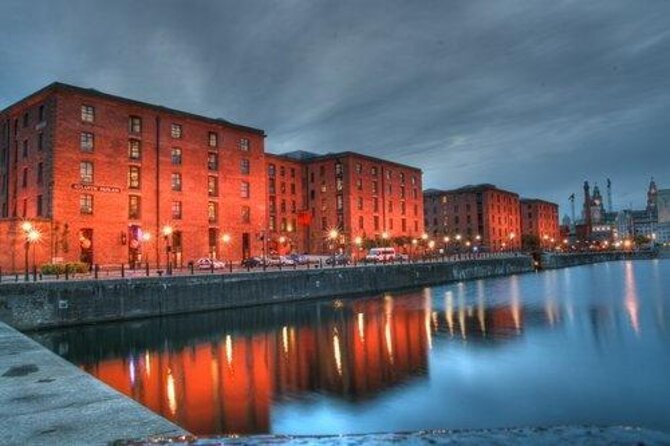
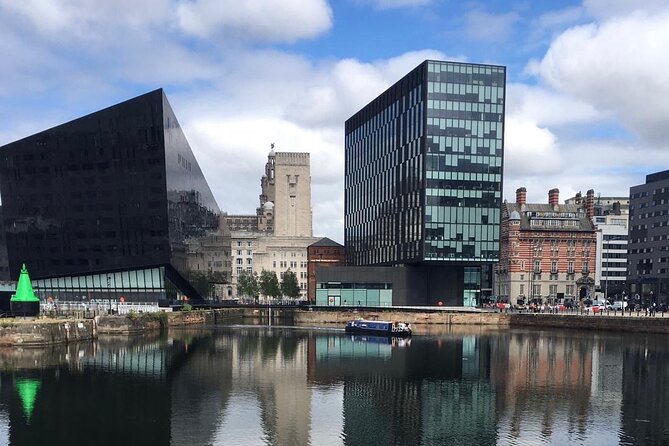
- Royal Albert Dock: where Liverpool’s dock history clicks
- Thomas Steers Way: a dry dock site turned into a modern photo moment
- Sailors’ Home Gateway, Derby Square, and the Queen Victoria connection
- Mathew Street and Castle Street: music footsteps and medieval hints
- Town Hall and Exchange Flags: civic power in stone
- Ending at Our Lady & St Nicholas Church and Garden
- Price and value: what $37.10 buys you
- The walking reality: shoes, pace, and staying together
- Should you book this Liverpool Heritage, History, Culture Walking Tour?
- FAQ
- Where does the tour start and where does it end?
- How long is the Liverpool Heritage, History, Culture Walking Tour?
- What’s the cost per person?
- Is it offered in English?
- What should I bring for the walk?
- Does the tour include food or drink?
- Are there limits on group size or age?
- What happens if weather is poor?
Key highlights you’ll actually feel
- Port-first meeting means less stress after you get off the ship
- Local guides (I’ve seen praise for guides like Carl, Michael, Pam, and Peter) keep stories clear and lively
- Landmarks in a smart route: docks, the Three Graces, Mathew Street, and the Town Hall area
- Titanic connections on the waterfront give the maritime history real context
- Beatles moments without taking over the day (hello, Beatles Statue and Mathew Street)
- Small group size (max 20) helps you stay together and ask questions
Why this tour works so well from a cruise ship
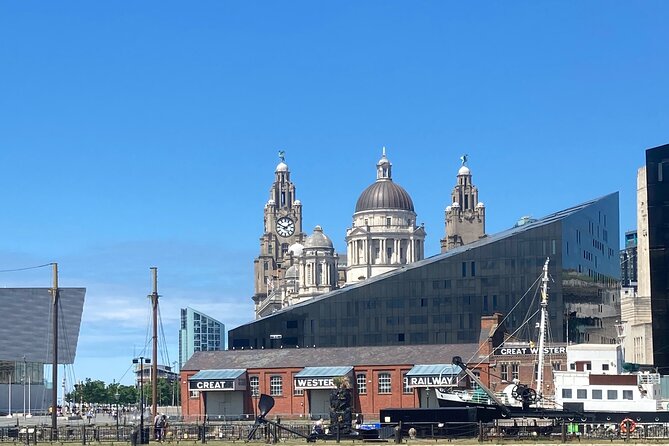
If you’re on a cruise, time is the real enemy. This tour is built for that reality: you meet your guide inside the Liverpool Cruise Terminal at Gate 2, Princes Parade (Liverpool L3 1DL), then you start walking with a plan. It runs about 2 hours 15 minutes and covers roughly a 4-mile round trip pace, which is long enough to feel like you saw Liverpool, but not so long that you’re fried before dinner.
Another practical win is that it’s mobile-ticket friendly and offered in English. And because the group is capped at 20 people, you’ll usually move at a human pace—important when you’re on cobbles and busy streets.
The tour also ends near where it started: your finish point is the Church of Our Lady & St Nicholas, just a short walk back to the cruise terminal. Even better, your guide can escort you back, or you can use the time afterward for shopping on the waterfront.
You can also read our reviews of more walking tours in Liverpool

Titanic-era waterfront and the Marine Engine Room Heroes
The tour’s maritime story starts early. Right after meeting your guide, you head to the Titanic Memorial and the Memorial to the Marine Engine Room Heroes. You’re not just seeing a monument for looks—you’re getting a clear explanation of Liverpool’s connection to the Titanic story, which helps everything you see later on the docks area make sense.
This is the kind of stop that can feel heavy if you rush it, but the timing here is friendly: you get a brief moment to take it in and hear the guide’s explanation without turning it into a long pause. Since you’re coming from the cruise terminal, it’s also a smooth way to get your bearings fast.
The Three Graces: Cunard, Port of Liverpool, and Liver Building
Next you’ll hit the cluster people talk about for Liverpool’s skyline. Collectively called the Three Graces, you’ll learn about the Cunard Building, the Port of Liverpool Building, and the Liver Building—including the fact they’re Grade II listed (so this is not random architecture, it’s protected heritage).
What I like about this part is how the guide uses the buildings to explain the city’s identity. Liverpool didn’t grow by accident; it grew through trade and shipping. Seeing these landmark facades together makes that story feel obvious instead of abstract.
You’ll also notice the rhythm of the route: you’re close enough to walk between major sights, but not so packed that you miss details. If you enjoy architecture and city identity stories, this is a strong middle anchor for the whole tour.
Waterfront streets, film locations, and a Beatles detour
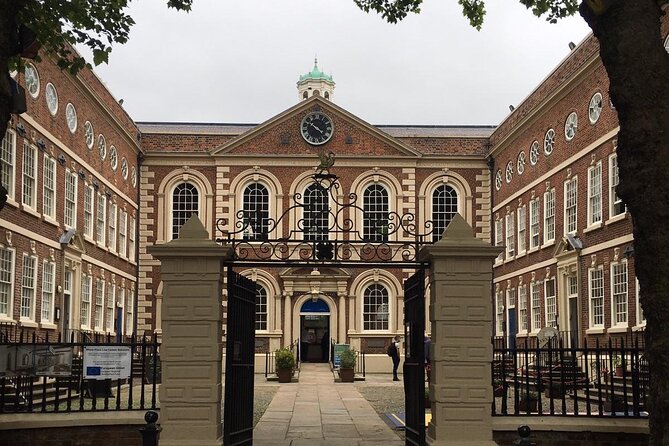
As you move along the Liverpool Waterfront and surrounding streets, the guide encourages you to look for places that have shown up in films and TV. That matters because it turns a simple walk into a scavenger hunt: you start noticing streets and building angles you’d normally overlook.
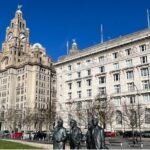
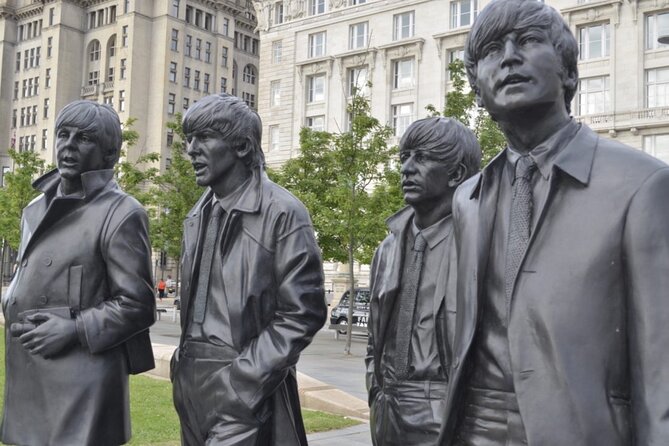
Then comes the Beatles stop—brief, but memorable. You’ll pass the Beatles Statue sculpted by Andrew Edwards, with a chance to grab a selfie. Access can sometimes be restricted, and on those occasions the tour visits alternative statues, so the experience stays flexible.
One helpful reality-check: some guides bring the Beatles into the larger Liverpool story (music, culture, identity), while others lean on Beatles references more. The tour is designed to keep Beatles as a thread, not the entire fabric.
Royal Albert Dock: where Liverpool’s dock history clicks
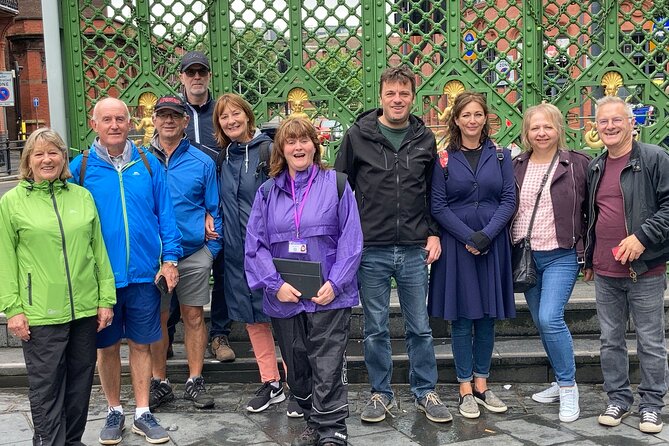
At the Royal Albert Dock, the guide ties the waterfront walking you’ve done so far to the city’s dock development—plus how the Titanic story became part of Liverpool’s maritime history. This is a good moment to pause and look around, because the dock area is where Liverpool’s shipping identity shows up visually, not just in stories.
You’ll also see the bronze statue to Bill Fury, a popular stop for fans because it’s effectively a shrine moment. If you like music history as much as shipping history, this is a satisfying crossover.
The one “watch out” here is timing: you’re on a tight shore-excursion schedule, so you won’t have hours to wander on your own. Still, the guided element helps you understand what you’re looking at so you don’t waste the visit guessing.



Thomas Steers Way: a dry dock site turned into a modern photo moment
After the docks, the tour moves to Thomas Steers Way, which sits on the site of Liverpool’s first dry dock. The stop is interesting because it blends history with something you can actually interact with: there’s a large water fountain tied to the dry dock story, and you can have a quick look down through a porthole.
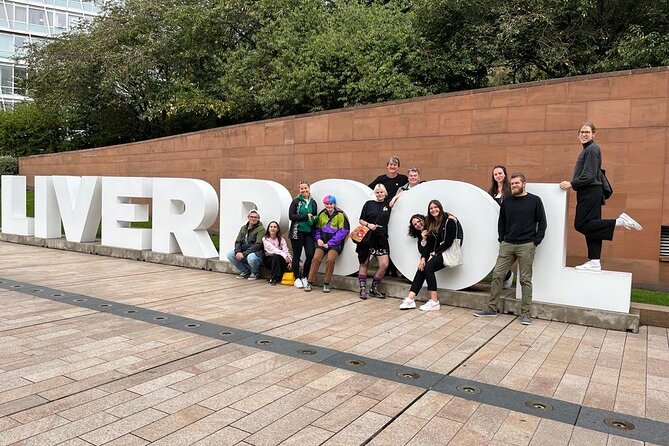
And then there’s the fun part: the oversized LIVERPOOL selfie sign, whose colors change based on season or events. If you travel with friends or family who love photos, this is the kind of stop that doesn’t feel forced. It’s short, but it breaks the walk into something memorable.
Sailors’ Home Gateway, Derby Square, and the Queen Victoria connection
You’ll next reach the Liverpool Sailors Home Gateway, a monument honoring the maritime community served there. You get another good photo angle with the golden Liver bird, and this stop is a nice reminder that ship work was built on real communities—not just ships and trade.
Then the route shifts toward Derby Square. You’ll hear about the history of Liverpool Castle, which once stood here, and you’ll see an imposing monument to Queen Victoria. This is one of those stops where a guide’s explanation makes a big difference. Without that context, it’s easy to see a square and move on. With it, you start seeing layers.
Mathew Street and Castle Street: music footsteps and medieval hints
One of the most iconic parts of Liverpool walks is Mathew Street. You’ll hear it described as walking in the footsteps of musical icons, with special attention to the Cavern Club and the broader Cavern Quartet area. The tour gives you a chance for a photo in front of the Cavern Club, plus you’ll get connections along the street to Liverpool’s musical past.
This is also where the tour’s “not a Beatles-only day” philosophy becomes clear. Even when Beatles references show up, the guide usually frames them as part of Liverpool’s wider creative culture, not as a separate theme park.
After Mathew Street, you’ll pass along Castle Street, and the guide points out the medieval connections you can still feel in the street layout and surrounding buildings. It’s a short stop, but it adds variety after the docks and music scenes.
Town Hall and Exchange Flags: civic power in stone
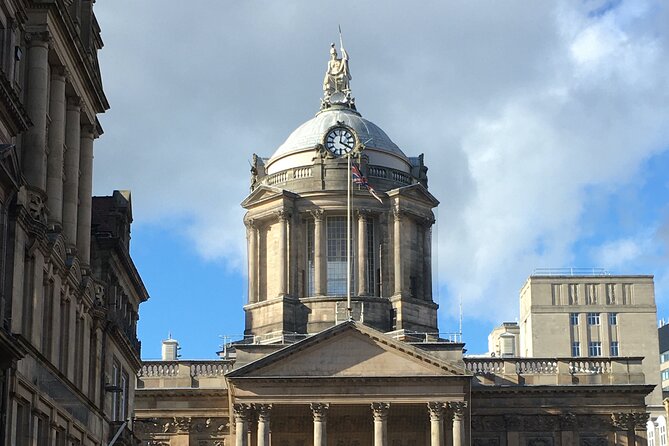
From Castle Street, you head toward the Liverpool Town Hall, which is a Grade I listed building and recognized as one of the finest surviving 18th-century town halls in England. You’ll also hear about earlier town hall predecessors dating back to the 1500s, which helps you understand why this building matters beyond the skyline photo.
Next up is Exchange Flags, a Grade II listed courtyard area facing the Town Hall. Here the guide connects the space to World War II history, and you’ll see the Nelson Monument and a large bronze monument to Nelson dating to the early 1800s.
If you like cities where history shows up in civic architecture, this section is satisfying. You’ll feel how Liverpool organized itself—through trade, governance, and public symbols.
Ending at Our Lady & St Nicholas Church and Garden
The tour finishes at Our Lady & St Nicholas Church and Garden. This is more than a “last stop” because the tour explains that the site has been a place of worship for over 750 years. You’ll see historically interesting tombstones and sculptures, and the guide also covers Liverpool’s links to the Slave Trade and North American history.
That’s the kind of context that can be uncomfortable, but it’s also important. This stop is where the tour’s “heritage and culture” promise becomes real, because it doesn’t only celebrate— it also informs.
From there, you’re only a few minutes back to the cruise terminal. Your guide will escort you, or you can keep exploring and do some shopping around the waterfront at your own pace.
Price and value: what $37.10 buys you
At $37.10 per person, you’re paying for a guided, port-based route through some of Liverpool’s most recognizable heritage sites—plus a guide to turn it from scenery into a story. The value is strong because the tour includes local Liverpool experienced guides, and all the stops listed include free admission.
That said, you should plan for what’s not included. There’s no food or drink. If your cruise day is tight, I’d bring water and a small snack so you’re not scrambling during the walk—especially since you’ll be on street level through areas with cobbles and uneven surfaces.
Also, you’re paying for convenience: you avoid the hassle of sorting transport after you disembark. The tour is also timed to match typical shore-excursion energy levels.
The walking reality: shoes, pace, and staying together
This is an easy to moderate street-level walk with uneven sections. The key instruction is simple: wear comfortable, no-slip shoes. Cobblestones are common in this part of the city, and a slip ruins the whole day.
The pacing is designed for a group, and most stops are short by default. Still, this is not a “see everything from a bus” type of day. You’ll want to stay with the group and keep the tour moving.
The good news: the small size and guided nature make it easier to ask questions. In guide feedback I saw, people praised how guides stayed patient when someone drifted off, and how they offered suggestions after the tour ended—handy if you want to keep exploring.
Should you book this Liverpool Heritage, History, Culture Walking Tour?
Book it if you want a time-smart cruise-day walk that covers Liverpool’s waterfront, civic buildings, and music landmarks with a local guide telling the story. It’s also a solid choice if you’re traveling with people who like a bit of everything—maritime history, architecture, and Beatles culture—without turning the day into a single-idea theme.
Skip it (or consider a different option) if you want a Beatles-only day. This tour includes Beatles moments like the Beatles Statue and Mathew Street, but the overall focus stays on Liverpool’s heritage and city identity.
One last practical thought: bring water, wear grippy shoes, and keep your expectations aligned with a walking tour format. Done right, it’s one of the best ways to get an organized first taste of Liverpool before you head back to the ship.
FAQ
Where does the tour start and where does it end?
You meet your guide at the Liverpool Cruise Terminal at Gate 2, Princes Parade, Liverpool L3 1DL, UK. The tour ends at Our Lady and St Nicholas Church, which is about a 2-minute walk to the cruise terminal, with the option for your guide to escort you back.
How long is the Liverpool Heritage, History, Culture Walking Tour?
The duration is about 2 hours 15 minutes (approx.).
What’s the cost per person?
The price is $37.10 per person.
Is it offered in English?
Yes. The tour is offered in English.
What should I bring for the walk?
You’ll want comfortable no-slip shoes because the route includes uneven surfaces like cobbles. The tour also recommends bringing water or a drink, and using a reusable bottle where practical.
Does the tour include food or drink?
No. Food and drink are not included.
Are there limits on group size or age?
The tour has a maximum of 20 travelers. Children under 16 must be accompanied by an adult.
What happens if weather is poor?
This experience requires good weather. If it’s canceled due to poor weather, you’ll be offered a different date or a full refund.