REVIEW · KUSADASI
Kusadasi Shore Excursion: Private Tour to Ephesus including Basilica of St John and Temple of Artemis
Book on Viator →Operated by Achtypis Tours · Bookable on Viator
Ephesus in one shore day still feels like a win. This private trip connects the big-name ruins with two spiritual sites—Meryemana (Virgin Mary’s House) and the Basilica of St John—plus the Temple of Artemis, one of the ancient Seven Wonders. I like the setup because you get a real guide experience (I’ve seen how well it can work with guides like Alex and Emre, who kept things moving and made time for questions) and you travel in comfort in a private vehicle from the port.
One thing to watch: you may be taken to a rug-making or similar shopping stop, and the tone can range from informative to very sales-heavy. If shopping pressure makes you tense, go in with a firm plan for saying no.
In This Review
- Key highlights worth knowing
- From Kusadasi Port to Ephesus: the private pickup that protects your day
- Walking the Roman heart of Ephesus: Magnesia Gate to the Great Theater
- Meryemana (House of the Virgin Mary): short stop, big atmosphere
- Basilica of St John and the Temple of Artemis: two different kinds of wow
- Ephesus Museum: turning ruins into objects you can actually hold in your mind
- Price and value: what you’re really paying for
- The shopping stop question: rug or leather sales, and how to handle it
- Who this tour fits best in Kusadasi
- Should you book this private Ephesus shore excursion?
- FAQ
- Are admission tickets included for Ephesus and the other sites?
- How long is the tour, and will I be back in time for the ship?
- Does the tour include food and drinks?
- What languages is the tour offered in?
- How does pickup work in Kusadasi?
- Is this a private tour or shared with other groups?
- Can I cancel for a full refund?
Key highlights worth knowing
- Private port pickup with a worry-free return promise to protect your ship timing
- Ephesus highlights in a logical walking loop, including Celsus Library area and the Great Theater
- Meryemana (Virgin Mary’s House) stop that’s short but meaningful, with a calm setting outside the main crowds
- Basilica of St John ruins plus a view stretch toward Selçuk countryside
- Temple of Artemis as a fast hit of Seven Wonders scale
- Ephesus Museum helps you connect ruins to objects like mosaics and frescoes
From Kusadasi Port to Ephesus: the private pickup that protects your day
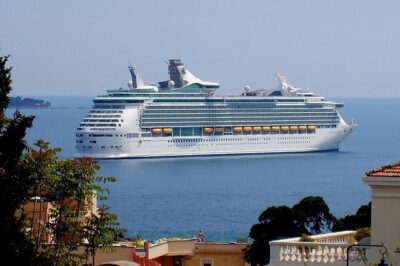
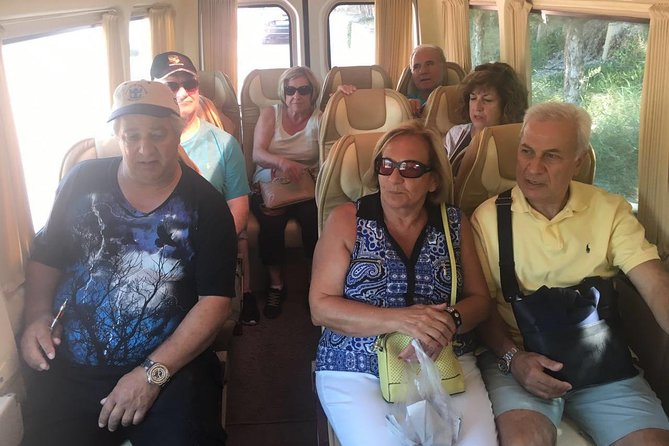
Kusadasi shore days live or die by timing. The good news here is the tour is designed around port reality: once your ship docks, you meet your guide and transfer by private car/van to Ephesus. You’ll get an English-speaking professional guide, and the vehicle is set up for comfort during the drive, which matters in hot weather.
Before you go, you’ll need to contact Achtypis Tours at least 48 hours ahead to confirm the exact pickup time and meeting details (the exact meet point comes on your voucher). Then you’ll reconfirm again 48 hours before departure. It’s a small step, but it’s the difference between “we found each other” and “we’re texting while your ship grows impatient.”
Also, the worry-free shore excursion guarantee is the kind of thing you hope you never need, but you’ll be glad it exists. The tour promises an on-time return to Kusadasi. If (unlikely) your ship leaves before you’re back, they arrange transport to your next port. And if your arrival back to Kusadasi is delayed, you get a refund as stated in the terms. For a port call where hours are tight, that safety net is real value.
One smart pattern many private tours use is avoiding the heaviest cruise-bus waves by taking sites in the order that works best for the day. In the experience, it’s been common to get to key spots early and keep queues short. That alone can change how you feel about Ephesus: you’ll actually be able to look, rather than just shuffle.
You can also read our reviews of more private tours in Kusadasi
Walking the Roman heart of Ephesus: Magnesia Gate to the Great Theater
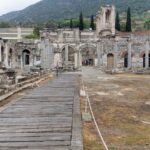
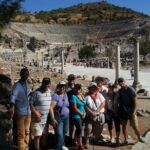
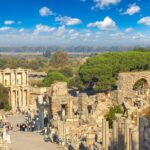
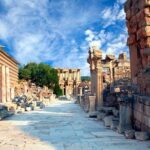
Ephesus isn’t one monument. It’s a whole city plan, and the best way to see it is with a guided route that keeps you oriented. You’ll enter through the Magnesia Gate and start a slow downhill walk through the ruins, with your guide pointing out what you’re seeing and why it mattered in Roman provincial life.
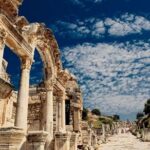
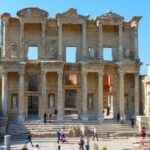
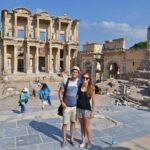
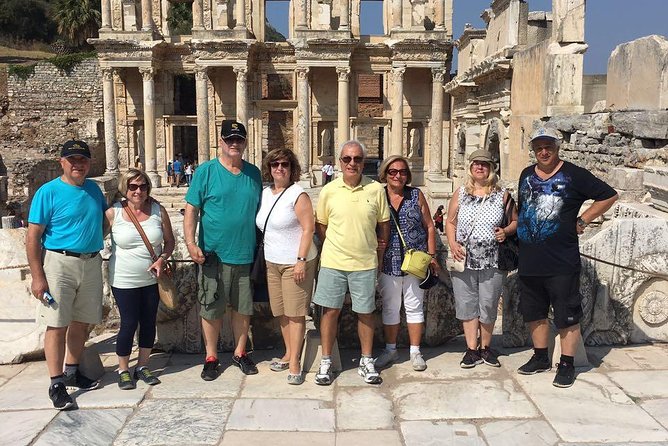
A classic stop sequence here includes the Odeon, the Temple of Hadrian, the Fountain of Trajan, and the Celsus Library area. The Celsus Library is one of those places where your brain goes quiet for a second. The façades and architectural details are so intact—or at least so readable—that you start imagining how people moved through the space.
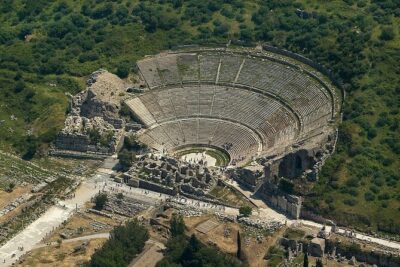
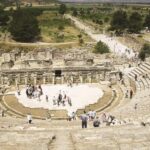
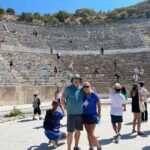
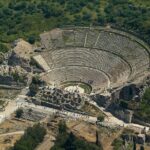
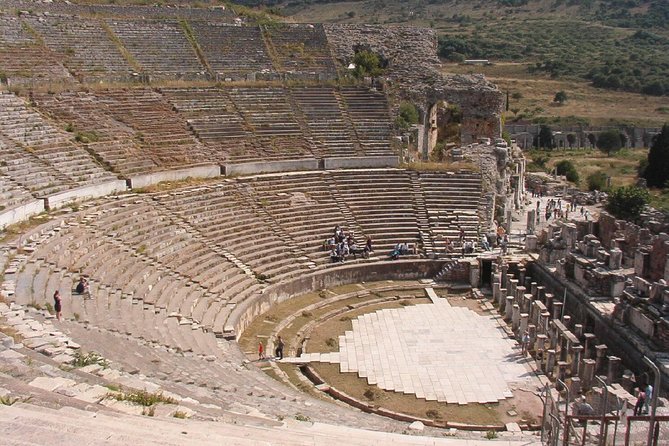
Then there’s the Great Theater, with seating for about 24,000 people. Your guide will also connect it to the early Christian story: it’s believed St. Paul preached to the Ephesians there. Today the theater can be used for local festivals, which gives the ruins a “still alive” feeling instead of just museum-stillness.
This part is about 1 hour 30 minutes, and it’s worth respecting that time. You’re not being asked to race. You’re being guided through the city’s most recognizable highlights, which works well on a shore day.
Two practical notes so you enjoy the walking:
- Wear good shoes. The terrain is uneven, and it’s downhill most of the way to the main sights.
- Plan for sun/heat. You’ll spend time outdoors, and summer can be intense.
Admission for the Ephesus sites isn’t included, so you’ll want to budget separately for tickets.
Meryemana (House of the Virgin Mary): short stop, big atmosphere
Next comes Meryemana, the House of the Virgin Mary. This is a small stop by time—about 20 minutes—but it has a different mood than the Roman stones of Ephesus. It’s also one of the most requested stops in the region.
Here’s what matters for your expectations: the experience presents Meryemana as the final resting place associated with the Virgin Mary, in the Solmissos Mountains area, and notes that a shrine dedicated to St. Mary was found after the house was discovered. Your guide will explain the discovery story, including the account connected to 19th-century visions published by a nun.
In practice, the house site can be crowded depending on the day. Even with that, it tends to feel more “quiet and personal” than the big ruins. If you want a moment that’s less about architecture and more about place and belief, this is where you get it.
If you’re the type who likes taking in atmosphere rather than collecting facts, this stop is exactly that. If you’re not a spiritual-sights person, you may still enjoy it because it breaks up the archaeological intensity and gives you a human scale after the huge theater and libraries.
Basilica of St John and the Temple of Artemis: two different kinds of wow
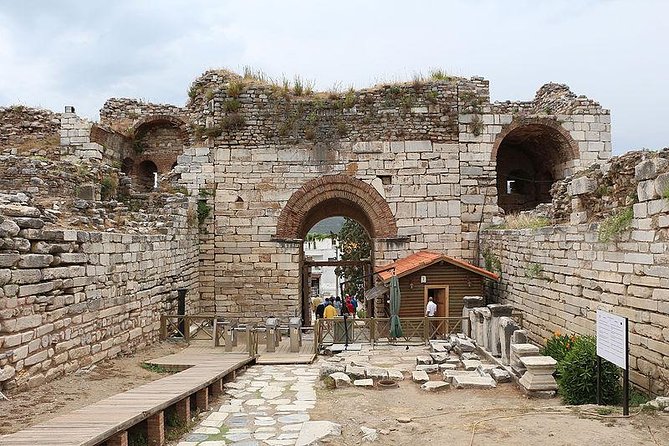
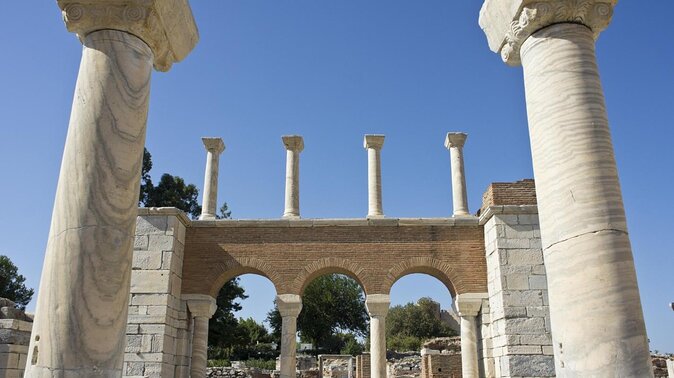
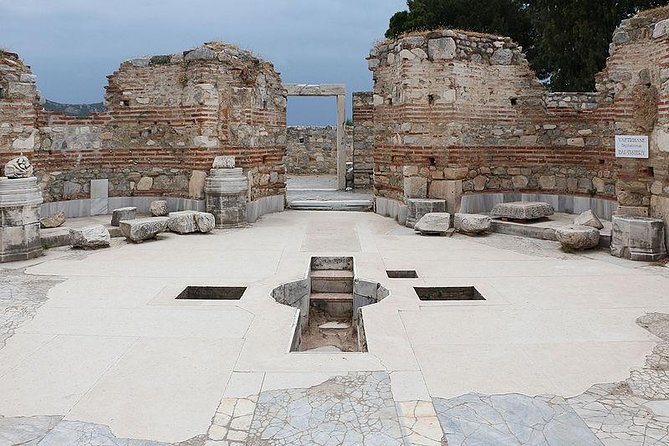
After Meryemana, the route moves to the Basilica of St John. This portion is about 30 minutes, and it’s a great “from sacred to cinematic ruins” moment. The basilica was built by Emperor Justinian over what’s believed to be St. John the Apostle’s tomb. Even though it’s now in ruins, the structure once rivaled St. Sophia in size—an impressive comparison that helps you understand how grand it was.
What you’ll see now includes the graceful columns and remnants of ancient mosaics. Your guide may point out details that help you read the scale, and you’ll often get a panorama view angle afterward, looking out over the rural Selçuk countryside. That “look back at the ruins from a distance” feeling is part of why basilicas don’t just feel like stone—they feel like a scene.
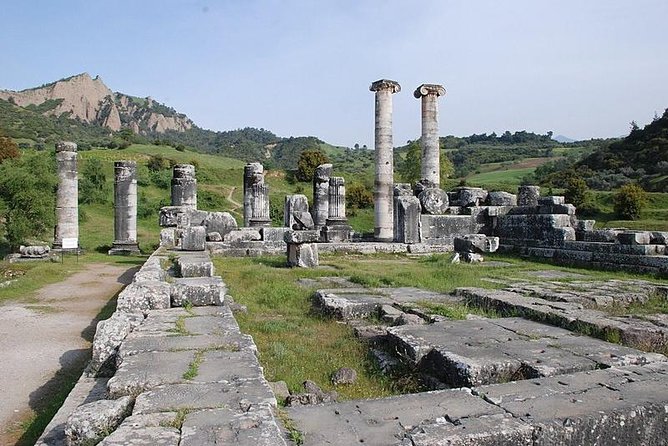
Then, later, you’ll head to the Temple of Artemis. This stop is about 15 minutes, and it’s fast on purpose. Artemis is famous for being one of the Seven Wonders of the Ancient World, but the reality is that what remains today is limited compared to what once stood here. Still, it’s worth the stop because it gives you a frame for what the ancient world meant by “monument.”
The guide context matters on this one. Without it, you could walk away thinking, “That’s it?” With it, you understand the significance of what used to be here and why the site drew power and wealth in its time.
Like Ephesus, admissions for these sights aren’t included.
Ephesus Museum: turning ruins into objects you can actually hold in your mind
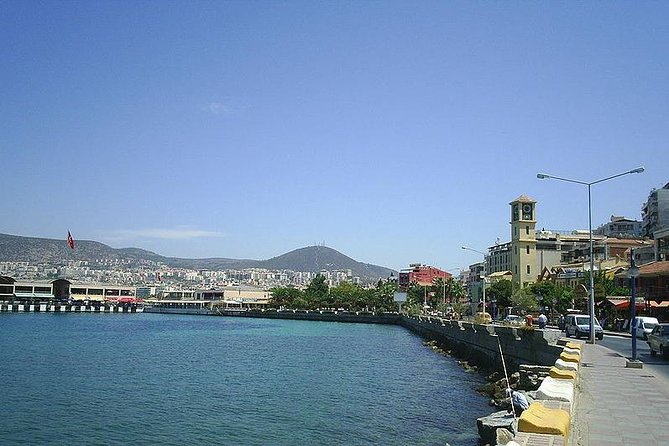
Most people leave Ephesus with photos of façades and columns. The Ephesus Museum gives you a different kind of connection. It’s the last stop before the return to Kusadasi.
Here’s what you can expect based on what the tour includes: you’ll see excavated items from Ephesus plus frescoes and mosaics. That’s important because mosaics in particular are one of those art forms that are hard to fully appreciate just by staring at scattered ruins. In the museum, you can understand technique and craftsmanship more clearly.
It also helps you end the day in a calmer way. Instead of one more outdoor walk, you get a place to sit, look closely, and let the day’s “big impressions” settle into something more specific.
A few more Kusadasi tours and experiences worth a look

Price and value: what you’re really paying for
At $438.51 per person, this is not a budget excursion. So you should ask one question: do you need a private tour on your shore day?
For many people, the answer is yes—because you’re buying:
- Private guide attention (not a group lecture you can’t ask questions in)
- Private vehicle (less hassle, more comfort)
- Port protection via the worry-free return guarantee
- A route built for limited time that still hits the key sights
A few reviews also point out how this can compare favorably to ship-bus pricing. I can’t promise that will happen every day, but the logic is sensible: cruise line tours are often packed and fixed, while a private setup can help you avoid the worst crowd bottlenecks.
What you’ll still pay separately:
- Admission tickets are not included
- Food and drinks are not included unless specified
So, treat the price as a package for logistics + guiding + transport comfort. Then budget modestly for entry tickets and lunch. If you plan a lunch on your own, you’ll likely have more flexibility than if you rely on whatever time the day allows.
The shopping stop question: rug or leather sales, and how to handle it
Let me be direct: some versions of the day may include a rug-making facility or other sales-related stop. This isn’t unusual in the region, and your driver/guide might frame it as part of local craft culture.
The problem is not the craft—it’s the pressure. Some guests describe feeling pushed to buy, with hard-sell tactics that made them uncomfortable. Others have said the presentation felt more like an informative visit, and they even enjoyed it.
If you book this tour, I suggest you set expectations before you go:
- Decide ahead of time if you’re willing to shop at all.
- If the sales pitch starts, be firm early. A polite no beats a “maybe” that turns into lingering persuasion.
- If you start to feel trapped in the process, you can ask for time to move on. You’re on a timed shore day—your schedule matters.
There’s also a softer version that can happen: some guests report a leather factory stop with an entertaining fashion-style demonstration. That still counts as a sales environment, but the tone may feel lighter than rug hard-sell.
Your best move: treat any shopping stop like a visit, not a test of willpower. You’re allowed to enjoy the craft talk and still leave empty-handed.
Who this tour fits best in Kusadasi
This is a strong choice if you:
- Want to see Ephesus plus Meryemana plus St John plus Artemis in one day
- Prefer private, small-group pacing over a crowd bus schedule
- Like learning from a guide and being able to ask questions
- Appreciate having transport handled so you’re not guessing how to get there and back
It’s also a good fit for families with older kids and teens, since Ephesus can work well as a “history in real size” experience. If you’re traveling with younger children, note that the tour is not recommended for kids age 4 and under and that children 18 and under must be accompanied by an adult.
One more practical check: you should have moderate physical fitness. The Ephesus section includes walking and uneven surfaces, plus a downhill route that still takes effort on return paths and museum time.
Should you book this private Ephesus shore excursion?
If your goal is a smooth, guided Ephesus day that includes the big spiritual stops and key landmarks, I think this tour makes sense. The private setup plus the worry-free return guarantee is exactly what you want when your ship schedule runs the show.
Book it if:
- You want a guided route that hits the core sights without turning your day into a maze
- You value comfort and timing more than you value cheapest price
- You’re okay with the possibility of a craft-sales stop and can handle a firm no
Skip or rethink it if:
- You hate shopping pressure and want zero chance of being pulled into sales mode
- You want a slow, in-depth archaeology day with lots of free roaming time (this is still a structured shore-day experience)
If you decide to go, go in prepared: sun protection, good shoes, and a clear mindset about shopping stops. Do that, and you’ll walk away feeling like your Kusadasi port day wasn’t just “time filler.” It was a real highlight.
FAQ
Are admission tickets included for Ephesus and the other sites?
No. The tour notes that admission tickets are not included for the main stops.
How long is the tour, and will I be back in time for the ship?
The duration is about 6 hours. It includes a worry-free guarantee focused on returning to Kusadasi on time, with arrangements made if your ship departs early.
Does the tour include food and drinks?
Food and drinks are not included unless specified.
What languages is the tour offered in?
The tour is offered in English.
How does pickup work in Kusadasi?
You must contact the local provider at least 48 hours before the tour to confirm the exact pickup time. The meeting point is provided on your confirmation voucher.
Is this a private tour or shared with other groups?
This is a private tour/activity. Only your group will participate.
Can I cancel for a full refund?
Yes. You can cancel up to 6 days in advance for a full refund, as long as you cancel at least 6 full days before the experience’s start time.