REVIEW · KUSADASI
Kusadasi Private tour from Cruise Port
Book on Viator →Operated by Neon Tours · Bookable on Viator
Cruise days get busy fast, so this tour is built for clarity. You get a local guide plus an air-conditioned ride, and you’ll pack in major sights around Kuşadası/Izmir and the Ephesus corridor. What I especially liked was the way guides bring the sites to life in short time blocks, and the fact that return timing feels taken seriously. One thing to watch: the exact route can shift with port logistics, so double-check which stops you’re actually visiting that day.
This is also one of those rare shore excursions where you’re not just dropped off at random points. I liked the mix of big-ticket history (like Ephesus and the Artemis area) with city texture (markets and Ottoman-era details), and I really valued the “we’ll get you back on time” attitude. The main drawback is that some parts of the day involve market walks where sales talk can get a little pushy, especially if rug or leather sellers spot you lingering.
In This Review
- Key highlights at a glance
- From Kuşadası Port to Historic Sites in 4 Hours
- Ephesus Ancient City: What You Can Really See
- Temple of Artemis and Selçuk: The Human Scale Behind the Wonder
- Izmir Highlights: Agora Strolls and the Konak Square Icon
- Museums, Markets, and Ottoman Details: Where the Day Gets Real
- Price and Value: What $100 Really Buys You
- Who Should Book This Kusadası Private Shore Tour
- Should You Book This Tour?
- FAQ
- What’s included in the tour price?
- How long is the tour?
- Is the Ephesus entrance fee included?
- What language is the tour offered in?
- Where does the tour start and what time?
- Is this tour private?
- What happens if a museum is closed?
Key highlights at a glance
- Private, small-group feel with undivided attention when the schedule allows
- Punctual port pickup and drop-off so you can breathe easy on cruise day
- World-class ruins you can realistically see in limited time, including Ephesus
- Izmir symbols like Konak Square’s clock tower and its famous four-fountain ring
- Professional guide storytelling, including memorable hosts such as Ihsan and Mehmet
- Safe return planning if your ship’s timing changes
From Kuşadası Port to Historic Sites in 4 Hours

Start at Kuşadası Port, meet your guide, and head out by air-conditioned vehicle. The whole concept is a half-day sprint with context, not a slow sightseeing day. You’re looking at roughly 4 hours total, with the clock guiding everything—good if you hate rushing, but you should still expect walking and some uneven stone at the ancient sites.
This tour is offered in English, and it’s private, meaning only your group is participating. That matters more than it sounds: your guide can adjust pacing, answer follow-up questions, and regroup if your group is moving at a different speed.
The other major factor is timing for cruise departure. The operator stresses an on-time return, and if the ship leaves before you get back, they’ll arrange transportation to your next port. If that fails due to a late arrival, you’re told your money is refunded under the terms. Practically, it means the guide’s job isn’t just history—it’s keeping you from getting stuck.
You can also read our reviews of more boat tours in Kusadasi

Ephesus Ancient City: What You Can Really See
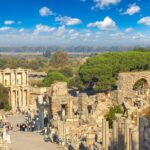
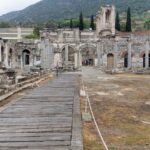
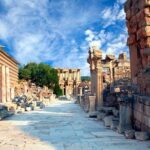
If your day includes Ephesus (many versions do), treat it like a highlight show of the city’s biggest themes: public life, power, and everyday commerce. In a short stop—about 2 hours—you’re not trying to see everything. You’re trying to see what makes Ephesus feel like a living Roman city.
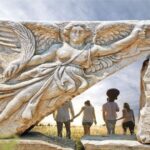
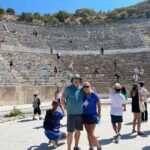
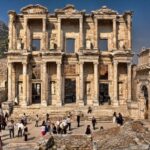
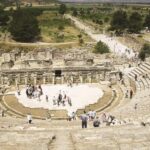
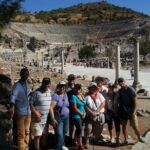
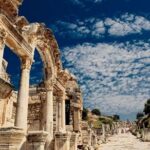
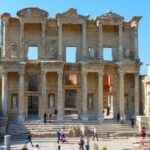
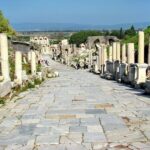
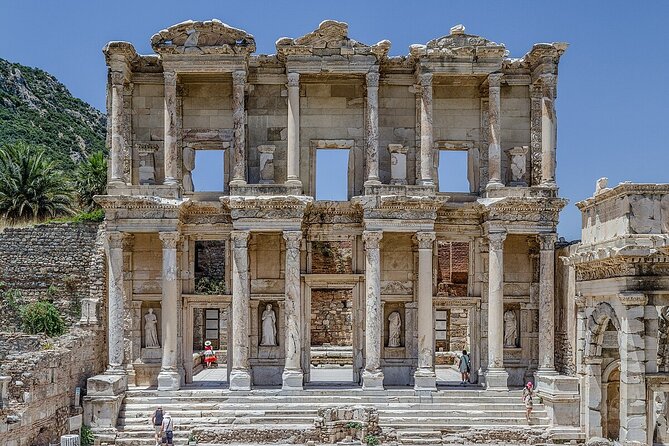
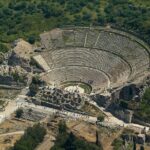
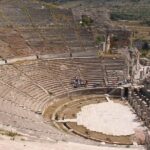
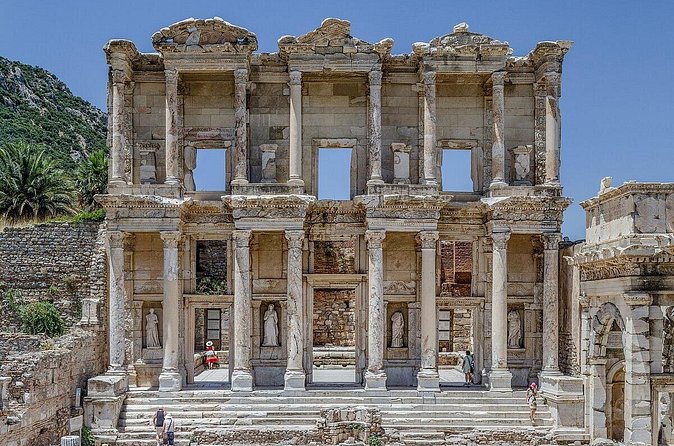
The landmarks you’ll likely focus on are the Library of Celsus, the Grand Theatre, the Temple of Hadrian, and the Marble Streets. Even if you’ve seen photos before, standing near these structures hits different. The scale is hard to photograph—columns, arches, and the street layout make you understand how people moved and gathered.
Here’s the value of doing Ephesus on a timed shore tour: your guide gives you the “why” behind what you’re looking at. Without that, you can wander and still enjoy the ruins, but you may miss the connections—how entertainment, religion, and civic pride all sit in the same urban pattern.
A small reality check: Ephesus entrance is not included. The listed entrance fee is $55 per person, and that can change your true all-in cost. Also, the sites have uneven surfaces, stairs, and long stone stretches. If your group has moderate mobility needs, plan for a slower pace and wear shoes you trust.
Temple of Artemis and Selçuk: The Human Scale Behind the Wonder

Near Selçuk, the Temple of Artemis site is a different kind of experience. You’re walking on remains, not a complete structure, but that’s exactly why it works on a half-day tour. Your guide helps you picture what the temple was: one of the Seven Wonders of the Ancient World and a statement of Greek religious and architectural ambition.
The stop is short—around 30 minutes—but it’s enough to connect the dots between stories you’ve heard and the actual location you’re standing in. You’ll want to look around for angles and sightlines rather than expecting a single perfect photo spot.
Then comes Selçuk itself, about an hour. This is where the day shifts from stone monuments to regular town life. Selçuk is described as the gateway area for Ephesus, and it shows: you can expect a calmer rhythm, with landmarks like the Basilica of St. John, the Temple of Artemis area, and the Isa Bey Mosque referenced as key points.
One thing I appreciate about this pairing is pacing. After Ephesus, your brain needs a reset. Selçuk offers that reset while still keeping you in the historical zone.
Izmir Highlights: Agora Strolls and the Konak Square Icon
Some days lean more toward Izmir proper, and you’ll feel that right away. Instead of spending most of the time in ruins, you shift to the city’s layered story—Roman leftovers, Ottoman-era details, and modern street life.
One of the first stops described for Izmir-focused routing is Agora, once a thriving Roman bazaar. Walking the remains gives you a sense of commerce and crowd movement. You can also admire the Corinthian columns and archways, which makes it easier to picture how the space worked at its peak.
From there, the tour may include the Archaeology Museum, with Roman and Greek artifacts. One standout mentioned is the gargantuan head linked to the statue of Domitian. Even if you’re not a museum person, this is the kind of artifact that makes you pause—big, strange, and instantly memorable.
Then you’ll head toward town for Ottoman architecture and modern Izmir symbolism. A key detail is a tower with four fountains around the base in a circular layout. After that, the tour moves to Konak Square, where the clock tower and its surrounding four-fountain icon are central to the city’s identity. If you want a fast way to understand why Izmir sells postcards the way it does, this is it.
Finally, you get a scenic look toward Alsancak district and Pasaport Quai along the waterfront before returning to the ship. That last stretch is underrated: it helps your brain stitch together what you saw earlier, rather than ending the day abruptly at the port.
Museums, Markets, and Ottoman Details: Where the Day Gets Real

The best tours don’t just list stops—they change your view of the places. On this one, the “real” texture often comes from how the guide mixes big history with street-level experiences.
For example, one review praised a guide’s sensitivity and even the chance to enter a small mosque and discuss traditions. That’s the kind of moment that can’t be replaced by another photo stop. It also helps you understand that these places are still part of daily life, not sealed-off museum scenery.
Markets can add another layer—especially if your guide times a walk well. But here’s the practical note: you may run into sales energy, including bantering from leather sellers during market walks, and on some days a rug demonstration scenario can happen where sales staff are slow to accept a no. If you’re not interested, keep moving and be direct early. You’ll enjoy the shopping atmosphere more if you treat it like a quick stroll, not a negotiation.
Also, bring expectations for museums. Some people love long explanations; others find date-heavy tours tiring. If your group prefers lighter, more story-based interpretation, tell your guide early and ask for more focus on what you’re seeing rather than every timeline detail.
You can also read our reviews of more private tours in Kusadasi

Price and Value: What $100 Really Buys You
At $100 per person, the big value is not a single artifact—it’s the whole package: port pickup and drop-off, a local guide, and an air-conditioned vehicle. Those three things add up fast if you tried to DIY it from the cruise port. Plus, the private format usually means your time is protected better than on a busier group tour.
The main cost add-on is entrance. The Ephesus entrance fee is listed as $55 per person and is not included. So your true base cost could jump depending on whether your route includes Ephesus that day. If you end up on an Izmir-forward loop instead, the entrance math may feel different—so don’t just do the mental calculation from the headline price. Ask your guide at pickup which paid sites are part of your day.
Food and drinks are not included. That doesn’t mean you’re stuck hungry. It just means you should plan for a coffee stop or a snack on the way if you tend to get hangry on sightseeing days. One person did mention enjoying Turkish coffee and a lunch at market cafes, which is exactly the kind of low-effort, local break that works during a half-day tour.
Who Should Book This Kusadası Private Shore Tour

This is a good match if you:
- Want a private shore excursion with a guide who can keep things moving without losing context
- Like guided history explanations but still want the schedule to fit a cruise day
- Prefer air-conditioned transport and a clear return plan
- Are comfortable with moderate walking and stone surfaces
It may be less ideal if:
- You dislike sales talk during market stops (decide in advance how you’ll handle it)
- Your group gets overwhelmed by museum time and lots of dates
- You’re traveling with very young children (it’s not recommended for kids 4 and under)
I also think this tour shines when your guide is a strong storyteller. Reviews specifically mentioned guides such as Ihsan and Mehmet, with praise for professionalism, careful group handling, and making the day feel secure. A good guide can turn “ruins are ruins” into “this place explains itself.”
Should You Book This Tour?
Yes—if you verify the day’s focus and you like the idea of a guided sprint. The price is fair for what’s included (pickup, vehicle, and a real guide), and the “we’ll get you back to the ship” emphasis is exactly what cruise passengers need.
But make your decision with one key checklist:
- Confirm whether your day is Ephesus/Selçuk-focused or more Izmir-city-focused (or a mix). The presence of the Ephesus entrance fee means the route affects the real cost.
- Go into markets with a plan for sales pressure. If you want souvenirs, browse. If you don’t, keep it quick.
- Wear solid walking shoes and expect some uneven stone, especially if Ephesus is on the schedule.
If you do those three things, you’ll come away with a smart overview of the region—Roman grandeur, Greek religious legend, and Ottoman-to-modern Izmir street identity—without sacrificing your cruise departure.
FAQ
What’s included in the tour price?
Port pickup and drop-off, a local guide, and an air-conditioned vehicle are included. Entrance fees and food/drinks are not included unless specifically noted.
How long is the tour?
It’s listed as about 4 hours.
Is the Ephesus entrance fee included?
No. The entrance fee for Ephesus is listed separately as $55 per person.
What language is the tour offered in?
The tour is offered in English.
Where does the tour start and what time?
It starts at Kuşadası Port (Camikebir, Feribot Limanı) and begins at 9:00 am.
Is this tour private?
Yes. It’s private, meaning only your group participates.
What happens if a museum is closed?
The information says that if any museums close, the operator will visit an alternative similar museum.