REVIEW · KUSADASI
From Cruise port: Private Ephesus Shore Excursion
Book on GetYourGuide →Operated by Ephesus Tour Company · Bookable on GetYourGuide
Ephesus in five hours is doable. This private Kusadasi shore outing takes you to the Library of Celsus and the House of the Virgin Mary with a live guide, air-conditioned van comfort, and port pickup with a sign. The only real catch is the walking—this route is not set up for wheelchair users or people with mobility impairments.
I like how the pace is structured: a focused visit to Ephesus plus a couple of spiritually important stops nearby, all with time built in for photo moments. You also get a licensed guide in Spanish or English, and that matters when the ruins start blurring together.
One more planning note: the $100 price covers guide, transport, and parking, but not entrance fees or food—so you will want to budget for tickets and a snack.
In This Review
- Key things to know before you go
- Kusadasi pickup and the value of a true private van
- House of the Virgin Mary: a guided 45 minutes with context
- Ephesus ruins: Great Theater, Marble Street, and the chariot-wheel marks
- Library of Celsus: why the restored facade is worth aiming at
- Terraced Houses and the everyday side of Roman life
- Temple of Hadrian, Roman Baths, and how to spot the city layout
- St John’s Basilica: short visit, strong meaning
- Ephesus Museum note: themed rooms you might see on the route
- Price and logistics: what $100 really covers
- Who should book this Ephesus shore excursion
- Tips to make your day smoother (and less sweaty)
- Should you book this Private Ephesus Shore Excursion?
- FAQ
- How long is the private Ephesus shore excursion?
- Where does the tour pickup happen?
- What are the main stops on the itinerary?
- Are entrance fees included in the $100 price?
- Is food and drink included?
- What type of transportation is provided?
- Does the tour include skipping ticket lines?
- What languages are available for the live tour guide?
- Is the tour suitable for wheelchair users or mobility impairments?
Key things to know before you go
- Port pickup with your name sign: you meet your guide at the arrival gate in Kusadasi.
- Skip-the-ticket-line: you lose less time to queues at the big sites.
- Terraced Houses as a Roman life window: the houses are built on terraces with a Hippodamian grid plan.
- Library of Celsus photo stop: the restored facade makes a great anchor point for your visit.
- St John’s Basilica is brief but purposeful: a short guided stop tied to the traditional burial area.
- Bring sunhat and camera: you are outdoors for most of the day.
Kusadasi pickup and the value of a true private van
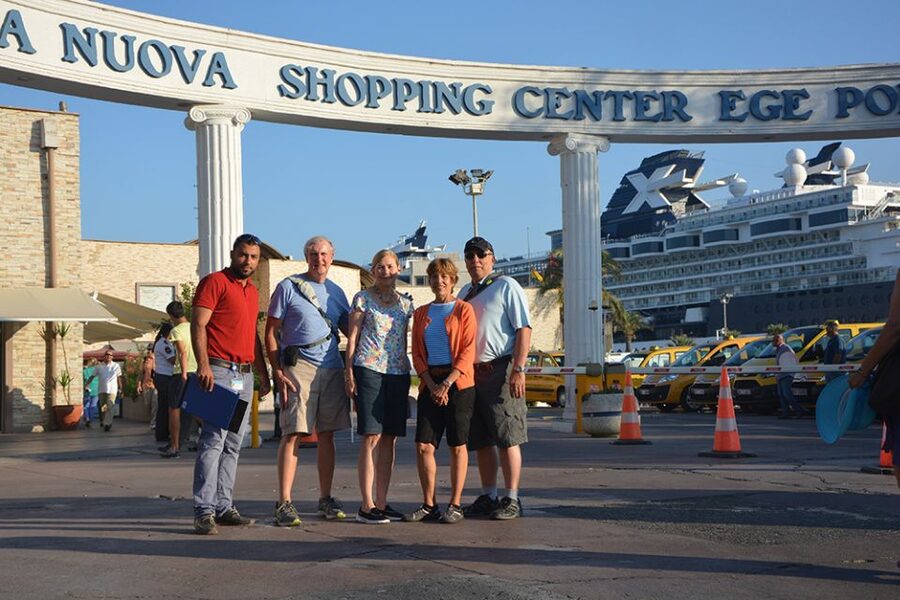
This is a shore excursion built for cruise-day timing: pickup is in Kuşadası, and your guide meets you at the arrival gate holding a sign with your name. That simple detail saves stress. You are not hunting for a group and hoping the schedule matches your ship’s clock.
Transport is in an air-conditioned luxury van, with parking fees handled. For a 5-hour outing, that matters because you are trying to cover multiple “must-see” stops without feeling like you’re living on foot from morning to night.
The big value here is the private format. Instead of joining a loud parade, you get a live guide and a custom-feeling route—especially helpful when you want extra time for the Library of Celsus facade or you’d rather move briskly through the less-prioritized areas.
You can also read our reviews of more boat tours in Kusadasi

House of the Virgin Mary: a guided 45 minutes with context
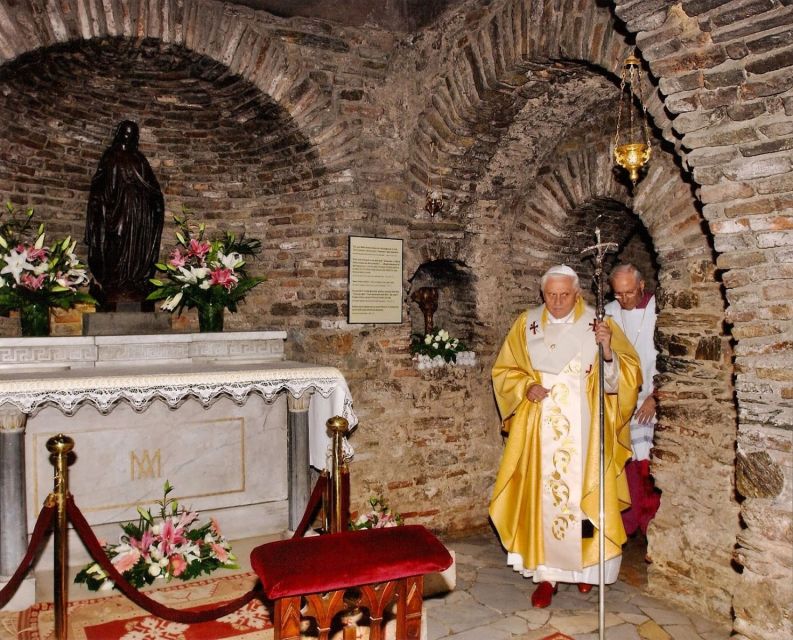
The day starts with the House of the Virgin Mary, with about 45 minutes of guided time. This stop is different from the Roman and Greek ruins. It’s a Christian tradition site tied to the idea that Mary came to Ephesus after the resurrection and spent her final days there.
The church at the site was erected on the foundation of that house, and the authenticity is described as confirmed by Pope Paul VI and Pope John Paul II. That background helps you read the place beyond just the setting. You understand why people come here with a certain kind of attention.
Practical tip: this is still part of an outdoor itinerary, so comfortable shoes and a sunhat are not optional. If you’re sensitive to heat, plan to hydrate early after pickup so you are not scrambling later.
Ephesus ruins: Great Theater, Marble Street, and the chariot-wheel marks
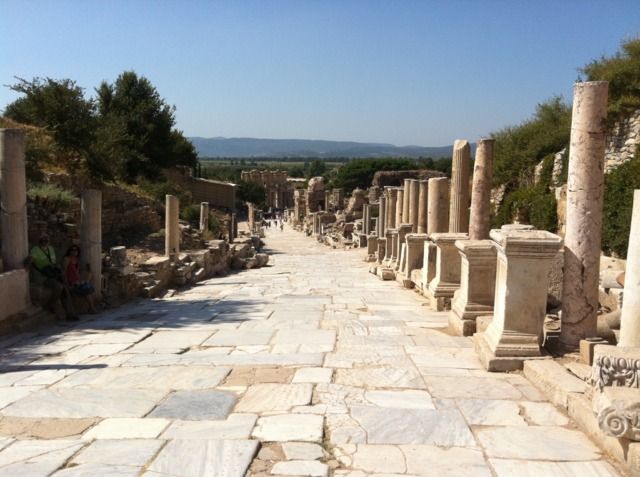
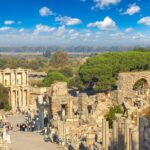
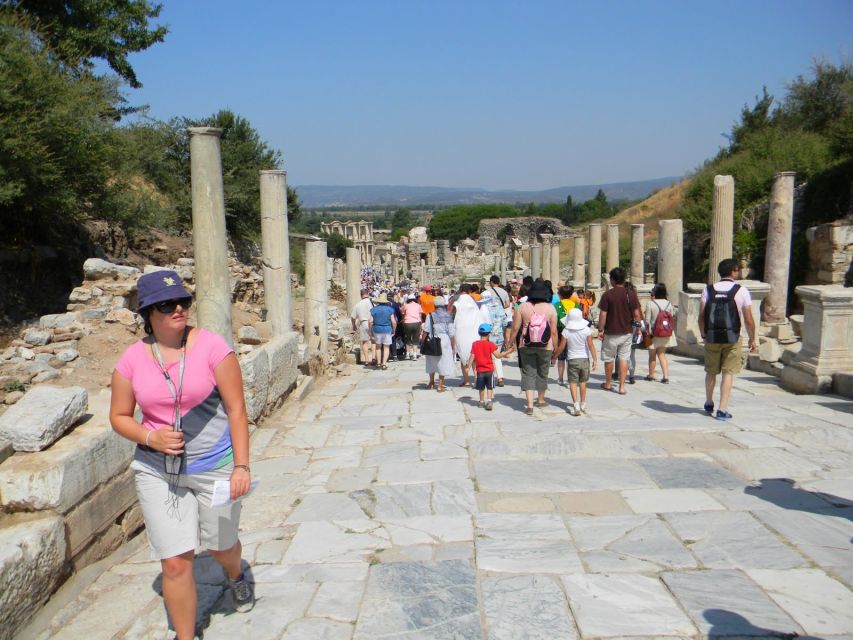
You get roughly two hours in Ephesus with guided touring and a photo stop. Ephesus is framed as one of the best-preserved classical city sites in the Eastern Mediterranean, and the way it’s described here makes you understand the scale fast: more than 30 buildings and structures connected by streets that still show ancient chariot wheel marks.
Ephesus doesn’t feel like one monument. It feels like a functioning city layout. That’s why the guided component helps: you’re not only seeing famous structures; you’re walking the streets that link them.
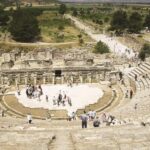
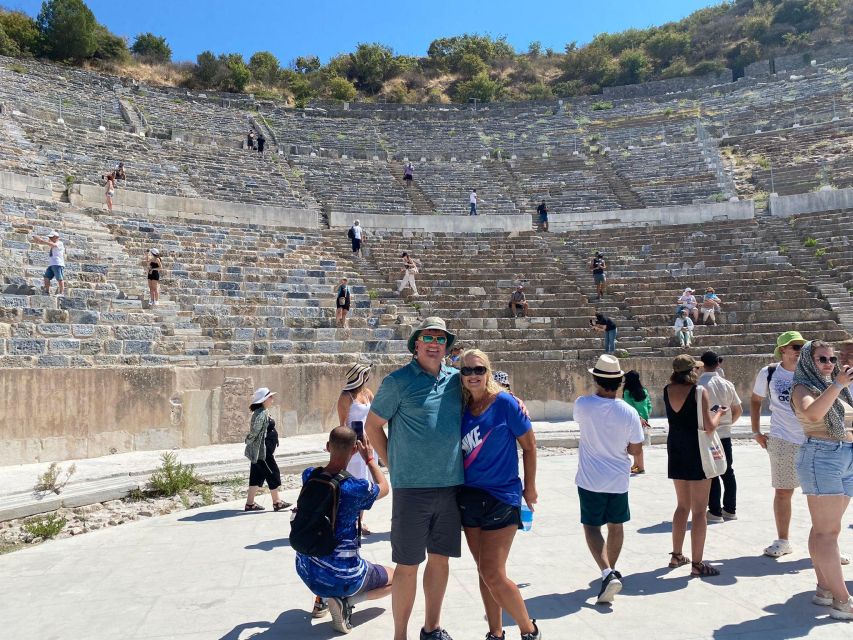
Your guide will point out highlights like the Great Theater, where St. Paul preached against pagans and gladiators once fought. It’s also tied into the Christian story, since John the Apostle is part of the region’s wider tradition. If you like making the past more human, this kind of commentary is exactly what you want in a limited-time shore excursion.
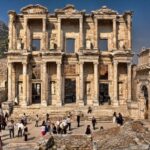
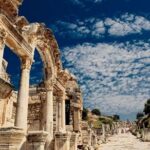
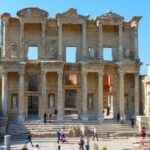
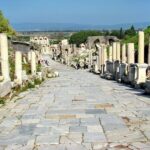
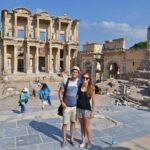
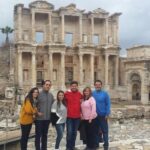
And then there’s Marble Street, leading you toward the restored facade of the Library of Celsus. If you’ve ever felt underwhelmed by “facades,” trust this: the restoration detail is strong enough that you’ll likely want multiple photos from slightly different angles.
Library of Celsus: why the restored facade is worth aiming at
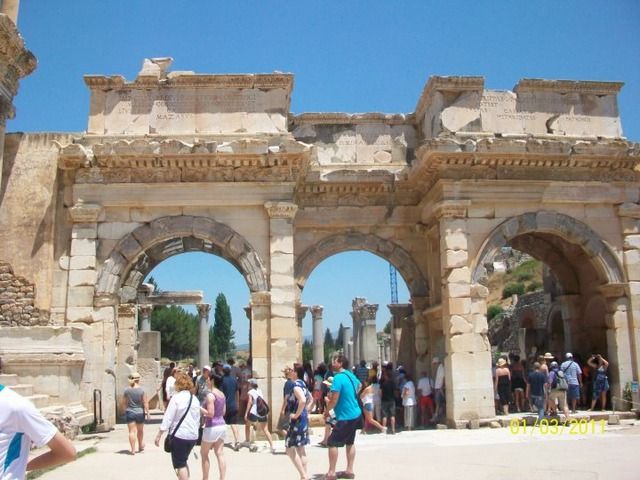
The Library of Celsus is one of those places where timing and focus pay off. You’re walking through ruins, and then suddenly you get this clean, recognizable front—made even more striking by the fact it’s been remarkably restored.
What I like about this stop is that it gives you a visual anchor. Even if the rest of Ephesus feels like you’re chasing fragments, the Library gives you a baseline for remembering where you are in the city layout.
Also, this is where skip-the-line becomes real value. You don’t want to burn precious Ephesus time standing at ticket checks. In practice, “skip the ticket line” is less about convenience and more about protecting your route.
If you’re a photo person, bring your camera ready. The Library area is where you’ll want to slow down and get a crisp shot before the day continues.
Terraced Houses and the everyday side of Roman life
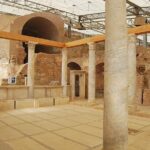
The Terraced Houses are often where Ephesus goes from impressive to personal. These are described as the houses of the rich, built for family life in the Roman period.
The details matter. They were constructed following the Hippodamian plan, with roads running at right angles. On Bulbul Mountain’s slope, there are six residential units spread across three terraces at the lower end. Even the timeline is the kind of thing you don’t forget once you hear it: the oldest building dates back to the 1st century BC and stayed in use as a residence until the 7th century AD.
This stop is valuable because it breaks the pattern of seeing only temples and theaters. You get daily-life texture—space planning, how wealth was organized, and what “home” meant in a city that also held gladiators and sermons.
If you prefer practical history over big names, Terraced Houses are a great match. If you want nonstop spectacle, you might find it a bit more “read the layout” than “take a dramatic photo,” but that’s exactly why it’s memorable.
You can also read our reviews of more private tours in Kusadasi


Temple of Hadrian, Roman Baths, and how to spot the city layout
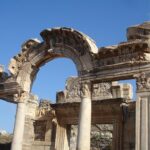
Within Ephesus, your guide’s route typically includes stops such as the Temple of Hadrian and Roman baths. These might not be as instantly recognizable as the Library facade, but they help you understand the city’s rhythm.
Think of it this way: big landmarks tell you what mattered. Secondary structures tell you how people moved through their day. Temples and civic buildings create the “headline” view, while baths and related areas give you the everyday infrastructure behind it.
Ephesus is also described as having several notable buildings and linked streets, and the guide will help you connect the dots so you’re not just wandering. When time is tight, structure is the difference between seeing a lot and actually understanding what you saw.
One more possible add-on, depending on how the day runs: you might also see the Temple of Artemis site. Today it’s mostly columns and scattered ruins, but the point is that what you see is the remainder of something once bigger than the Parthenon in scale.
St John’s Basilica: short visit, strong meaning
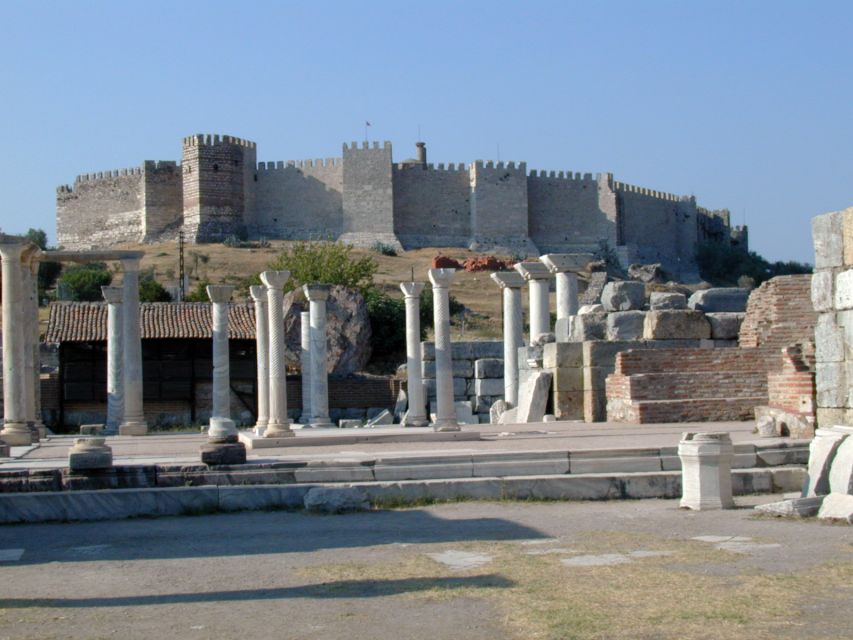
After Ephesus, you can expect a guided stop at the Basilica of St John (about 25 minutes). This is tied to the tradition that St. John spent his last years around Ephesus and was buried on the southern slope of Ayosolug Hill.
Here’s the key story thread: three hundred years after his death, a small chapel was constructed over the grave. Later, during Emperor Justinian’s reign (527 to 565 AD), it was changed into a basilica.
A short stop sounds quick, but it works on a shore excursion. You get the meaning without the fatigue of a long museum-style pace. If you’re traveling with mixed interests—some people want ancient sites, others want spiritual context—this stop helps satisfy both.
Ephesus Museum note: themed rooms you might see on the route
The Ephesus Museum is described as different from many museums because it is not chronological. Instead, it’s organized by themed rooms such as the House Findings Room, Hall of the Fountain Relics, Hall of the Funerary Relics, and Hall of Artemis.
You might find this museum approach more engaging than a straight timeline, especially if you like thinking about artifacts in categories that reflect how people lived and what they valued. That said, the exact museum time is not guaranteed from the information you have here, so treat it as something your guide could work in if the day’s schedule allows.
If a museum is a must for you, ask your guide at the start of the day what’s feasible within the 5-hour window.
Price and logistics: what $100 really covers
At $100 per person for a 5-hour private shore excursion, the cost is best viewed as paying for time, expertise, and transport—not ticket budgets.
Included:
- Professional licensed tour guide
- Air-conditioned luxury van
- Parking fees
- Pickup at the Kusadası cruise port with a name sign
- Skip-the-ticket-line
Not included:
- Entrance fees
- Food and drink
- Personal expenses
So the financial value depends on one thing: how many paid sites you plan to enter. Since entrance fees are excluded, you’ll want to set aside extra money for tickets before your day starts. In return, you are protecting your time by skipping some lineups and getting guided context that turns scattered ruins into a connected walk.
Also, remember the tour is not suitable for wheelchair users or people with mobility impairments. This isn’t a “chair and bus” experience. It’s built around walking ancient ground.
Who should book this Ephesus shore excursion
This tour fits best if you want:
- a private experience without the crowd-chaos
- a guided route that links sites together by theme and story
- a one-day hit of Ephesus highlights plus Mary and St John’s related stops
- Spanish or English live guidance rather than guessing your way around
It’s especially practical for first-timers. Ephesus can be overwhelming if you only have a brochure. With a guide, you get signposts like Marble Street, the Library of Celsus facade, and the city-linked connections that make it feel like a real place instead of a collection of ruins.
If your priority is maximum “hands-on” time in every single structure, you might wish for a longer tour. But with only five hours, this itinerary targets the places most people want to see plus the stops that add spiritual and domestic context.
Tips to make your day smoother (and less sweaty)
First, wear comfortable walking shoes. The tour is not described as wheelchair-friendly, so assume uneven paths and lots of footwork.
Bring a camera and a sunhat. You are outdoors for the main Ephesus block and also for the Virgin Mary and St John’s stops. If you get heat-tired easily, your best move is to plan hydration early and sip regularly instead of trying to catch up later.
Plan mentally for a “structured walking day.” Two hours in Ephesus can sound long, but once you include photo stops and guided explanations, it moves fast. If there’s one thing you care most about—Library of Celsus photos, Terraced Houses, or the theater area—tell your guide at the start so they can help you prioritize within the time.
Should you book this Private Ephesus Shore Excursion?
I’d book it if you want a guided, time-protected way to see Ephesus while also getting the House of the Virgin Mary and St John’s Basilica. The included guide, private transport, and skip-the-line value make a difference when you’re on cruise time and don’t want to trade comfort for wasted minutes.
I would skip it (or look for a different format) if mobility is a concern, because this tour is not suitable for wheelchair users and involves lots of walking. I’d also think twice if entrance fees and any meals out of pocket would be a stretch, since those are not included in the $100 price.
If you’re aiming for a classic first pass through Ephesus with strong context and minimal stress, this is a solid choice—and getting a guide who can work in Spanish or English helps you take more from every stop.
FAQ
How long is the private Ephesus shore excursion?
The duration is 5 hours.
Where does the tour pickup happen?
Pickup is included from the Kusadası Cruise Port. Your guide meets you at the arrival gate holding a sign with your name.
What are the main stops on the itinerary?
The tour includes the House of the Virgin Mary, Ephesus, and the Basilica of Saint John.
Are entrance fees included in the $100 price?
No. Entrance fees are not included.
Is food and drink included?
No. Food and drink are not included.
What type of transportation is provided?
You ride in an air-conditioned luxury van, and parking fees are included.
Does the tour include skipping ticket lines?
Yes, it includes skip-the-ticket-line.
What languages are available for the live tour guide?
Live tour guidance is available in Spanish and English.
Is the tour suitable for wheelchair users or mobility impairments?
No. It is not suitable for people with mobility impairments or wheelchair users.