REVIEW · THESSALONIKI
Thessaloniki Jewish Sightseeing Private Tour, Shore Excursion
Book on Viator →Operated by Hello Thessaloniki · Bookable on Viator
A half day can tell a lot. This private Thessaloniki shore excursion strings together major Jewish sites and the surrounding city landmarks, with an English-speaking guide and a comfortable ride so you don’t waste time hunting details. I like that it centers on lived history, not just sightseeing, and I like that you can ask questions while you move.
What makes it especially satisfying is the way the route feels both focused and humane: you visit the Holocaust Memorial and then head toward places tied to synagogue life and community memory, all within a short window. In the reviews I’ve read closely, guides like Margarita and Maria stand out for professional, friendly English and for answering questions clearly, with drivers like Catalina and Katrina helping the whole thing run smoothly.
One thing to consider: part of the core experience is ticketed on your own at two stops (the Jewish Museum and the White Tower), so you’ll want to budget a little extra if you plan to go inside both.
In This Review
- Key highlights to know before you go
- A Jewish-Themed Shore Excursion in Half a Day
- Pickup, Private Van, and a Guide Who Can Answer Questions
- Holocaust Memorial: The City Center Starts with Commemoration
- Monastiriotes Synagogue: How One Survived When Others Didn’t
- Villa Allatini and Agia Sofia: When Thessaloniki Layers Faith Over Time
- Casa Bianca (Villa Fernandez): A Sephardi Merchant’s House Under Occupation
- Villa Joseph Modiano: An Eclectic Mansion Turned Museum
- Villa Ahmed Kapandji: Sephardi Brothers, Civic Power, and an Art-Era Home
- Yad Lezicaron and the Cemetery Site: Memory Mapped onto the Present
- Aristotelous Square: The City’s Open Space as a Meeting Point
- Jewish Museum and the White Tower: Two Ticketed Stops to Plan For
- Greek Agora, Roman Forum, and the Old Train Station: Closing with the Hard Truth
- Price and Value: What $331.22 Buys You
- Who This Tour Suits Best
- Should You Book Thessaloniki’s Jewish Private Tour?
- FAQ
- FAQ
- How long is the Thessaloniki Jewish sightseeing private tour shore excursion?
- Does the tour include pickup?
- Are the Jewish Museum and the White Tower entrance fees included?
- Is this a private tour?
- What’s included in the price?
- Is there a cancellation policy and weather condition?
Key highlights to know before you go
- Private, dock-timed flexibility that helps a shore excursion feel calm instead of rushed
- Synagogue-focused stops, including Monastiriotes Synagogue, Thessaloniki’s best-preserved pre–World War II synagogue
- A guided memory trail, from commemoration to everyday Jewish community sites and key wartime locations
- Comfort upgrades like an air-conditioned vehicle, bottled water, WiFi on board, and onboard coffee or tea
- Paid museum time is optional but worth planning for the Jewish Museum and the White Tower
A Jewish-Themed Shore Excursion in Half a Day
Thessaloniki moves fast. But this tour gives you a way to slow down without getting stuck waiting around. In about 3 to 4 hours, you hit a sequence of meaningful locations that trace Jewish life, loss, and remembrance alongside major city landmarks.
You’re not just collecting photos. You’re seeing how the Jewish story sits inside the wider Thessaloniki story. That matters because it helps you understand the city as a place that kept going through centuries, not as a static postcard.
The private setup helps too. You’re not sharing tight sidewalks with strangers. You’re with your group only, in one vehicle, with an English guide who can pace the stops to match your questions.
You can also read our reviews of more tours and experiences in Thessaloniki.
Pickup, Private Van, and a Guide Who Can Answer Questions
Logistics can make or break a shore excursion. What I like here is that you have pickup offered, and the experience is designed around a clear start time. Reviews also mention people being met promptly right at the dock and heading out with minimal delay.
Inside, you get the practical stuff:
- Air-conditioned vehicle
- Bottled water
- Coffee and/or tea
- WiFi on board
- Mobile ticket
And then there’s the human factor. Guides named in reviews—Margarita and Maria—are repeatedly described as professional, friendly, and fluent in English. Drivers mentioned include Catalina and Katrina, also described as great partners to the guide. That pairing matters because it keeps the timing smooth as you move between sites.
If you’re the type who likes to ask why a place matters, you’ll appreciate that the guide’s role isn’t just narration. It’s also answering questions as you stand in front of what you’re learning about.
Holocaust Memorial: The City Center Starts with Commemoration
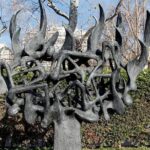
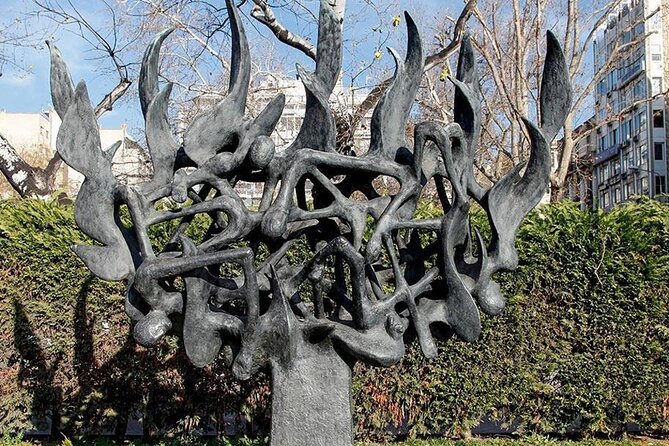
Your tour opens at the Holocaust Memorial in Thessaloniki. It commemorates the city’s murdered Jews, including the reality that only a few hundred members of what had once been one of Greece’s largest Jewish communities returned home after deportations to Auschwitz-Birkenau in 1943.
This stop is brief—about 10 minutes—but it’s a strong “set the tone” moment. I like how it anchors the tour in remembrance right from the start. It prevents the rest of the day from feeling like a sightseeing checklist.
Practical tip: since this is a central stop, you’ll likely want to keep your camera ready, but also take a few seconds to actually read in place if there are plaques or text. The point here isn’t to rush past the emotion—it’s to let it frame everything that comes after.
Monastiriotes Synagogue: How One Survived When Others Didn’t
Next is Monastiriotes Synagogue, described as the most important of Thessaloniki’s existent synagogues and the only one that survived from the pre–World War II era. It’s not just a museum piece. It functions as a cult’s place for the Jewish community as well.
You’ll also learn how the synagogue ties to specific people and migration patterns. It was established in 1925, with construction running until 1927. The name Monastiriotes comes from the fact that many contributing families came from Monastery (today Bitola), after leaving due to the Balkan Wars and World War I.
This is one of those stops where you feel the difference between architecture as style and architecture as community. You’re seeing how a place of worship can also act like a historical record.
A small drawback: because it’s a working community site, you may need to follow the guide’s pacing and any instructions you’re given on the spot.
Villa Allatini and Agia Sofia: When Thessaloniki Layers Faith Over Time
After the synagogue, the tour shifts through major landmarks that show how Thessaloniki reuses and reshapes sacred spaces across eras. One key stop is Villa Allatini, tied in the description to Agia Sofia (Agia Sophia), a domed basilica built over earlier ruins.
You’ll hear the long timeline:
- Construction began in the 7th century AD, with modifications over time
- During the Ottoman Empire, it became a mosque
- A fire in 1890 affected it, and holy service resumed in 1913
- Visitors can observe impressive pictures and carved decorations from the 8th, 9th, and 11th centuries
What I like about including this here is the contrast. Jewish community life isn’t happening in a vacuum. The city’s religious landscape has changed hands and purposes repeatedly. Seeing Agia Sofia in the middle of a Jewish-focused day gives you a fuller sense of how Thessaloniki’s history is physically layered.
Casa Bianca (Villa Fernandez): A Sephardi Merchant’s House Under Occupation
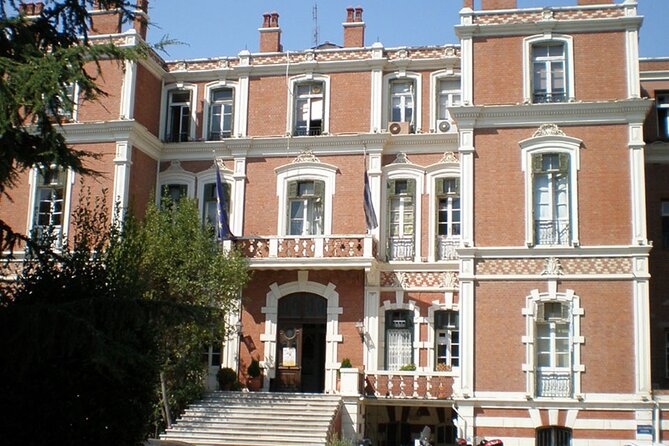
Casa Bianca—also known as Villa Fernandez or Villa Fernandez—is a mansion that connects architecture to the story of Sephardi Jews in Thessaloniki. The building was constructed between 1911 and 1913 for Dino Fernandez Diaz and family, designed by Pietro Arrigoni.
In the narrative you’ll hear, the story doesn’t end with wealth and design. The villa was confiscated and used by Germans during the Axis occupation of Greece. To escape Nazi persecution, Dino Fernandez Diaz fled to Italy with family members—then in 1943, the family was murdered by German SS near Como Lake.
This stop is short, but it’s powerful because it shows how the Holocaust wasn’t just a concept. It reached into homes, property, and everyday life.
If you’re sensitive to heavy topics, pace yourself here. Take a breath before moving on, especially since later stops continue the thread of deportation and memory.
Villa Joseph Modiano: An Eclectic Mansion Turned Museum
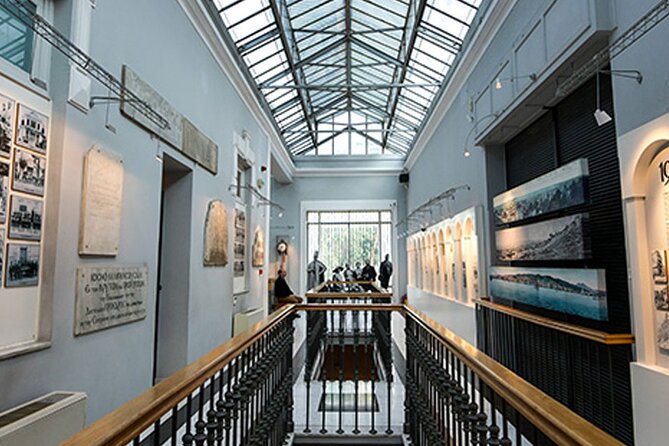
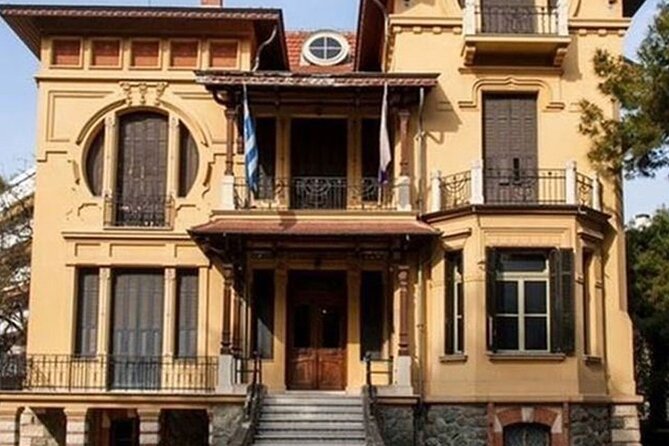
You’ll then visit Villa Joseph Modiano, built around 1905–1906 as a residence for banker Yiako Modiano. It’s also called the old Governor’s Residence because it hosted the commander of Macedonia and later the minister of Northern Greece.
Architecturally, it’s described as eclectic with Art Nouveau elements. Politically and institutionally, it changed hands over time:
- Bought by the Greek Government in 1913
- Used by the Army Medical School in 1947
- Used by the Priest School in the early 1960s
- Later used by the Ministry of Northern Greece
- Today, it houses the Folklife and Ethnological Museum of Macedonia
I like how this stop rounds out the day. You get to see that Jewish heritage in Thessaloniki isn’t only about loss. It’s also about people shaping civic life, commerce, and institutions—then later, how buildings are repurposed so the city can keep telling its story.
Villa Ahmed Kapandji: Sephardi Brothers, Civic Power, and an Art-Era Home
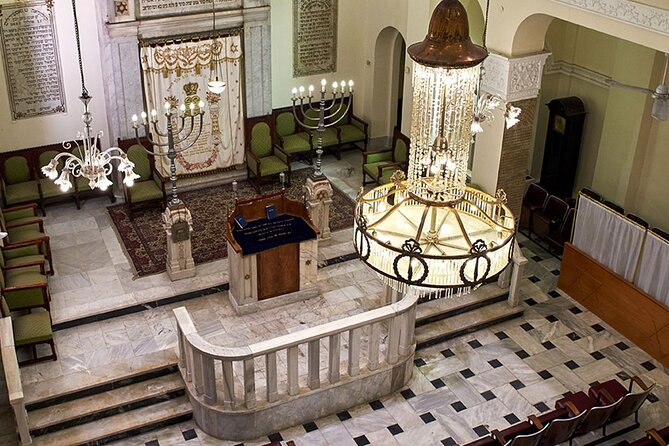
Villa Ahmed Kapandji is another standout mansion stop, built at the end of the 19th century (1890). The architect is listed as Piero Arrigoni, designed for Mehmet Kapantzi.
There are actually two mansions bearing the name Villa Kapantzi in Thessaloniki, designed for two brothers: Ahmet and Mehmet Kapantzi. The descriptions in the route highlight that they and their ancestors were Sephardic Jews, deported from Spain as far back as the late 15th century.
What makes this stop feel grounded is the civic detail:
- Mehmet Kapantzi served as president of the Thessaloniki Chamber of Commerce
- Ahmet Kapantzi was mayor of Thessaloniki in 1907–1908
- The villa is described as a luxurious three-storeyed residence in eclectic style
Today, the oldest mansion is part of the cultural center of the National Bank of Greece.
If you like architecture, you’ll probably enjoy how the style signals status without being the only story. Here, you learn who funded and shaped community influence—and how that influence sits inside broader Thessaloniki history.
Yad Lezicaron and the Cemetery Site: Memory Mapped onto the Present
The tour includes Yad Lezicaron Synagogue, connected to the old Jewish cemetery of Thessaloniki. The cemetery was located where Aristotle University of Thessaloniki stands today, and it included over 400,000 graves.
This is one of those stops where the physical setting forces a reality check. History didn’t disappear. It was covered over, repurposed, and rebuilt—yet a site like this keeps the memory alive.
Because the duration here is short, you may want to slow down mentally and let the scale sink in. Over 400,000 graves is a number that’s hard to picture until you’re standing near the place where it once existed.
Aristotelous Square: The City’s Open Space as a Meeting Point
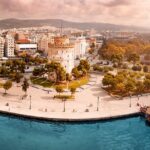
Aristotelous Square is next, and it’s a contrast in tone. After the city’s tragic wartime reality, you get a central public space shaped by the redesign after the 1917 fire.
You’ll hear about Ernest Hébrard, the French architect assigned to redesign the city center, and how he placed Aristotelous Square at the heart of the plan due to its historical significance. The square is described as:
- The point where sea meets land in the city’s most central spot
- A rare large open space in the center
- A place for events, meetings, recreation, and promenade
- A preplanned architectural design with an orientation that offers views toward Mount Olympus
I like including this because it helps you see Thessaloniki as it is now: a city where people still gather. It makes the memorial and museum stops feel part of a living city rather than a sealed chapter.
Jewish Museum and the White Tower: Two Ticketed Stops to Plan For
The tour includes time for the Jewish Museum of Thessaloniki and the White Tower, but tickets are not included for either.
- Jewish Museum of Thessaloniki: admission not included (listed as €8.00 per person)
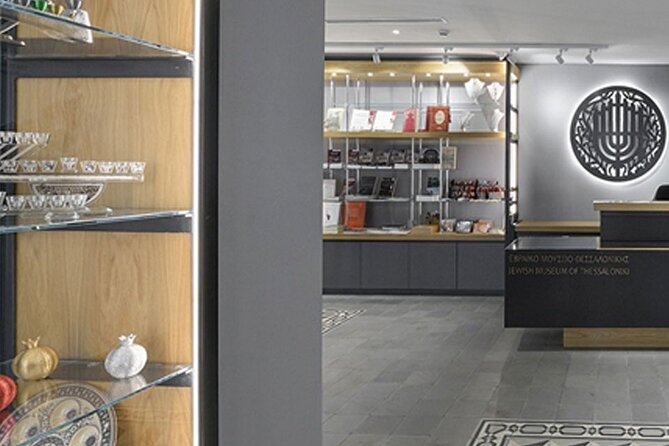
It opened in 2001 in an old commercial arcade belonging to the Jewish Community of Thessaloniki, renovated with funds connected to Thessaloniki’s Cultural Capital of Europe 1997.
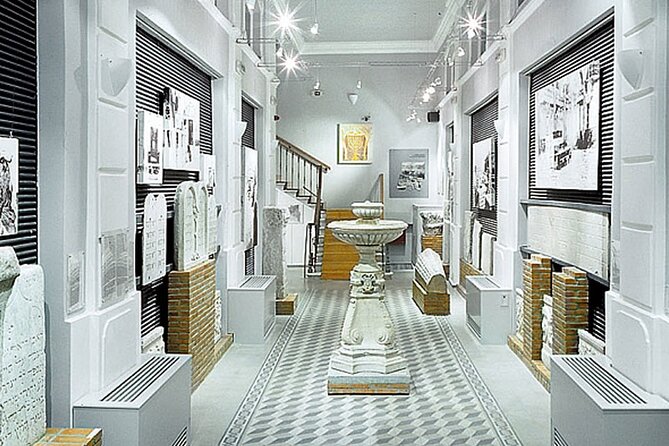
The museum’s mission is described as collecting documents and heirlooms not destroyed during the Holocaust, preserving remembrance of victims, and encouraging research on the continuous presence of Jews in Thessaloniki for more than 2000 years.
- White Tower of Thessaloniki: admission not included (listed as €4.00 per person)
The White Tower houses a permanent exhibition summarizing aspects of the city’s history, from its founding in 316/15 B.C. to the present, with a focus on an unbroken historical presence.
Should you pay for both? If you’re even moderately interested in context, I’d say yes, because they complement each other. The Jewish Museum gives community-specific evidence and memory work. The White Tower gives broader city framing, which can help you place what you saw earlier.
A practical note: your tour is only 3 to 4 hours total, so these are time-budgeting moments. If you’re short on time, ask your guide how to prioritize based on your interests.
Greek Agora, Roman Forum, and the Old Train Station: Closing with the Hard Truth
The route finishes with ancient and modern layers, then lands on a sharply historic wartime location: the old train station.
You’ll visit:
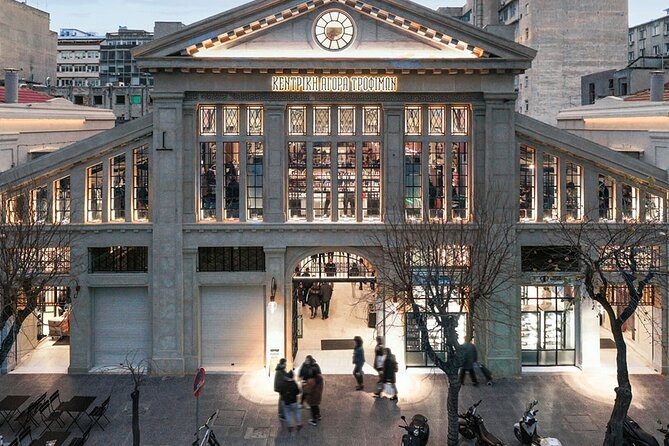
- The Greek Agora and Roman Forum, a Roman-era forum with two terraces and two-storey stoas dug up in the 1960s
- The Old Train Station, listed as the station where 50,000 Greek Jews were deported to Poland concentration camps
This closing pairing does something important. It shows the city’s long continuity—then pivots directly to what modern Thessaloniki did to itself during the Holocaust years through deportation.
It’s a lot for one day, but it also feels complete. The tour starts at commemoration, moves through community landmarks, then ends at the machinery of deportation and the place where so many lives were turned toward camps.
If you’re carrying emotion from earlier stops, it may help to plan a quiet meal afterward rather than rushing into a busy schedule.
Price and Value: What $331.22 Buys You
At $331.22 per person (for a 3 to 4 hour private tour), the big question is value. For me, the value comes from four places:
1) Private routing and pace
You’re not sharing limited time with strangers. You’re moving efficiently between dispersed sites.
2) Transport plus comfort
An air-conditioned vehicle, bottled water, WiFi, and onboard coffee/tea add real comfort on a short shore excursion.
3) English guidance and Q&A time
The reviews put a lot of weight on the guide experience—especially names like Margarita and Maria. When the guide is strong, you get meaning from the stop list, not just movement.
4) The itinerary’s focus
This is not a generic city tour with one Jewish stop. It’s structured around Jewish history locations—synagogues, memorials, cemetery memory, and deportation—plus key Thessaloniki anchors like Aristotelous Square and the White Tower.
The one area that can increase your out-of-pocket cost is that the Jewish Museum (€8) and White Tower (€4) aren’t included. If you plan to go inside both, budget for that.
Who This Tour Suits Best
This is a great fit if you want:
- A shore excursion that stays coherent instead of crisscrossing randomly
- A route centered on Jewish history and key locations you can’t easily stitch together on your own
- Clear English interpretation and time to ask questions
It’s also ideal for people who like a mix of architecture and meaning. Mansions, synagogues, memorials, and city squares show different angles of the same story.
If your travel style is strictly hands-off, you might find the day emotionally heavy. But if you want context—and a guide to translate what you’re looking at—this tour is built for you.
Should You Book Thessaloniki’s Jewish Private Tour?
If you’re doing Thessaloniki in a short window, I’d book it. The private pacing, pickup included, comfortable ride, and strong emphasis on Jewish sites make it feel like a purpose-built shore excursion rather than a standard drive-by.
One final decision tip: think about your museum priorities before you go. If you’re excited to spend real time at the Jewish Museum and see the White Tower’s permanent exhibition, this becomes even better value because those ticketed stops are already part of the plan.
FAQ
FAQ
How long is the Thessaloniki Jewish sightseeing private tour shore excursion?
It runs about 3 to 4 hours.
Does the tour include pickup?
Pickup is offered.
Are the Jewish Museum and the White Tower entrance fees included?
No. The Jewish Museum entrance is listed as €8.00 per person and the White Tower entrance is listed as €4.00 per person.
Is this a private tour?
Yes. It’s private, and only your group participates.
What’s included in the price?
It includes air-conditioned vehicle, bottled water, coffee and/or tea, private transportation, and WiFi on board. A mobile ticket is also included.
Is there a cancellation policy and weather condition?
Free cancellation is available up to 24 hours in advance for a full refund. The experience requires good weather, and if it’s canceled due to poor weather, you’ll be offered a different date or a full refund.