REVIEW · MALLORCA
Shore Excursion: Coasteering in Mallorca
Book on Viator →Operated by Experience Mallorca S.L · Bookable on Viator
Mallorca’s cliffs are begging for a splash. This coasteering shore day gives you close-up coastline time at Cala Fornells, with guides leading you through jumps and waterline challenges. It’s built for cruise-day convenience thanks to round-trip transport from Palma.
What I like most is how all equipment is provided, so you’re not hunting for the right shoes or dealing with wet-suit rentals. I also like that you get a minivan pickup and drop-off, which keeps logistics simple even when your ship schedule is tight.
The trade-off: this isn’t a casual beach stroll. You’ll be climbing on sharp rocks and getting back up after the water, so you should have a moderate fitness level and be comfortable swimming and navigating uneven terrain.
In This Review
- Quick hits before you book
- Palma to Cala Fornells without the stress
- The gear drop-off trick: arrive ready to change and go
- The training and safety briefing: how the day gets controlled
- Carrer Cala Fornells: what 3 hours on the coast feels like
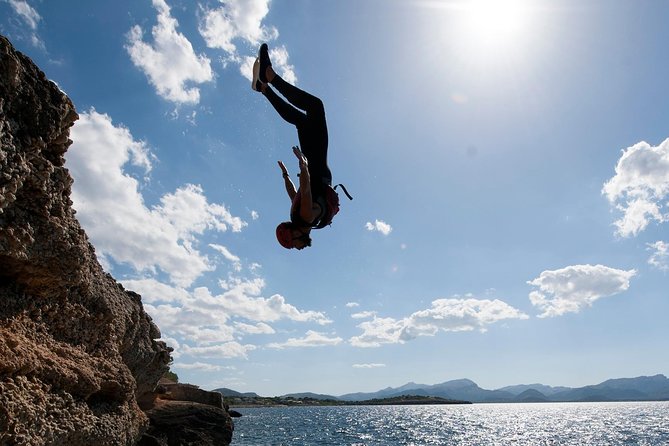
- Cliff jumps and zip line: how to judge your comfort level
- Timing quirks for cruise days (and how to avoid frustration)
- Value for $89.87: what you’re really paying for
- Who should book this coasteering day
- What to bring checklist (so you don’t overpack or forget)
- Should you book Coasteering in Mallorca?
- FAQ
- How long is the coasteering shore excursion in Mallorca?
- What does pickup from Palma look like for cruise passengers?
- Where does the activity start and where does it end?
- What equipment is included?
- Is food or drinks included?
- What age is the minimum for this tour?
- Do I need moderate fitness for the tour?
- How many people are in the group?
- What happens if weather is bad?
Quick hits before you book
- Marked-van pickup near the West Sea Wall makes it easier for cruise days to start on time
- 3 hours of coasteering at Carrer Cala Fornells is where the action happens
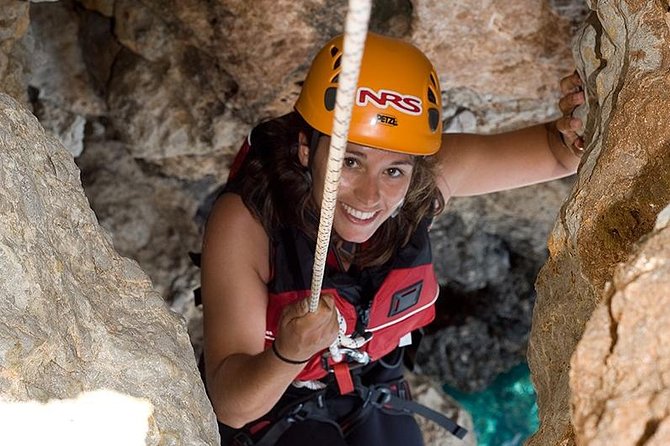
- Wetsuit, helmet, flotation vest, and water shoes are included, plus the guides provide shoes to match you
- Safety briefing and training first, then you progress through the activities
- Cliff jumps, climbing, and a zip line are common highlights, but you bring your own lunch since food isn’t included
Palma to Cala Fornells without the stress
This trip is structured for people who want adventure but don’t want to fight with buses, taxis, or “what time does this actually start.” You’re picked up from Palma by minivan, then driven to the coasteering site for the main 3-hour session. The whole thing runs about 4 hours total, which is a big deal if you’re on a cruise shore day.
For cruise passengers, the meeting point is close to the port area. If your ship is docking at the west sea wall (Dique Del Oeste) at terminal Estacion Martima 5, you walk about 7 to 10 minutes to the meeting school. As you exit the dock gate, you’ll see canons on your right, and you’ll head toward a white building. You’ll know you’re right when you see the huge ship anchor on the grass.
Your representative is waiting by the school for you with a marked van, and the guide is reported to wear a bright yellow t-shirt. If your GPS is off, the “anchor” landmark is your friend.
One more practical note: some groups find communication easier through WhatsApp when lining up timing from the ship to the meeting school. If you like that kind of real-time coordination, this format tends to help.
A few more Mallorca tours and experiences worth a look

The gear drop-off trick: arrive ready to change and go
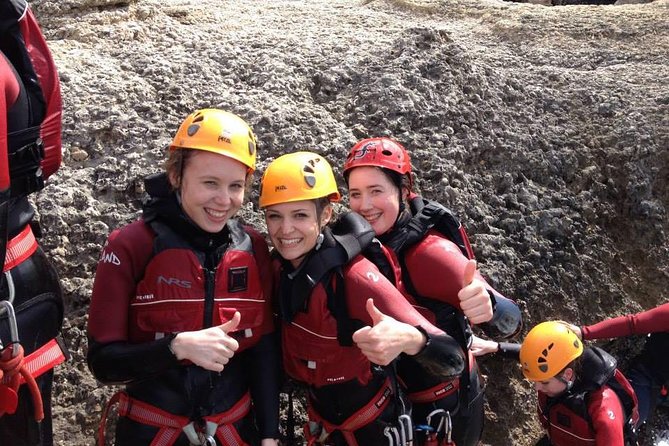
Coasteering works best when you don’t spend the morning figuring out clothing layers. The setup is designed so you change into the wet gear at the site, then leave your dry items behind during the activity.
You’re provided with the essentials: wetsuit, helmet, flotation vest, and water shoes (plus other required gear). Reviews also mention switching in and out at a gravel parking area before walking down to the water. That matters because it cuts down on the time you’re standing around in wet conditions.
What you should bring for your comfort:
- Bathing suit and a towel for after
- Sunscreen and bottled water
- A lunch since food and drinks aren’t included
- Your own small bag for valuables (if you want one)
I also suggest you plan for scratched arms and hands. Rock climbing and climbing out of the water can be rough on skin, even with water shoes. A rash guard or long-sleeve swim layer can be a smart extra if you tend to get scraped easily.
The training and safety briefing: how the day gets controlled
Even if you’re excited, you want the day to feel under control. This excursion includes a training session and safety briefing before you start doing the more daring bits. And the groups are small, with a maximum of 16 travelers, which gives the guide team more ability to watch and help.
The activities typically build in difficulty. Many guides start with easier entry points so you get used to the rock surface and the waterline. Then you move toward the higher jumps and zip line sections if you feel comfortable.
You’ll also learn how to climb back out after the splash. That’s the part people underestimate. The water jump is only half the work; the real test is the pull-yourself-up portion on rocky exits. If you’ve got upper body strength and you’re not afraid to use it, you’ll likely enjoy this more.
Guide names you might encounter include Mario, Jose, Juan, Oscar, Antonio, and Raffi. The consistent theme across groups is that guides try to keep people safe without forcing anyone to do something outside their comfort zone.
Carrer Cala Fornells: what 3 hours on the coast feels like
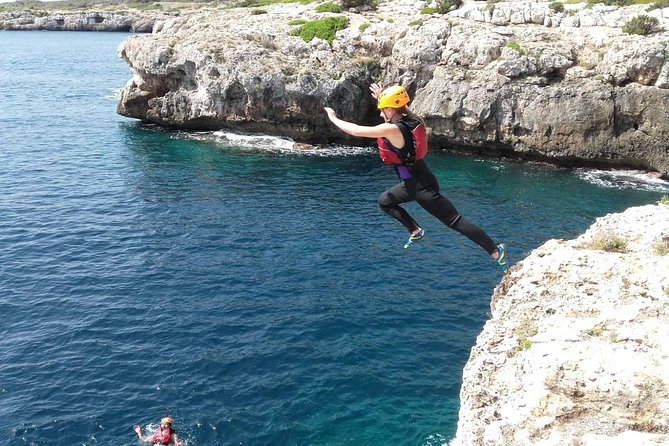
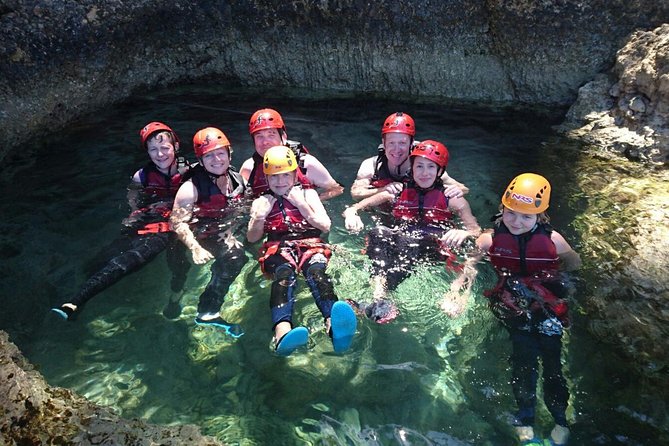
The main stop is Carrer Cala Fornells, where your coasteering session runs about 3 hours. From the moment you arrive at the coastal site, expect a mix of short hikes, rock scrambling, and water-based challenges.
A typical flow looks like this:
- Gear up and get your instructions
- Walk a short trail down to the cliff and cove area
- Start with smaller jumps or easier sections to learn the movement
- Progress to bigger jumps, more climbing, and sometimes a zip line across a cove
- Finish and walk back to the van base, with dry clothes waiting
You may see activities described as cliff jumping, rock climbing, abseiling/repelling, and even psihobloc-style jumps (depending on what the guides set up and what the group can handle). The core is the same: you’re moving along the coastline in a hands-on way, not just watching from the beach.
And yes, the water can be stunning. The payoff is the combo of clear sea views and the sense of being right at the edge of the island, where the coastline curves and the cliffs drop straight into the coves.
One consideration: surfaces can be sharp, and exits can be awkward. Some people use thicker soles for grip, while others prefer their own swim shoes. Just remember any shoes you wear outside the provided gear might not be as protected.
Cliff jumps and zip line: how to judge your comfort level
Here’s the honest way to think about this day: it’s part sport, part adventure training. If you like controlled risk, you’ll have a good time. If you freeze when heights appear or you hate the feeling of cold water and rock scrambling, you may not.
The guides run it with safety as a priority. They also tend to offer choices, so you can skip a zip line or a higher jump if you’d rather stay with the water-fun sections. But skipping is only half the story. Even if you do fewer jumps, you still need to handle climbing and getting back up onto uneven rock.
If you’re deciding whether to do it, look at these factors:
- Are you comfortable swimming in open water?
- Can you climb up rough rock after a plunge?
- Are you okay with heights you can’t avoid once you’re at the top?
- Do you have moderate fitness, not just motivation?
On height levels: groups often progress from low jumps up to bigger ones, and some tours include jumps that reach roughly 10 meters. You shouldn’t plan your day as a guaranteed maximum, but you should be mentally ready for the possibility.
The zip line element can add a different kind of fear, because you’re released over water and drop into the cove area. If you’re okay with that, it’s a highlight. If you’re not, it’s usually possible to choose a different activity level and still enjoy the day.



Timing quirks for cruise days (and how to avoid frustration)
The tour duration is about 4 hours, but cruise days can add waiting. If your ship runs late or pickup windows shift, you might wait longer than you planned before the group leaves the meeting school.
To make this smoother, do these two things:
- Be early to the meeting point walk from the port gate. If you’re cutting it close, allow extra minutes.
- Bring what you need for a short wait: water, sunscreen, and something to keep yourself calm if the schedule slips.
Also, plan your valuables. Some participants keep phones in waterproof pouches for the first jumps, but many end up leaving tech on the cliff side for the later actions because higher jumps and zip line drops make it harder to keep gear safe. A GoPro-style setup in a hard shell can make more sense if you want a lot of footage, but that’s only if you’re comfortable managing it around the water and rocks.
Value for $89.87: what you’re really paying for
At $89.87 per person for roughly 4 hours, the value comes from what’s included and how it’s organized. You’re not just paying for access to a shoreline activity. You’re paying for:
- Qualified local guide time
- Insurance included in the package
- All the key safety gear and shoes
- Transport by minivan from Palma
- Training and safety briefing
The cost-to-value flips in your favor if you don’t want to buy or rent gear yourself, and if you want someone to run the line between fun and safe. It’s also a good deal compared to piecing together separate transfers, equipment rentals, and private instruction.
The one clear gap is food and drinks. Since food isn’t included, you’ll want to pack your own lunch, water, and any snacks you’ll need to keep your energy steady for the climb and recovery after.
Who should book this coasteering day
This is best for active travelers who want more than a photo-stop view. It’s also a strong choice for teens and families who can handle a physical challenge with supervision. The minimum age listed is 8 years, but the real filter is fitness and comfort level with swimming and rock climbing.
You’ll likely enjoy it if you:
- Like adrenaline that’s guided, not chaotic
- Want a hands-on way to see Mallorca’s coastline up close
- Are okay with getting wet, staying focused, and moving on uneven ground
- Prefer small-group guiding rather than large tours
You might skip or choose a gentler option if you:
- Don’t swim well or get panicky in open water
- Fear heights and can’t manage that stress
- Have mobility limits that make climbing back up unrealistic
- Expect a laid-back beach day
One rare negative note did show up about a guide being condescending and lacking regard for one person’s comfort. That’s not the tone most groups describe, but it’s a reminder to speak up early if you feel uncomfortable. If you ever feel judged rather than coached, that’s not what you want on an active safety-focused trip.
What to bring checklist (so you don’t overpack or forget)
Based on the rules and what makes the day easier, pack like this:
- Bathing suit + towel
- Comfortable clothes for before/after
- Sunscreen and bottled water
- Your own lunch (no food provided)
- Any rash guard or long-sleeve swim layer if you want extra skin protection
- Any meds you might need, plus a small bag for valuables
And if you have shoe size, height, and weight details: you must provide passenger heights, weights, and shoe sizes at booking so the gear fits right.
Also note: service animals are allowed, so if that applies to you, you can plan around that.
Should you book Coasteering in Mallorca?
If your idea of a great Mallorca day is getting out on the water with real movement, then I think this is worth considering. You’re getting organized instruction, solid gear, and a coastline setting that you can’t replicate by simply walking a promenade.
Book it if you meet the physical basics and you can handle cold-water surprise, sharp rocks, and climbing back up after jumps. Skip it if you want a calm day or you can’t comfortably swim and scramble.
If you’re unsure, treat this as an activity that tests your comfort a little and builds from there. And when you show up, aim for calm focus: listen to the briefing, ask questions early, and let the guide adjust your pace.
FAQ
How long is the coasteering shore excursion in Mallorca?
The tour is listed at about 4 hours total, with around 3 hours spent on the coasteering activity at Carrer Cala Fornells.
What does pickup from Palma look like for cruise passengers?
Pickup is offered by minivan. If your ship docks at the west sea wall (Dique Del Oeste) at terminal Estacion Martima 5, you walk about 7 to 10 minutes to the meeting school in Palma, then look for a marked van and a guide wearing a bright yellow t-shirt.
Where does the activity start and where does it end?
The start point is Carr. de Cala Fornells, 30, 07160 Cala Fornells, Illes Balears, Spain. The activity ends back at the meeting point.
What equipment is included?
You get all equipment and shoes, along with a wetsuit/helmet and safety gear as part of the provided setup. Insurance and a qualified local guide are also included.
Is food or drinks included?
No. Food and drinks are not included, so you should bring your own lunch and water.
What age is the minimum for this tour?
The minimum age is 8 years.
Do I need moderate fitness for the tour?
Yes. The tour is designed for travelers with a moderate physical fitness level.
How many people are in the group?
The maximum group size is 16 travelers.
What happens if weather is bad?
This experience requires good weather. If it’s canceled due to poor weather, you’ll be offered a different date or a full refund.