A cruise day, but Rome feels close. This private, small-vehicle tour is built for getting your bearings fast and hitting the big icons without feeling like you’re stuck on a long bus ride. You’ll travel with an English-speaking tour driver in a no-more-than-8-seat vehicle, so you can often get nearer to the sights than you would on a larger coach.
What I like most is the mix of major landmarks and classic street-level Rome: Pantheon, Trevi Fountain, and St. Peter’s Square all make the cut, with stops kept efficient so you still have time to actually look. I also like that the guides named Andrea (native Roman) and Leonardo are known for tailoring the day to what you want to see, not running you through Rome on autopilot.
One consideration: this is a fast 9-hour loop, so you won’t have hours to linger at every stop. Also, while some sights are free, entrance fees and any Vatican Museums/Sistine Chapel entry are not included, so you may want to plan ahead if you’re set on going inside.
In This Review
- Key Things to Know Before You Go
- Why This Private Shore Trip Works for a Cruise Stop
- The Real Advantage: Getting Close in a No-Bus Vehicle
- Triumphal Arch of Constantine: A Fast Start With Big Meaning
- Circo Massimo: Chariot-Race Rome in One Stop
- Palatine Hill Views: Where Rome’s Story Begins
- Piazza Venezia: Italy Unification and a National Memorial
- Pantheon: A Short Stop That Pays Off
- Trevi Fountain and Spanish Steps: Icon Stops With Limited Time
- Fontana dell’Acqua Paola: The Older-Than-Trevi Detour
- St. Peter’s Square: Where the Day Closes Strong
- How Andrea and Leonardo Shape the Day
- Value: Is $554.32 Per Person Worth It?
- Best Fit: Who This Shore Excursion Serves Well
- Should You Book This Private Rome Shore Excursion?
- FAQ
- How long is the Rome shore excursion from Civitavecchia?
- Is this a private tour?
- What vehicle size should I expect?
- Will I have pickup?
- Are entrance fees included?
- Does the tour include a guide?
- Can I add Vatican Museums and the Sistine Chapel?
- What is the cancellation policy?
Key Things to Know Before You Go
- Small-vehicle transport (8 seats max) helps you stay close to the action and avoid the farthest drop-offs.
- Cruise-friendly pacing keeps the day moving at the tempo you need for a shore stop.
- Free-admission highlights like the Pantheon, Trevi Fountain area, and key viewpoints save money on the spot.
- Palatine Hill access from Circus Maximus side views gives you a strong ancient overview without starting deep inside ticketed zones.
- Optional Vatican Museums and Sistine Chapel can be added if you tell the team you want them.
- St. Peter’s Square is included with a focused stop that covers the main square and its context.
Why This Private Shore Trip Works for a Cruise Stop
Rome is big, and cruise schedules are unforgiving. This kind of private shore excursion helps because it treats your day like a practical mission: meet the driver, get the history you need, and then see Rome’s most recognizable spaces without wasting time.
The biggest win is how the route is designed around Rome’s signature photo-and-walk areas. You’re not just driving past things—you’re stopping for short, targeted windows at the places most people remember long after the cruise ship is gone.
And the format matters. A smaller vehicle can mean fewer delays and easier movement through dense areas. If you’ve ever watched buses struggle at curbs and crosswalk bottlenecks, you’ll understand why this setup feels calmer.
You can also read our reviews of more tours and experiences in Vatican City.


The Real Advantage: Getting Close in a No-Bus Vehicle
The tour uses an air-conditioned vehicle with up to 8 passengers, plus a dedicated tour driver who speaks English. That combination changes your day in subtle ways.
First, you’re more likely to start your walks from locations that cut down stress—important when you’re fitting everything into about 9 hours. Second, it tends to feel more human than large-group sightseeing, because your driver can adjust the order or the side streets used to reach each stop when needed.
There’s also a value angle. Private tours can get expensive fast, but this price aims to buy you time and access rather than just a labeled driver service. You’re paying for a format that’s built for tight time windows and close-up sightseeing.
Triumphal Arch of Constantine: A Fast Start With Big Meaning
The day opens with a stop at one of Rome’s major triumphal arches, built in 315 AD to celebrate Emperor Constantine. Even if you don’t memorize dates, it helps to start with something that instantly signals how Rome celebrated power—then you’ll recognize that same storytelling style all day.
This is a good first stop for two reasons. You get an early anchor in Roman imperial history, and you also get a gentle ramp-up: it’s not a long walk, but it gives your eyes something to understand before you move into the more crowded city centers.
If you like architecture, you’ll appreciate how these monuments still shape the modern street view. You’ll be looking at a living backdrop, not just a museum object.
Circo Massimo: Chariot-Race Rome in One Stop
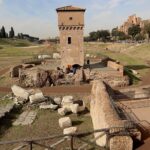
Next up is Circo Massimo, described as Rome’s biggest racetrack for chariot races since the end of the Roman Empire. This is one of those places where the scale hits you quickly, even if you don’t see an intact arena the way you might expect.
The stop is short (about 5 minutes), so this is not a “walk through every detail” moment. It’s more like an orientation stop—your driver can point out what the space meant and how it fits with the rest of the ancient landscape you’ll see.
The practical perk? A brief stop like this works well on a cruise day because it adds context without burning time. You’ll step out feeling like you learned something, not just saw stone.
Palatine Hill Views: Where Rome’s Story Begins
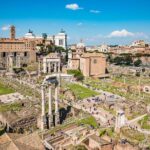
From the side of Palatine Hill, you’ll see ruins tied to what’s often described as Rome’s founding era, dated here to 753 years before Christ. The itinerary approach is smart: you’re getting major ideas without needing to commit to deeper ticketed exploration during a shore excursion.
What makes this stop worthwhile is the “layering” effect. Palatine is connected to imperial life, but your vantage point from the Circus Maximus side means you’re viewing it as part of the bigger urban puzzle. You’re also likely to get a better sense of how the city’s power centers evolved over time.
One drawback to keep in mind: with limited time, you’ll want to be selective about what you focus on. If you’re the type who wants to read every sign and linger at every viewpoint, this portion may feel like it moves quickly.
You can also read our reviews of more private tours in Vatican City
Piazza Venezia: Italy Unification and a National Memorial
At piazza Venezia, you’ll see a monumental complex that began in 1885 to celebrate the unification of Italy and its first king, Vittorio Emanuele II. This area is important because it shifts the story from ancient Rome into modern nation-building.
Then there’s the Monument to the Unknown Soldier, noted here as dating from 1921. This creates a strong emotional contrast next to the older stones around the city. You’re still in Rome, but you’re also seeing how 20th-century Italy chose to remember its losses.
For many visitors, this is the moment when Rome stops being only ancient and becomes fully real—lived in, remembered, rebuilt, and reinterpreted across centuries.
Pantheon: A Short Stop That Pays Off
The itinerary includes Pantheon, widely seen as one of Rome’s best-preserved ancient buildings. It’s the kind of stop where even a brief visit feels worthwhile because the building is visually complete and instantly recognizable.
Here, you’re scheduled for about 15 minutes, and admission is marked as free. That combination is rare in Rome sightseeing: a famous indoor landmark with a window long enough to appreciate the shape and setting.
Do this well and you’ll leave with the right mental image of Rome. The Pantheon isn’t just a backdrop for selfies—it’s a masterclass in how ancient engineering made space feel monumental.
The only caution: don’t plan on a slow, detailed museum-style read. This stop works best if you treat it like a “hit the highlights” moment and let the structure do the heavy lifting.
Trevi Fountain and Spanish Steps: Icon Stops With Limited Time
After the Pantheon, the day turns toward classic baroque Rome with Trevi Fountain and the Spanish Steps.
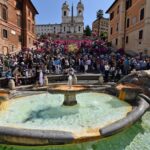
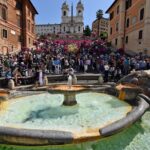
Trevi Fountain is scheduled for about 10 minutes, and it’s listed as free admission. It’s the biggest fountain in Rome in the way this tour frames it, and it also ties to how water systems mattered, since it was built in the 1700s to celebrate ancient aqueducts restored by the popes for the people’s water supply.
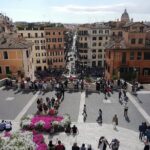
The Spanish Steps follow, also about 10 minutes, with free viewing. If you like places where Rome becomes theater—people gathering, conversations echoing, and the city’s geometry doing the work—this is where you’ll feel it. The top and bottom squares give you two different angles in one small time block.
The consideration here is crowd reality. Even without going into crowd guessing, any major icon in central Rome gets busy. If you want quiet photos, you’ll likely spend part of your 10 minutes working around foot traffic.
Fontana dell’Acqua Paola: The Older-Than-Trevi Detour
The itinerary ends with Fontana dell’Acqua Paola, placed on one of Rome’s beautiful hills and noted as older than Trevi Fountain. This is a smart addition because it gives you a different tempo: you’re still doing “fountain Rome,” but you’re not only repeating the most famous name.
This stop is about 10 minutes with free admission, so it’s a light landing after a day of big icons. It can also help you remember the differences between the fountains—style, scale, and how each one sits in its own urban setting.
If you like small contrast moments, this stop is where your brain gets a fresh hook before the day wraps.
St. Peter’s Square: Where the Day Closes Strong
St. Peter’s Square is one of the best-known spaces in Christianity, and the itinerary gives it about 30 minutes. It’s a longer stop, which helps, because this is not just about seeing a building from the outside—it’s about understanding the space’s purpose and how it functions as a public gathering place.
What I like about including St. Peter’s Square (even if you don’t go inside any museum) is that it gives you a complete-feeling experience. You get the context and the scale, which makes later Vatican Museum plans easier to imagine.
Optional add-on: the tour notes that if you want to visit the Vatican Museums and the Sistine Chapel, you should tell the team. Admission for those is not included, so it’s a separate decision with separate planning needs. Still, the fact that the option exists means the tour can flex around your priorities.
How Andrea and Leonardo Shape the Day
One reason private tours feel better is the guide’s approach. In this case, Andrea is described as a native Roman whose love for his city shows up while sharing history, architecture, and culture. Leonardo is also mentioned for going above and beyond, including stepping in when schedules outside the tour changed due to cruise timing.
That matters because a shore excursion isn’t just sightseeing—it’s logistics with expectations. A good guide keeps you moving, but also keeps your choices in view: what you want most, what you can handle walking-wise, and what you’d rather skip if time gets tight.
Also, the vehicle size helps. With a small group, the driver can usually handle small adjustments more easily than a larger operation built around a fixed bus route.
Value: Is $554.32 Per Person Worth It?
At $554.32 per person, this is not a budget tour. But the question isn’t just price—it’s what that price protects for you.
You’re buying:
- Private transport in an air-conditioned up-to-8-seat vehicle
- An English-speaking tour driver
- A day designed to cover key landmarks efficiently on a cruise stop
- Multiple high-recognition stops, including Pantheon, Trevi Fountain, and St. Peter’s Square
- A structure where some major stops are marked as free admission
Entrance fees and tour guides inside sites or museums are not included, and meals are also not included. So if you’re expecting everything from start to finish to be turnkey, you’ll want to adjust your expectations.
Still, the math often works if you’re traveling as a couple or a small group that values time. When you factor in taxi juggling, long transfer stress, and the cost of missing out on a timed window, the private format can start to look like a fair trade.
Best Fit: Who This Shore Excursion Serves Well
This tour fits best if you want the greatest hits with a knowledgeable guide—but you also care about the shape of your day. If you like short, punchy stops that still feel meaningful, you’ll probably enjoy the flow.
It’s also a good choice if you’re traveling with people who don’t want a marathon of walking. The schedule gives each stop a clear moment, rather than turning the entire day into one long slog.
On the other hand, if you’re the type who wants to sink hours into one area—deep museum time, long guided walking tours, or multiple indoor experiences—you may feel rushed. The tour can add Vatican Museums and the Sistine Chapel if you tell them, but that won’t make a 9-hour day unlimited.
Should You Book This Private Rome Shore Excursion?
I’d book this if your priority is: see major Rome highlights in one day, with a driver who can talk you through what you’re looking at. The small-vehicle setup is a practical advantage for cruise timing, and the stop list is a strong match for first-timers who want recognizable landmarks plus a quick ancient-to-modern story arc.
I wouldn’t book it if your dream day is slow and heavily museum-based. This route is designed to move, and while Vatican interior visits can be added, they come with extra planning and costs since entrance fees aren’t included.
If you’re deciding, think about your group. If you’ll appreciate close-up transport, clear time limits, and a guide who can shape the day around your preferences, this private shore trip is a solid value in the Rome market.
FAQ
How long is the Rome shore excursion from Civitavecchia?
The tour duration is about 9 hours.
Is this a private tour?
Yes. It is private, and only your group participates.
What vehicle size should I expect?
The tour uses a vehicle with no more than 8 passenger seats.
Will I have pickup?
Pickup is offered.
Are entrance fees included?
Entrance fees are not included. The itinerary lists some stops with free admission, but tickets for places like Vatican Museums and the Sistine Chapel are not included.
Does the tour include a guide?
You’ll have a tour driver. Tour guides inside sites or museums are not included.
Can I add Vatican Museums and the Sistine Chapel?
The tour notes you can request Vatican Museums and the Sistine Chapel. Admission is not included, and you’ll need to arrange that request with the team.
What is the cancellation policy?
You can cancel for a full refund up to 24 hours in advance. If you cancel less than 24 hours before the start time, the amount paid is not refunded.