REVIEW · ATHENS
Piraeus Shore Excursion: Acropolis and Museum Classical Tour
Book on GetYourGuide →Operated by Key Tours · Bookable on GetYourGuide
Ancient Athens is a half-day sprint. What makes this Acropolis and Museum tour so appealing is the licensed guide who connects the sights to mythology and architecture, plus the chance to stand on the Parthenon for those famous Athens views. I like the small-group pace and the included audio devices, which help you follow the story without craning your neck at the guide.
The main thing to keep in mind is logistics timing around the port. One guide (Nico) is praised for getting things back on track at the end, but you should still expect that cruise-day coordination can be imperfect, so stay aware during pickup and listen carefully for the return instructions.
In This Review
- Key points to know before you go
- From Piraeus to Athens: transfers, meeting spot, and the small-group tempo
- First stops that set the stage: Hadrian, Dionysus, and the music of the ruins
- Propylaea and Temple of Athena Nike: where orientation pays off
- The Parthenon and Caryatids route: best views, plus why you get real break time
- Acropolis Museum (optional upgrade): why the museum makes the ruins make sense
- Price and value: what $100 covers on a cruise day
- Smooth day planning: what to bring and what can cause delays
- Who should book this Acropolis and Museum shore excursion
- Should you book? A quick decision guide
- FAQ
- How long is the Acropolis and Museum Classical Tour from Piraeus?
- Where is the meeting point for the tour?
- Is the Acropolis Museum included?
- What’s included if I select the option with tickets?
- What if I select the option without entrance tickets?
- What places on the Acropolis are included?
- Do I get free time on the Acropolis?
- What should I bring and wear?
- What’s not allowed during the tour?
Key points to know before you go
- Licensed guide + audio devices: you’ll get clear commentary without constantly asking questions.
- Skip-the-ticket-line (if you choose tickets): less time waiting, more time seeing.
- Free time on the Acropolis: you get a real chance to photograph and move at your own speed.
- Parthenon + multiple temples: the route covers the big names, not just one quick stop.
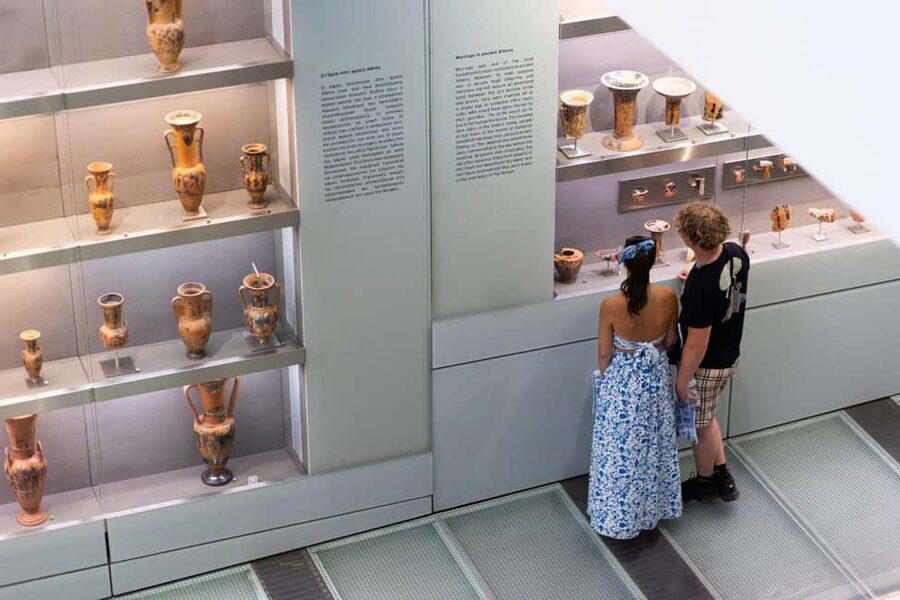
- Optional Acropolis Museum: you’ll pair the ruins with original sculptures displayed above the remains.
- Cruise-friendly transfers: round-trip coach service from Piraeus with guaranteed ship timing.
From Piraeus to Athens: transfers, meeting spot, and the small-group tempo

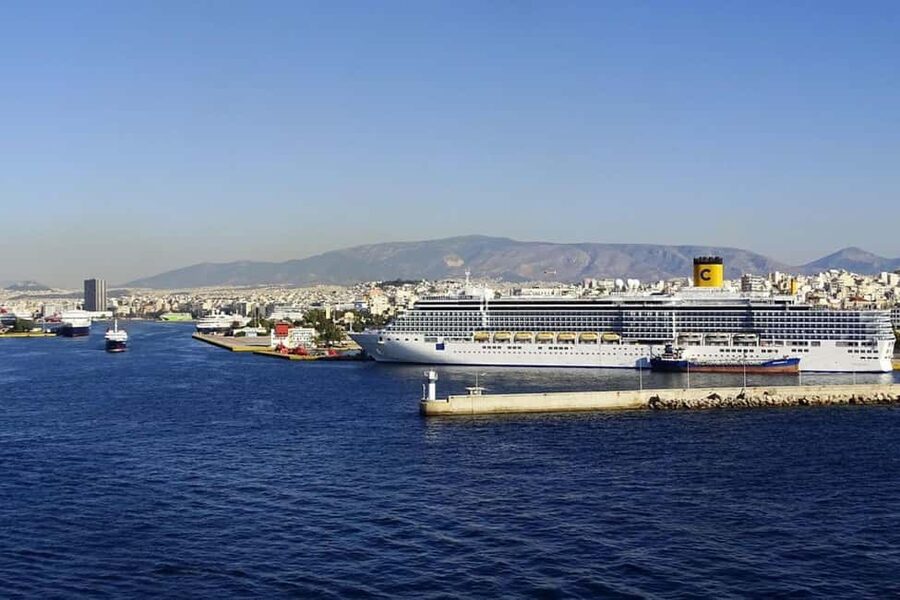
This is built for cruise schedules. You start at Piraeus Harbour, where a driver meets you at the cruise ship terminal holding a sign that says KEY TOURS. After that, you ride an air-conditioned coach toward central Athens (about 30 minutes).
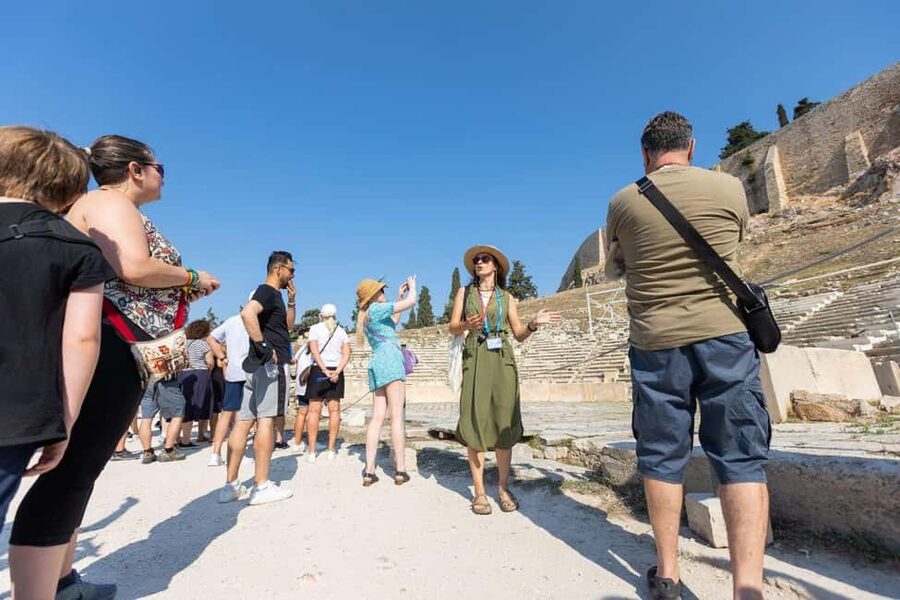
The small-group size matters more than it sounds. On the Acropolis, you’re walking, stopping for photos, and listening. With a tighter group, you spend less time waiting for people to catch up and more time getting oriented—especially when the guide is pointing out what to look for and how the buildings relate to each other.
You also get audio devices for clear commentary. That means you can focus on the views and the details in front of you, instead of trying to hear a guide over crowds, wind, and the general noise of a major landmark.
You can also read our reviews of more museum experiences in Athens
First stops that set the stage: Hadrian, Dionysus, and the music of the ruins
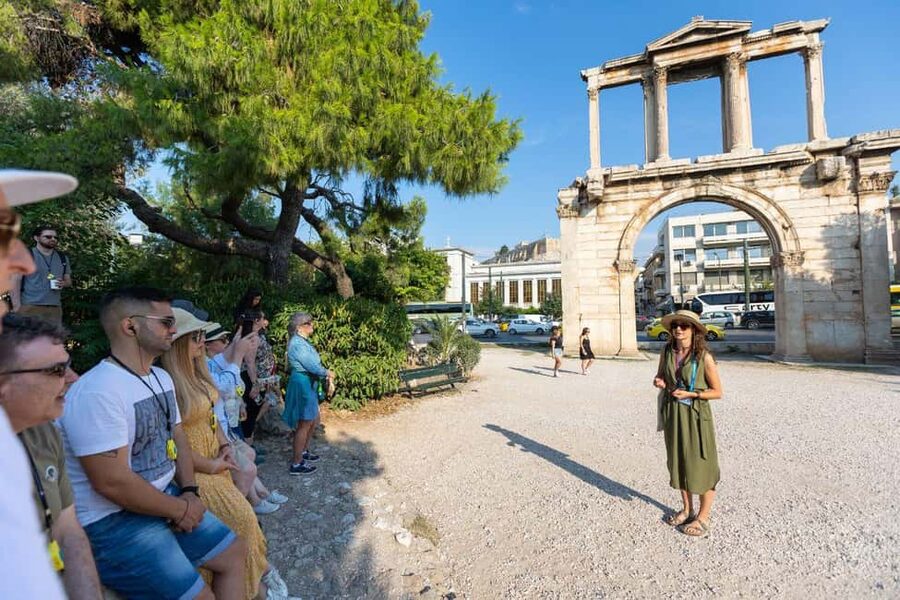
Before you climb toward the core monuments, the tour gives you useful context with a sequence of stops and photo breaks. There’s a quick photo stop and brief visit at the Arch of Hadrian (around 10 minutes). It’s a fast moment, but it helps you understand that this area wasn’t frozen in time—it evolved through different rulers and eras.
Then comes the Theatre of Dionysus (about 10 minutes). Even if you don’t come in knowing Greek theatre, a good guide can make the place click by connecting the setting to myth and performance. It’s one of those locations where the purpose of the space feels old and strange—in a great way.
Next is the Odeon of Herodes Atticus. You get another photo stop plus guided explanation (around 10 minutes). This stop works well because it fills the gap between “wow, temples” and “wow, how the city functioned.” Athens wasn’t just stone worship—it was also where people gathered, performed, and talked.
Propylaea and Temple of Athena Nike: where orientation pays off
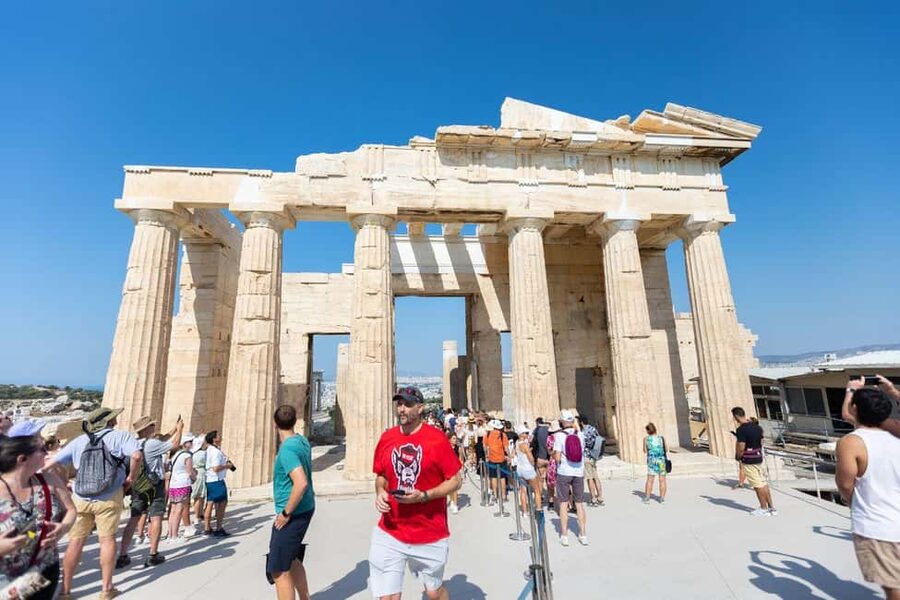
The Propylaea (about 15 minutes) is your gateway moment. You’re not just moving through an entrance—you’re transitioning from the modern approach to the sacred space above. When a licensed guide talks through the design and layout, you’ll likely find that the Acropolis route feels less like a collection of buildings and more like a planned procession.
Right after that is the Temple of Athena Nike (about 5 minutes). It’s a short stop, but it’s the kind of place where the guide’s framing makes it easier to remember later—especially once you’re standing near the Parthenon.
If you’re a photo person, this is also where you start noticing sightlines. You’ll be able to predict what kind of angle you’ll want for the next big monument, instead of reacting on the fly.
The Parthenon and Caryatids route: best views, plus why you get real break time
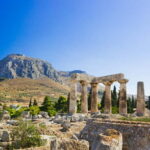
This is the part most people come for: the monuments at the top. The tour includes a Parthenon photo stop and guided time (around 30 minutes). You’ll also get time to look around on your own, which is key on a site like this. Facts and stories are great, but taking a slow look at the proportions—and feeling the scale—usually makes it stick.
Plan for the temperature and crowds. Wear comfortable shoes, use sunscreen, and take water breaks whenever your group schedule allows. The tour gives you time for photos and guided listening, but you’re still outdoors and moving.
After the Parthenon, you continue to the Erechtheion (about 5 minutes) and then the Porch of the Caryatids (around 10 minutes). The guide’s commentary is especially helpful here because it turns what could look like “another temple stop” into something more specific. Caryatids are eye-catching, and they’re also the kind of detail you might miss if you’re only speed-walking for photos.
Finally, you get break time on the Acropolis (about 30 minutes). This matters a lot. It’s the portion that lets you:
- re-check your photos from different angles
- revisit anything the guide highlighted earlier
- sit for a few minutes if you need a breather
For cruise passengers, that break can be the difference between seeing the highlights and actually enjoying the experience.
Acropolis Museum (optional upgrade): why the museum makes the ruins make sense
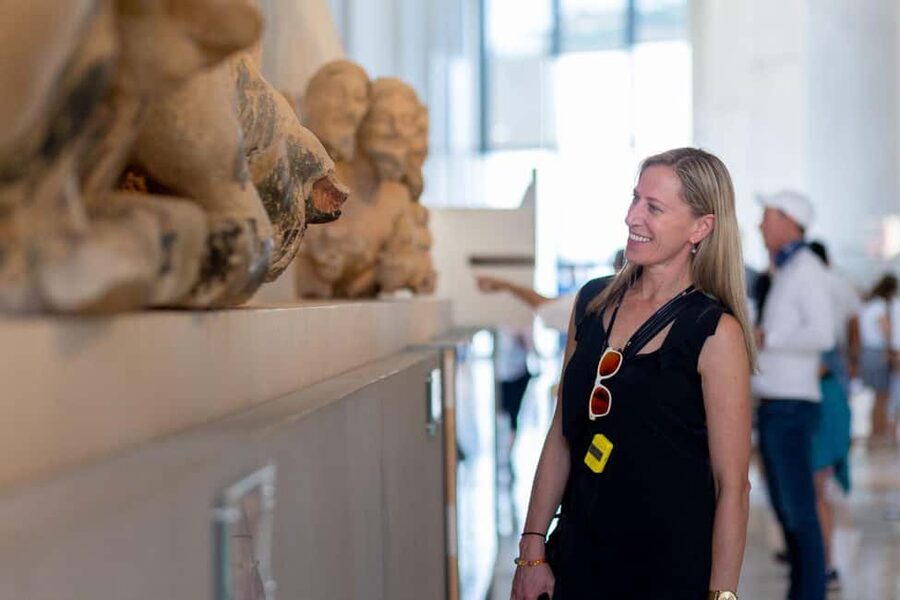
If you choose the museum option, you’ll continue to the Acropolis Museum for about 1.5 hours, guided. The big idea is simple: the museum gives you context for what you’ve just seen on the hill.
What I like about this upgrade is the way the displays are designed. You’ll see original sculptures and artifacts presented above ancient ruins visible through glass floors. That combination helps you connect the modern visitor experience to the layers beneath it.
In practical terms, the museum helps you remember details you might otherwise forget. On the Acropolis, everything happens fast—photo stops, guided stops, then your eyes move to the next structure. The museum slows things down and lets you focus on individual pieces and their meaning.
Also, if you selected the option with tickets, the tour includes skip-the-ticket-line access for the Acropolis and Museum. That’s one of the best ways to protect your time on a half-day itinerary.
A few more Athens tours and experiences worth a look
Price and value: what $100 covers on a cruise day

At around $100 per person for 5.5 hours, the value here comes from what you don’t have to manage yourself. You’re paying for:
- round-trip coach transfers from Piraeus
- a professional, licensed guide
- audio devices
- small-group routing
- and (if you choose that option) entrance fees plus skip-the-ticket-line for Acropolis and Museum
If you’re on a cruise, that kind of structure usually makes sense. You don’t want to lose time hunting tickets, figuring out transport, or arriving late because of port traffic. This tour is designed to keep you moving while still giving you meaningful on-site time.
One caution: there’s also an option without entrance tickets. If you choose that, you need to purchase tickets for your time slot (the guidance given is 10:00–11:00) to ensure your group entry works smoothly. If you prefer less stress, selecting the ticket option is the simpler path.
Smooth day planning: what to bring and what can cause delays
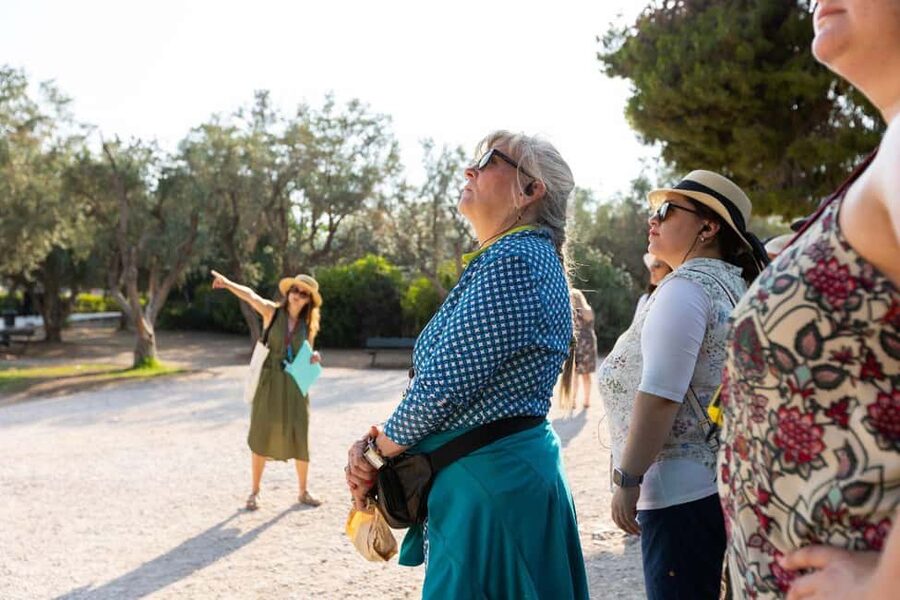
Bring comfortable shoes, sunscreen, and water. The tour also lists a few firm rules: no high-heeled shoes, no baby strollers, and no food or drinks during the tour. You also shouldn’t bring luggage or large bags.
Why this matters: it keeps the group moving. Any bottleneck—people pausing for belongings, misunderstandings about what’s allowed, or someone needing extra help—can affect the timing on a tight schedule.
Now about timing. Even when everything is well planned, port days can get tricky. A previous experience shared that pickup communication wasn’t perfectly smooth, and the driver was late picking up. The good news is that the lead guide (noted as Nico) helped correct the situation so the group returned with plenty of time. That’s a useful lesson for you: if anything feels off, focus on the people leading the group and follow their instructions quickly—don’t wait for the situation to fix itself.
Who should book this Acropolis and Museum shore excursion
This tour is a strong fit if you:
- want a guided Acropolis experience that explains mythology and architecture, not just a photo tour
- like the idea of free time on the site rather than being rushed the entire way
- want the optional Acropolis Museum to connect sculptures and artifacts to what you saw outside
- are on a cruise and prefer port-to-port transfers over DIY planning
It’s also a good match if you appreciate practical guidance like audio devices and a licensed expert. Those details matter when you’re trying to make the most of a limited shore window.
Should you book? A quick decision guide
Book this tour if you want a cruise-friendly way to hit the big Acropolis monuments plus the Acropolis Museum without juggling tickets and transport. The combination of guided storytelling, audio devices, and (if selected) skip-the-ticket-line access is where the value really shows.
Skip or reconsider if you’re the type who hates any uncertainty around timing. Port logistics can be imperfect on any day. If you do book, plan to be ready at the meeting point and pay attention to return instructions—your “buffer” is your best friend.
FAQ
How long is the Acropolis and Museum Classical Tour from Piraeus?
The tour runs for about 5.5 hours total.
Where is the meeting point for the tour?
You meet at Piraeus Harbour at your cruise ship terminal. The driver holds a sign reading KEY TOURS.
Is the Acropolis Museum included?
It depends on the option you select. The basic experience focuses on the Acropolis, and the museum visit is an upgrade option.
What’s included if I select the option with tickets?
Entrance fees are included, and you get skip-the-ticket-line access for the Acropolis and the Acropolis Museum.
What if I select the option without entrance tickets?
You’ll need to purchase your Acropolis tickets before the activity. The guidance provided is to secure them for the 10:00–11:00 time slot to ensure entry with your group.
What places on the Acropolis are included?
The tour covers major highlights such as the Propylaea, the Temple of Athena Nike, the Parthenon, the Erechtheion, and the Porch of the Caryatids, plus time for break/photo viewing.
Do I get free time on the Acropolis?
Yes. You’ll have a break time on the Acropolis for about 30 minutes.
What should I bring and wear?
Bring comfortable shoes, sunscreen, and water.
What’s not allowed during the tour?
High-heeled shoes, baby strollers, food and drinks, and luggage or large bags are not allowed.