REVIEW · SAFAGA
Luxor Shore Excursion Tour to King Tut’s Tomb Valley of the Kings from Safaga
Book on Viator →Operated by Luxor Travels · Bookable on Viator
A tomb day in Luxor, planned by locals.
This private shore excursion from Safaga is built around Tutankhamun and the West Bank sights, with an Egyptologist guiding your group through the most meaningful parts of the Valley of the Kings. You get the kind of smooth, time-conscious route that works well when your ship timetable is king. One more smart detail: the plan includes a lunch stop so you’re not hunting for food between tombs.
My favorite part is the private Egyptologist. You’re not listening over shoulders in a crowd, and you can ask the questions that usually pop up when you’re staring at royal art up close.
My second favorite part is the day structure: transport from Safaga, prebooked Valley of the Kings admission, and a long enough stop window to actually see more than just the highlights. The one drawback to weigh is that entrance fees aren’t included, so you’ll want to budget extra on top of the tour price.
In This Review
- Key highlights for your private Luxor day
- Why a private Luxor shore day from Safaga is a smart use of time
- Price and logistics: what you’re paying for (and what costs extra)
- The drive from Safaga: air-conditioned comfort and a full-day plan
- Tomb of King Tutankhamun: why that first stop hits hardest
- Valley of the Kings: the necropolis circuit and the value of expert pacing
- Ramses III, Merenptah, and the other royal tombs: variety in art and purpose
- Ramses III (KV 11): ritual scenes plus unexpected everyday details
- Merenptah (Tomb 8): a royal burial tied to Howard Carter’s discoveries
- Ramses IX: why it’s worth including even if you don’t know the name yet
- Deir el Bahari: Queen Hatshepsut’s temple after the tombs
- Colossi of Memnon: the West Bank landmark that links to Tutankhamun
- Lunch on the West Bank: fuel for a long day
- Your Egyptologist guide: where the private format really pays off
- What to expect at each stop (and how to pace yourself)
- Who should book this tour (and who might want a different plan)
- Tips to get more out of tombs and tight time windows
- Should you book the Luxor Shore Excursion from Safaga?
- FAQ
- How long is the Luxor shore excursion from Safaga?
- Where does pickup happen?
- Is this tour private?
- What’s included in the price?
- Are entrance fees included?
- Which sites are part of the itinerary?
- What is the cancellation policy?
Key highlights for your private Luxor day
- Private group with an Egyptologist, so the story stays focused and personal
- Round-trip air-conditioned transport from Safaga harbor (and central Safaga pickup is offered)
- Prebooked Valley of the Kings admission to reduce waiting time
- A planned lunch mid-tour so your day doesn’t stall
- Tomb time built into the schedule, including Tutankhamun’s nearly intact burial
- West Bank icons after the tombs, including Deir el Bahari and the Colossi of Memnon
Why a private Luxor shore day from Safaga is a smart use of time
Luxor is far enough from Safaga that “DIY” can turn into stress if you’re not used to Egyptian logistics. This tour is designed for the cruise reality: you need a plan that starts on time, gets you to the West Bank, and returns before your ship pulls away.
What makes this experience practical is the private format. You’re not stuck in a slow-moving pack. Instead, you get your own guide who can pace you around tomb crowds and keep the focus on what matters most: Tutankhamun’s story and the tombs around him.
Also, the day has a clear rhythm. It’s not just drive-and-drop. You’ll move through key stops in a sequence that makes sense for photos, learning, and managing fatigue.
A few more Safaga tours and experiences worth a look
Price and logistics: what you’re paying for (and what costs extra)
The tour is listed at $300 per person for about 12 hours. For that price, you’re getting far more than sightseeing: you’re buying transport, a qualified Egyptologist, and a lunch. That alone can make the day feel “worth it” compared to piecing it together and paying for guide time plus separate tickets plus transport.
Here’s the fine print that affects value: entrance fees are not included. The tour also notes that Valley of the Kings admission is prebooked, which helps you skip some waiting. But you should still expect to pay for site entry on the day.
To me, this is a decent deal if you want a private guide and want the schedule handled. If you’re comfortable traveling independently and you only care about one or two tombs, you could spend less on tickets and transport. But if you want the full Tut-focused West Bank day with expert context, the structure justifies the cost.
The drive from Safaga: air-conditioned comfort and a full-day plan
Your day starts with pickup from Safaga harbor (and pickup from central Safaga is mentioned as an option). You’ll be in an air-conditioned vehicle for the long transfer to Luxor’s West Bank.
Since the day runs about 12 hours, timing matters. You’ll want to treat this as a schedule-heavy outing: eat light before pickup, keep water handy if you can, and be ready for a long day that mixes walking, stairs, and time inside tombs.
The plus: transport is handled. That means you don’t need to negotiate, find a vehicle, or worry about how to match your timing to the ship. It’s the kind of relief that keeps your energy for the sites.
Tomb of King Tutankhamun: why that first stop hits hardest
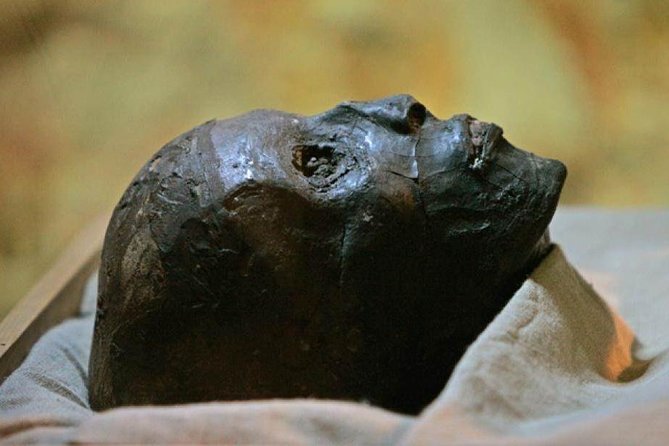
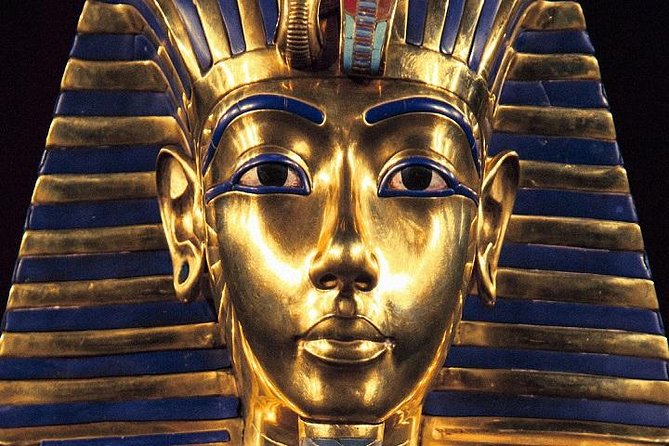
The centerpiece is the Tomb of King Tutankhamun (Tutankhamun). This is the tomb most people dream about because it was discovered nearly intact in 1922 by Howard Carter. Even though Tut’s famous golden mask is displayed at the Egyptian Museum in Cairo, here you’ll have a different kind of “in-your-face” connection: the royal mummy of the young king.
You’re given about 25 minutes at this stop. That’s a short window, but it’s enough to take in the atmosphere, follow the guide’s explanation, and see how the tomb’s layout and carvings communicate power and ritual.
One practical note: tomb spaces can feel cooler than the street outside, but they also tend to be tight. If you’re sensitive to enclosed spaces, you’ll still get what you came for here, but it may help to keep your pace steady and let your guide direct where to look.
Valley of the Kings: the necropolis circuit and the value of expert pacing
After Tut’s tomb, you’ll visit the Valley of the Kings, the royal necropolis on Luxor’s West Bank. The tour’s framing helps you understand what you’re seeing: these tombs weren’t built for day trips. They were built as part of a worldview about kingship, protection, and the afterlife.
You’ll be exploring with your Egyptologist, which is the difference between looking at walls and understanding why those walls matter. With an expert, you start noticing patterns: recurring religious themes, how different tombs reflect different reigns, and how decoration changes from one royal burial to another.
The tour description points to visiting four royal tombs during the Valley of the Kings portion. Admission to the Valley is handled in advance, which is a big help on days when crowds and lines can slow everyone down.
Also, a tomb itinerary can feel repetitive if you don’t get context. With your guide, the day stays “story-based.” Tut isn’t isolated. You see him in relation to earlier and later rulers in the same burial landscape.
Ramses III, Merenptah, and the other royal tombs: variety in art and purpose
The Valley stop includes multiple tomb visits, including Tomb of Merenptah and Tomb of Ramses III, plus Tomb of Ramses IX. Even if you’re not a specialist, the value is that each tomb communicates a slightly different message about power and the afterlife.
Ramses III (KV 11): ritual scenes plus unexpected everyday details
Ramses III’s tomb (KV 11) is described as a complex system with colorful painted sunken reliefs tied to ritual texts like the Litany of Ra and Book of Gates. The tour also highlights something that makes this tomb stand out: there are secular scenes in side rooms showing foreign tributes, including detailed pottery imported from the Aegean, royal armor, boats, and blind harpists.
That last detail matters. Tombs with unique art themes often leave the strongest impression, and this one is famous enough that it feels like more than just a stop on a list.
You’ll have about 25 minutes here, so you’ll want your guide to point out the key scenes rather than trying to read everything yourself in a hurry.
Merenptah (Tomb 8): a royal burial tied to Howard Carter’s discoveries
The tour describes Tomb 8 as the burial place of Pharaoh Merneptah (Merenptah). It also notes he was a son of Ramesses II and Queen Isis-Nofret, and that the tomb was discovered by Howard Carter in 1903.
That’s a useful connection: when you learn which tombs Carter found (and which ones later became famous), the story of discovery becomes part of your visit. In other words, you’re not only seeing ancient choices—you’re seeing the results of early 20th-century archaeology too.
Expect about 25 minutes at this stop. With an Egyptologist, this is a great place to ask what makes royal tomb planning different from one reign to another.
Ramses IX: why it’s worth including even if you don’t know the name yet
You’ll also visit the Tomb of Ramses IX. The supplied details are lighter here than for Tut, Ramses III, and Merenptah, but that doesn’t mean it’s “less important.” Part of the value of a curated circuit is that you get variety: different decoration styles, different eras, and a sense of how the Valley evolved across reigns.
If you’re the kind of person who likes to leave with a bigger mental map than you started with, multiple tombs will be a win.
Deir el Bahari: Queen Hatshepsut’s temple after the tombs
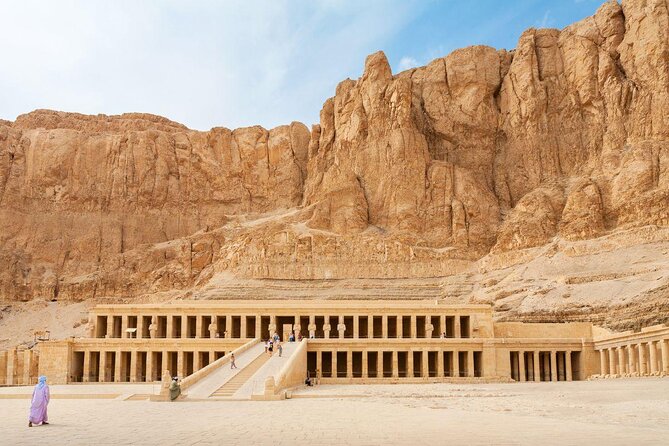
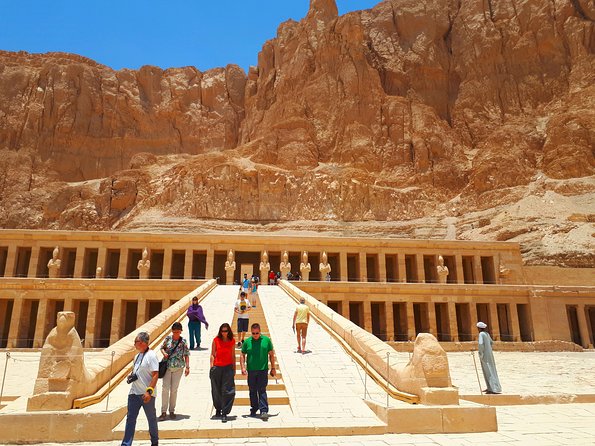
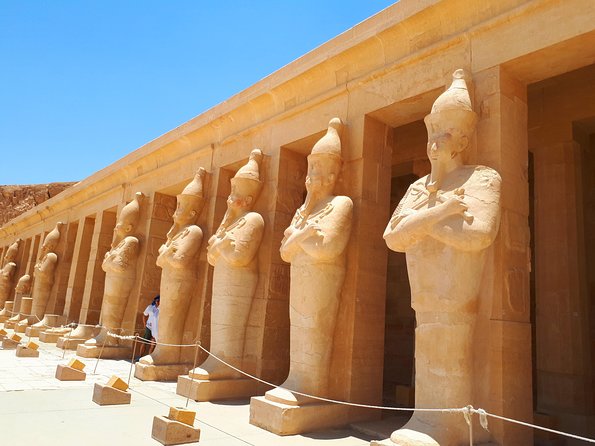
Once the tombs are done, the tour shifts to a more open, light-filled experience: the Temple of Queen Hatshepsut (Deir el Bahari). This is described as the only woman ever to reign over Egypt as Pharaoh, and the tour connects her directly to Tutankhamun by noting she belonged to the same dynasty.
Going here after tombs works well. The mood changes. Instead of enclosed chambers, you get architectural scale and a different kind of storytelling: power expressed through temple design.
The stop is scheduled for about 1 hour (the itinerary includes a timed segment around this area). With that time, you can move at a comfortable pace, take photos, and let your guide explain why the site matters beyond the headline facts.
Colossi of Memnon: the West Bank landmark that links to Tutankhamun
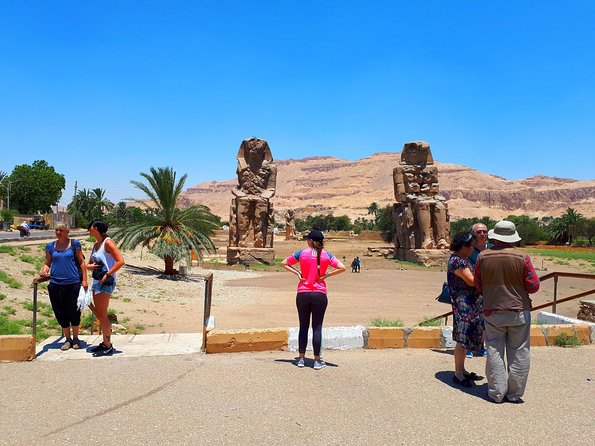
Next come the Colossi of Memnon, described as the two largest ancient statues in Egypt. They date back to Amenhotep III, who is identified here as the father of Akhenaten and the grandfather of Tut.
That family link is a nice guide tool. When you’re standing in front of a massive landmark, the story can feel distant. Hearing the genealogy in plain language helps the whole West Bank feel connected, not just like separate attractions.
The colossi stop is listed for about 15 minutes. It’s short by design, so don’t expect a long linger. Instead, treat it as a “reset” point before lunch and the final driving leg back.
Lunch on the West Bank: fuel for a long day
Food can make or break a shore excursion, and I like that this plan includes an actual lunch stop on the West Bank. You’ll be taken to a restaurant for an Egyptian lunch after the Colossi of Memnon.
The tour also notes a vegetarian option is available, which is a big help if you’re picky or just don’t want surprises.
Because this is a near-full-day schedule, I’d treat lunch as your main energy anchor. After tombs and sun exposure, your brain will thank you for eating before you get back on the road.
Your Egyptologist guide: where the private format really pays off
This is a private tour with a qualified Egyptologist. The difference shows up in the details: what your guide highlights, what they explain, and how they connect the dots between different tombs and reigns.
The tour description leans into meaning, not just facts. You’re not only shown the tombs—you get an explanation of why Tut’s nearly intact discovery was so important, how his story fits into the Valley of the Kings, and how Hatshepsut’s reign connects to Tut’s family line.
If you’re the type who loves asking questions, the private setup makes it easier. You can ask why one tomb’s decoration differs from another, or what’s going on in those side-room scenes.
It also helps that the service is praised for being honest and reliable, with an excellent driver and guide mentioned in the feedback. I’d interpret that as a sign that the day is run with care, not just sold as a basic bus tour.
What to expect at each stop (and how to pace yourself)
This is a schedule-packed day, so here’s how I’d mentally pace it.
- Tomb of Tutankhamun: high impact, shorter time, expect to focus on the key moments your guide points out.
- Valley of the Kings tomb circuit: the “workhorse” portion, where your guide’s context matters most.
- Deir el Bahari: a relief from tomb tightness, with more open viewing.
- Colossi of Memnon: quick but memorable, especially with the family link explained.
- Lunch: your energy reset before the long return drive.
The main thing: don’t try to memorize everything. Use your time to learn the story thread, then let your eyes enjoy the art and space.
Who should book this tour (and who might want a different plan)
This tour fits best if you want:
- A private day with an Egyptologist
- Major Tut-related stops without spending hours planning logistics
- Multiple tombs, not just the headline one
- A schedule that’s realistic for a cruise stop in Safaga
If you only have a passing interest in Egypt and you want slow tourism with lots of free wandering, a lighter option might suit you better. But if you care about meaning, context, and seeing more than one tomb, this is a solid match.
It’s also a good choice if you’re traveling with a small group and want to move efficiently. Private tours help you avoid the constant waiting that can happen when you’re mixed into larger crowds.
Tips to get more out of tombs and tight time windows
A few practical habits help on a day like this:
- Wear shoes that handle uneven stone. West Bank walks can be real work.
- Bring sunglasses and sun protection for the outside portions.
- Use your guide like a cheat code: ask what you should look for first in each tomb.
- If you’re sensitive to enclosed spaces, pace yourself inside and don’t force long staring time.
Most importantly, treat the short tomb windows as focused time. You don’t need to “do everything.” You need to hit the right details your guide points out.
Should you book the Luxor Shore Excursion from Safaga?
If you’re aiming for the Tutankhamun experience plus a meaningful chunk of the West Bank, I’d book this. The combination of private Egyptologist, prebooked Valley of the Kings admission, and a timed circuit through major tombs plus Deir el Bahari makes the day feel like an organized story, not a checklist.
I’d only hesitate if you hate extra costs on top of the advertised price. Since entrance fees aren’t included, confirm how that will be handled for your dates and budget for it.
For cruise travelers, the value is simple: you trade planning effort for a guided, time-managed day that hits the right places. If that sounds like your style, this is a strong choice.
FAQ
How long is the Luxor shore excursion from Safaga?
It’s listed at approximately 12 hours.
Where does pickup happen?
You can be picked up from Safaga harbor, and pickup from central Safaga is also mentioned. You’ll be dropped off back at the harbor after the tour.
Is this tour private?
Yes. It’s described as a private tour/activity, meaning only your group participates.
What’s included in the price?
The tour includes a qualified Egyptologist guide, Safaga pickup and drop-off, transport by air-conditioned vehicle, and an Egyptian lunch (with a vegetarian option available).
Are entrance fees included?
No. The tour notes that entrance fees are not included, though it also highlights prebooked Valley of the Kings admission to help reduce waiting.
Which sites are part of the itinerary?
The day includes Tomb of King Tutankhamun, visits in the Valley of the Kings (multiple royal tombs), Temple of Hatshepsut at Deir el Bahari, Colossi of Memnon, plus lunch on the West Bank.
What is the cancellation policy?
The experience offers free cancellation. You can cancel up to 24 hours in advance for a full refund. If you cancel less than 24 hours before the start time, the amount paid is not refunded.