REVIEW · NAPLES
From Naples: Pompeii Shore Excursion for Cruisers with Guide
Book on GetYourGuide →Operated by VEDITALIA · Bookable on GetYourGuide
Pompeii is more real with an archaeologist. This cruiser-friendly shore trip pairs skip-the-line entry with a licensed archaeologist who keeps the story clear in English, Spanish, and Italian.
I also love the practical comfort: a luxury air-conditioned coach and included headsets mean you can actually follow the guide, even while the group is moving. One drawback to plan for: this tour is not suitable for wheelchair users, and you will be walking over uneven ancient surfaces.
In This Review
- Key things that make this Pompeii shore excursion work
- Why Pompeii from Naples is a smart cruiser move
- Naples pickup, meeting options, and getting to the ruins
- Skip-the-line entry: what it buys you in real time
- The archaeologist guide: how the story stays clear
- From Porta Marina Inferiore to the Forum: public Pompeii in focus
- Houses of Menander and the Vettii: how wealth looked on the ground
- House of the Faun and the mosaics that make people stop walking
- Temples and markets: Apollo, Jupiter, and the city’s rhythm
- Baths and everyday routines you will feel in your feet
- The Lupanar: Roman intimacy, explained with care
- The Large Theatre and the places people went for entertainment
- Thermopolium to plaster casts: ending with the eruption’s human cost
- Time on the ground: how long 2.5 to 5 hours really feels
- What to bring (and what to skip packing)
- Price and value: why $47 can be a good deal here
- Who this Pompeii shore excursion suits best
- Should you book this tour?
- FAQ
- How long is the Pompeii shore excursion?
- Where can I meet for the tour in Naples or Pompeii?
- Is skip-the-line entry included?
- What languages are offered during the guided tour?
- Does the tour include hotel-style meals or food?
- What transport is included from Naples?
- Are headsets provided?
- Is the tour wheelchair accessible?
- What should I bring with me?
Key things that make this Pompeii shore excursion work
- Licensed archaeologist guide with live commentary in English, Italian, and Spanish
- Skip-the-line Pompeii tickets so you spend more time inside ruins
- A well-paced route starting around Porta Marina Inferiore and hitting the major highlights
- Everyday Roman stops like the thermopolium and the Lupanar
- Haunting end point with the plaster casts of victims frozen in time
- Round-trip coach from Naples (if you choose the port pickup option)
Why Pompeii from Naples is a smart cruiser move
Pompeii can eat a full day fast. This excursion is designed for real people with limited time off the ship, so you get a focused Pompeii walk without losing hours to lines and logistics.
What I like about this approach is the way it connects places that are often treated as separate sights. You see public buildings, homes, and street life, and the guide ties them into one tragic story.
And yes, it is a big site. The itinerary is built so you still hit the big names without turning your tour into a sprint.
You can also read our reviews of more guided tours in Naples
Naples pickup, meeting options, and getting to the ruins
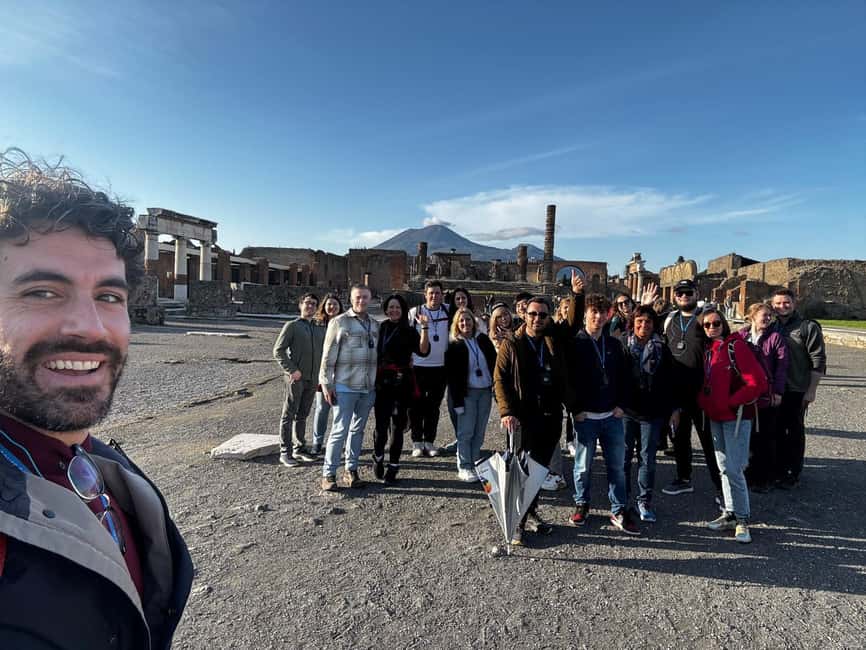
You have two starting location options in Naples, depending on what you book: Molo Beverello or Piazza Esedra. If you prefer to meet closer to the action, you can also meet directly in Pompeii for the guided portion.
From Naples, you ride a luxury air-conditioned coach with round-trip transfer. That matters because timing is everything on cruise days, and traffic and port distances can be unpredictable.
If you choose the port option, you get pickup and drop-off at the Port of Naples. If you meet in Pompeii, you remove the transfer time and can focus on the walking route through the ruins.
Skip-the-line entry: what it buys you in real time
Pompeii has a way of humbling your schedule. A tour that includes skip-the-line admission helps you avoid the worst delays at the gate.
In practical terms, this means you spend your limited hours looking at ruins instead of standing around holding your camera bag. That is where the value shows up, especially at the $47 per person price point, because the ticket and guide expertise are bundled in.
You still need to be ready when you arrive. Bring your camera, plan your water stop, and be prepared for a steady walking rhythm once you start.
The archaeologist guide: how the story stays clear
The guide is a licensed archaeologist, and the commentary is live in English, Spanish, and Italian. That tri-language setup is a big deal because Pompeii is not just walls and columns; it is details, materials, and daily routines that are easy to miss without interpretation.
Many people really respond to particular guides, and names like Carlo and Rosa come up often. If you are choosing this tour because you care about how the information is explained, keep an eye out for those names when you can.
Also, the tour includes headsets. When a group is moving across multiple sites, hearing the guide without straining your neck is a gift.
From Porta Marina Inferiore to the Forum: public Pompeii in focus
The walk begins around Porta Marina Inferiore, then moves through iconic central areas. A common theme here is that the guide leads you to the places where Pompeii functioned as a real city, not a museum.
Next up are the Forum and major civic buildings. You will visit the Forum, where public life played out, and the Basilica, where justice was served. These stops are powerful because they help you picture how politics and daily decisions worked when Rome was still very much alive.
The route also includes a photo stop, then continues with more key structures. Don’t treat Pompeii like one long sightseeing blur. This tour keeps the pacing organized so your photos and your understanding both improve.
A few more Naples tours and experiences worth a look





Houses of Menander and the Vettii: how wealth looked on the ground
After the public core, the tour shifts into private life. You visit the House of Menander and the House of the Vettii, both of which help you read social status through architecture and decoration.
You do not just pass by these houses. You get explanations tied to what you are seeing, so the rooms start to make sense: where people lived, how spaces flowed, and what messages wealthy homes displayed through their decoration.
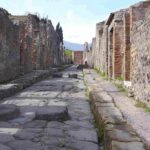
You will still want to slow down for your own viewing in the best spots. Even with a guide, Pompeii rewards a few extra seconds of looking closely at doorways, street layout, and the way homes face the road.
House of the Faun and the mosaics that make people stop walking
One of the most memorable segments is the House of the Faun. This is where you get to admire mosaics and see how decorative art was part of everyday prestige.
Why this matters: mosaics are not random floor art. They reflect taste, wealth, and identity. When you know what the guide is pointing out, you will start noticing patterns and themes that you would otherwise glide past.
If you are visiting during warmer months, take short breaks when you can. Pompeii gives you shade in pockets, not everywhere. A bottle of water is a smart call from the start.
Temples and markets: Apollo, Jupiter, and the city’s rhythm
The itinerary includes Temple of Apollo and Temple of Jupiter, plus the market area and a remarkably preserved thermopolium.
The Temple of Apollo stop helps you understand religion as part of city life. The guide’s explanations make it easier to see these temples as community anchors, not just grand structures.
The Temple of Jupiter adds another layer, and together these visits help you map what power looked like in both public ritual and everyday surroundings.
Then you hit the market area and the thermopolium, an ancient Roman snack bar. This is one of those stops that makes the city feel human. You can almost picture quick meals, casual conversations, and regular foot traffic.
Baths and everyday routines you will feel in your feet
Public baths come in as part of the tour, and you also see details in areas tied to daily routines. Bathhouses in Roman cities were social spaces, not just hygiene.
So even if you are not an archaeology person, you will likely connect with the idea of people gathering, talking, and spending time together. Pompeii is great for this because the layout helps you imagine movement—where people would enter, gather, and circulate.
This is also the point where you will notice your footwear matters. The terrain is uneven, and you are doing real walking over old stone. Comfortable shoes are not optional.
The Lupanar: Roman intimacy, explained with care
One of the more talked-about stops is the Lupanar. It was a brothel, and the guide brings in context for Roman life and social realities.
This section can feel intense because it is so direct. You are seeing the physical clues of what happened in that space, and you are also hearing the story behind it.
To get the most out of this stop, stay focused on what the guide highlights. If you drift into photo-taking mode, you might miss the interpretive parts that make the Lupanar more than a shocking postcard.
The Large Theatre and the places people went for entertainment
You also visit the Large Theatre. This helps balance Pompeii’s mix of public order and public entertainment.
A theatre is where people gathered for shared experiences, and it is one of the places where you can understand scale quickly. Even from a few key angles, you can see how the city organized crowds.
This stop also works well as a mental reset. After private homes and heavier subject matter, the theatre brings you back to the way Pompeii functioned as a community.
Thermopolium to plaster casts: ending with the eruption’s human cost
The tour closes at the haunting plaster casts of victims frozen in time. This is the part that lingers, because it forces you to confront the tragedy behind the ruins.
It is not a quick photo stop and move-on moment. The guide’s narrative makes this ending feel connected to everything you saw earlier: streets, homes, the public core, and daily routines all belong to the same city.
The contrast is what hits hardest. You see a functioning town, then you see the sudden stop that changed history forever.
Time on the ground: how long 2.5 to 5 hours really feels
The guided tour is listed as around 2.5 hours at Pompeii, with overall duration ranging from 2.5 to 5 hours depending on starting time and transfer. If you are on a cruise schedule, that flexibility is useful.
Expect the experience to feel like a well-structured sprint, not a slow meander. You will move between key locations like the Forum, baths, major houses, theatres, and temples without wandering aimlessly.
So plan your day with the idea that you will be walking for most of the time. If you have a tight connection back to the ship, this organized flow is a help.
What to bring (and what to skip packing)
Bring a bottle of water. Pompeii can be warm, and dehydration can sneak up on you because you are busy looking up, reading signs, and photographing.
Bring your camera. There are lots of angles, and the route hits the kinds of spots that photographers love.
Skip heavy bags. You will be walking, and you do not want your day to turn into a workout with extra weight.
Price and value: why $47 can be a good deal here
At $47 per person, the value comes from the bundle. You are not just buying entry. You get a licensed archaeologist guide, skip-the-line tickets, headsets, and (if you pick it) a luxury coach transfer round-trip from Naples.
If you tried to plan this on your own, you would likely spend time managing tickets, timing, and interpretation. Here, your money buys structure and explanations that help you understand what you are seeing.
Is it the cheapest option? Maybe not. But for a cruise shore day, value is about getting the right mix of sights, timing, and guidance without wasting your limited hours.
Who this Pompeii shore excursion suits best
This tour fits best if you want Pompeii highlights with a real archaeologist guide and minimal fuss. It is also a good match if you care about interpretation, not just photos.
It may not fit if you need wheelchair access, because it is not suitable for wheelchair users. It also might feel like a lot if you have limited walking tolerance, since the route covers major sights on an ancient, uneven surface.
If you love Roman everyday life—public buildings, homes, and city routines—this itinerary gives you plenty to connect.
Should you book this tour?
Book it if you want Pompeii without the usual headaches: skip-the-line entry, a licensed archaeologist guide, headsets for clear listening, and a route that hits the Forum, key houses, temples, market life, the Lupanar, and the plaster casts.
I would skip it if you cannot do steady walking on uneven ground or if you want a fully free-form, slow-paced visit.
For most cruise schedules and first-time Pompeii trips, this is a solid way to get meaningful context fast, without turning your day into a logistics puzzle.
FAQ
How long is the Pompeii shore excursion?
The duration is listed as 2.5 to 5 hours, with the guided tour portion around 2.5 hours at Pompeii.
Where can I meet for the tour in Naples or Pompeii?
You can start from Naples cruise areas such as Molo Beverello or Piazza Esedra, or you can meet directly in Pompeii depending on the option you book.
Is skip-the-line entry included?
Yes. The tour includes skip-the-line entrance tickets to the Archaeological Site of Pompeii.
What languages are offered during the guided tour?
The live guide commentary is available in English, Italian, and Spanish.
Does the tour include hotel-style meals or food?
No. Food and drinks are not included.
What transport is included from Naples?
If you choose the pickup option, the tour includes round-trip transfer from the Port of Naples aboard a luxury, air-conditioned coach.
Are headsets provided?
Yes. Headsets are included, which helps you hear the guide as you move around.
Is the tour wheelchair accessible?
No. It is not suitable for wheelchair users.
What should I bring with me?
You should carry a bottle of water for hydration and bring your camera for photos.