REVIEW · MONTEVIDEO
Best Private Montevideo Shore Excursion: City Tour. Optional WineTasting Tour.
Book on Viator →Operated by Top Private Tours · Bookable on Viator
Montevideo fits a lot into one half-day, especially when you do it privately. This shore tour is built around big-city highlights plus a few neighborhoods most cruise visitors speed past. I like that it’s designed for the cruise clock, not a leisurely vacation pace.
Two things I really like: you get a personal guide for context at every stop, and you can add the optional Pizzorno winery upgrade for Uruguay’s signature tannat and a guided vineyard visit. One drawback to keep in mind is that English quality can vary by guide, so if language matters to you, it’s worth asking what language they’ll use before you go.
In This Review
- Key highlights to know before you book
- The Smart Way to Do Montevideo on a Cruise Day
- Getting Picked Up at the Port (and Staying On Track)
- Plaza Independencia to the Old City Wall: Artigas, Palacio Salvo, and Ciudadela
- Mercado del Puerto: The Wrought-Iron Market Where Uruguay Eats
- Ciudad Vieja and Plaza Matriz: Colonial Bones and Everyday Squares
- Plaza Independencia Again (But With Context): Architecture All Around You
- El Prado and Parque Batlle: Mansions, Parks, and the Stadium That Lives in the City
- Carrasco, La Rambla, and Playa Pocitos: Waterfront Views Without the Bus Crowds
- Mercado Agrícola (MAM): The Market Side of Montevideo
- Catedral de Montevideo: Domes, Bell Towers, and Final Resting Places
- The Optional Winery Upgrade at Pizzorno: Tannat, Vineyard Walks, and Empanadas
- English and Guide Style: What Can Make or Break the City Tour
- Price and Value: Is $210 Worth It?
- Who This Tour Fits Best (and Who Might Want a Different Approach)
- Should You Book This Montevideo City Tour with Optional Wine Tasting?
- FAQ
- How long is the city-only tour?
- How long is the tour if I add the winery and wine tasting?
- What does the price include?
- What’s included if I choose the winery option at Pizzorno?
- Are meals included?
- Is this tour private?
- What if my cruise is delayed?
Key highlights to know before you book
- Cruise-timed private city tour that hits major sights without the shuffle of a group bus
- Old City + modern Montevideo in one route, anchored by Plaza Independencia and nearby plazas
- Estadio Centenario stop tied to Uruguay’s football identity and early 20th-century history
- La Rambla and Playa Pocitos for that postcard coastal angle of the Río de la Plata
- Optional Pizzorno tannat tasting with empanadas when the winery option is selected
- Guide quality can vary, so confirm language expectations for the best experience
The Smart Way to Do Montevideo on a Cruise Day
Montevideo is a great place to stretch your legs, but cruise days are short and traffic can be unpredictable. That’s why a private shore excursion works so well here. You’re not locked into long bus waits or sitting through stops that don’t interest you.
This tour is built for about 4 hours for the city-only version and about 6 hours if you add the winery. In practice, that means you’ll see a strong “first intro” mix: plazas, old streets, markets, parks, and waterfront views. It’s also private, so your group controls the pace a bit more than on a standard shared tour.
One small comfort detail: when the day runs hot, you’ll be glad you’re in a car that’s described as air-conditioned in some experiences. In Montevideo’s summer heat, it can make a big difference between tolerating the day and enjoying it.
Getting Picked Up at the Port (and Staying On Track)
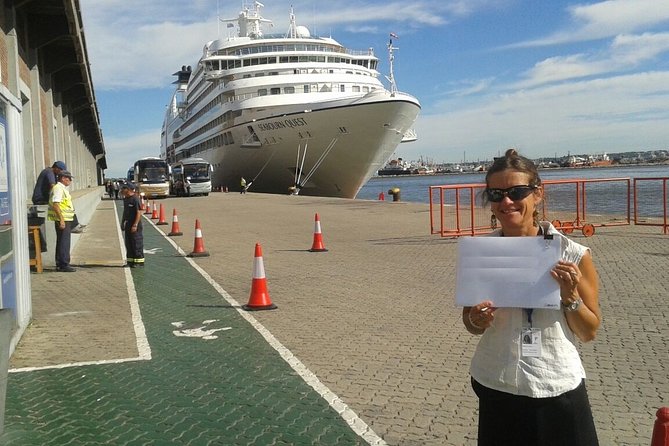
You’ll be picked up at the cruise terminal and returned there afterward. The operator also uses a worry-free approach tied to ship timing. If the ship is delayed and you can’t attend, you’re set up for a refund. And if the ship has already departed, they’ll arrange transportation to the next port-of-call.
That’s the kind of safety net you want for shore excursions. It’s especially important in Montevideo, where a small delay can cascade quickly when you’re dealing with people funneling off the ship at once.
Plaza Independencia to the Old City Wall: Artigas, Palacio Salvo, and Ciudadela
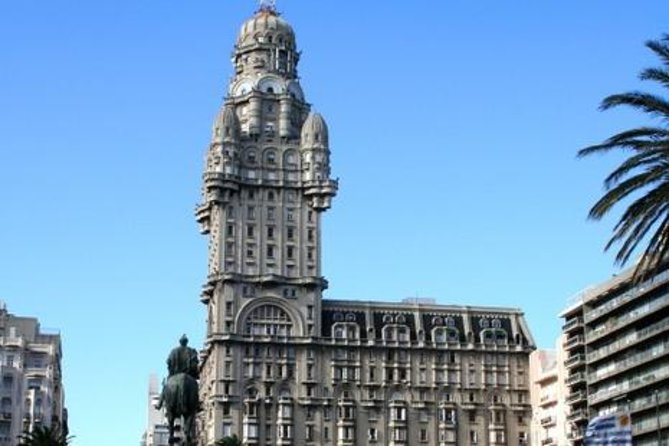
The tour starts where Montevideo’s “old meets new” idea is easiest to understand: Plaza Independencia (Plaza Independencia), right on the border of Ciudad Vieja (Old City). You’ll see the statue of José Artigas, Uruguay’s national hero, and you’ll pass by Palacio Salvo, a 26-story landmark that was once the tallest building in South America. Even if you don’t go inside, it helps you picture how Montevideo gained height and confidence during the early 20th century.
From there, you’ll also see Puerta de la Ciudadela, one of the surviving remnants of the colonial wall that once encircled Montevideo. It’s not a huge stop, but it gives you a real “you’re standing where the city used to stop” feeling.
This is the part of the day that works best if you care about orientation. If you want to come back later and explore on your own, you’ll have the mental map right away.
Mercado del Puerto: The Wrought-Iron Market Where Uruguay Eats
Next up is Mercado del Puerto. The building is a wrought-iron structure, and it used to be a train station before it became a market. Today it’s a food-focused stop known for meat and seafood dishes.
The time you have here is short, so I treat this as a “smell, look, and decide” moment. Even if you skip a full meal (food and drinks aren’t included), you can still use the market to get a feel for everyday Montevideo food culture.
Practical tip: if you’re hungry, plan to grab something light here or pair it with a meal later. The market is an easy place to pick up a local bite without needing a separate reservation.
Ciudad Vieja and Plaza Matriz: Colonial Bones and Everyday Squares
From the harbor area, you’ll pass through Ciudad Vieja, the older neighborhood around the docks. This is where you’ll notice remnants from earlier eras, like iron gates and colonial-style street lamps. It’s also where browsing makes sense because there are antique shops, small museums, and cafés.
Then the tour moves to Plaza Matriz. This leafy square has a fountain at its center and sits near important civic buildings, including the Town Hall and Cathedral area. It’s a small, photogenic pause that helps you connect Montevideo’s political and religious buildings to the street patterns around them.
These stops work because they slow the day down just enough for you to see “how people actually live near the history.”
Plaza Independencia Again (But With Context): Architecture All Around You
Even though you’re already in Plaza Independencia, it’s worth noting how the surrounding architecture gives you the story in layers. Plaza Independencia is described as the divider between the older parts of Uruguay and the modern city idea, so you can literally see shifts in style as you look around.
If you’re traveling with a guide who speaks your language well, this is where the commentary can turn into real understanding. You’ll learn why certain buildings matter, and you’ll start seeing Montevideo’s identity beyond the postcard version.
If the guide’s language is limited, don’t panic. Use this moment to focus on what’s visible: the monuments, the building heights, and the street layout.
El Prado and Parque Batlle: Mansions, Parks, and the Stadium That Lives in the City
A drive through El Prado brings you to a different Montevideo mood. Expect tree-lined streets and early 20th-century mansions. It’s a calm contrast to the harbor neighborhoods.
You’ll also see Prado Park and then head toward Parque Batlle, a large public park that’s about 60 acres and known for plenty of shade. Here the tour includes Estadio Centenario, Uruguay’s national soccer stadium.
Estadio Centenario is not just a famous building—it’s part of Uruguay’s football memory. The stadium was built between 1929 and 1930 for the 1930 FIFA World Cup, and it commemorates the centennial of Uruguay’s first constitution. It’s also listed by FIFA as one of football’s classic stadiums and was declared in 1983 as the only historical monument of World Football.
Even if you’re not a die-hard football fan, it’s an important cultural checkpoint. And because you’re there in a private tour format, you can typically spend a few extra minutes taking photos or walking a bit if the day stays on schedule.
Carrasco, La Rambla, and Playa Pocitos: Waterfront Views Without the Bus Crowds
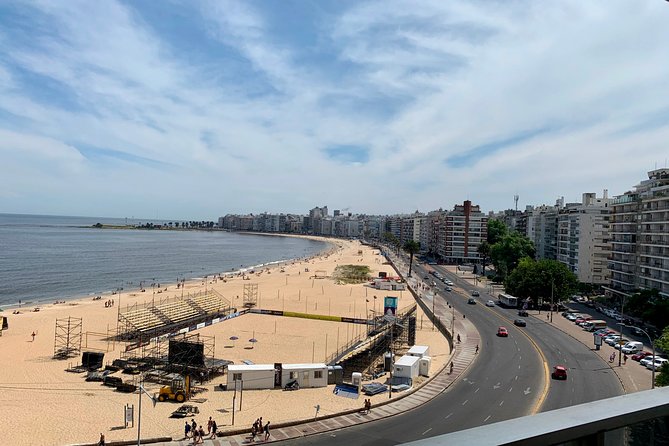
After Parque Batlle, you’ll get a scenic drive through Carrasco and then a stroll along La Rambla, Montevideo’s famous seaside promenade. This is where you’ll see beach views and the wide horizon of the Río de la Plata.
Then you’ll have time near Playa Pocitos, another fashionable seaside area known for shopping, restaurants, and bars. The tour keeps it flexible, so if you want photos from the promenade, this is usually the easiest part of the day to enjoy at your own pace.
This segment is especially good on a cruise day because it gives you visual payoff fast. A short walk here can feel like “I’m on a real day out in the city,” not just an itinerary checklist.
Mercado Agrícola (MAM): The Market Side of Montevideo
Next is Mercado Agrícola Montevideo (MAM). Think of it as a food court plus a dry-goods and garden fair space. It’s described as safe and affordable, and it can include live performances at times.
This stop is a smart way to experience local daily rhythms. Even if you don’t buy anything, it’s a good change of scenery from plazas and promenades. If you’re traveling with kids, it’s also a place where stopping to look around usually feels natural.
Catedral de Montevideo: Domes, Bell Towers, and Final Resting Places
You’ll also visit Catedral de Montevideo, noted for its domed bell towers. The cathedral dates to 1804 and is described as the burial place for some of Uruguay’s most important figures.
This isn’t a “you have to go inside” stop in the tour’s framing, but even from the outside, it adds weight to the day. It helps you connect the political story you heard around Plaza Matriz to the spiritual and memorial side of the city.
The Optional Winery Upgrade at Pizzorno: Tannat, Vineyard Walks, and Empanadas
If you love wine, the optional winery add-on is where the tour becomes more than sightseeing. The upgrade brings you to Pizzorno Family Estates, and the winery portion is about 2 hours.
Uruguay’s star grape here is tannat—red wine made from tannat grapes. The tasting is described as featuring award-winning tannat, and when you select the option, it also includes empanadas with the tasting.
A nice touch: visits are described as guided by a member of the Pizzorno family, with a focus on personal stories and passion for the winemaking process. That’s often what turns a wine stop into a memorable one, not just a tasting room stamp.
One important “manage expectations” note: the winery tasting is not described as private in all cases. Some experiences mention there may be other groups present, even if the size stays small.
If you’re the kind of traveler who wants quiet, only-your-group wine education, you may want to ask how the winery handles group format for cruise days. If you’re flexible and just want good wine plus a vineyard walk, this option is easy to love.
English and Guide Style: What Can Make or Break the City Tour
The biggest variable in this experience isn’t the sights. It’s the guide’s ability to explain them in your language.
There are accounts of guides using translation tools and giving shorter explanations during key stops. In other experiences, the guide clearly spoke good English and answered questions in detail—names that come up include Hector, Beatriz, Sandra, Veronica, Juan, Fernando, Guillermo, and Alex.
So here’s my practical advice: if you care about history and context, message the operator ahead of time with a clear request for an English-speaking guide. Even a basic checklist of what you want to understand—colonial walls, Artigas, football culture, waterfront neighborhoods—can help your guide tailor their talking points.
If language turns out to be limited, you can still get value by using the day for photos and orientation. Montevideo’s geography does some of the work for you.
Price and Value: Is $210 Worth It?
At $210 per person, you’re paying for a private format plus a guide plus port transfers, and you’re skipping the “wait around and guess” feeling you can get on shared shore tours.
City-only can feel steep if your main goal is deep history and you end up with limited explanations. Some experiences describe the city portion as lighter than expected for the price. That’s the main value risk.
The balance improves if you add the winery option. When you select it, you’re not just touring a few streets—you’re getting a guided vineyard visit and a tasting tied to tannat, plus empanadas included with the tasting option. For wine lovers, that extra value can feel real.
My rule: if you’re using this as your first taste of Montevideo and you want the highlights efficiently, this pricing can make sense. If you’re hoping for a highly detailed lecture-style guide, confirm language and ask how much explanation the guide typically gives.
Who This Tour Fits Best (and Who Might Want a Different Approach)
This tour fits best if:
- you have a limited cruise-day window and want a lot of Montevideo in one shot
- you want the comfort of a private guide for pacing and photo stops
- you like football culture, architecture, and waterfront walking
- you’re considering the optional Pizzorno tannat tasting
It may be less ideal if:
- you need very detailed commentary at every stop and language is uncertain
- you dislike wine and don’t want the longer 6-hour day (city-only is shorter, but still priced for private service)
- you expect the city portion to replace a longer land-based tour with deeper museum time (most stops are quick)
One more fit note: mobility needs can sometimes be supported. There’s at least one account where the driver helped with a mobility scooter during the ride. Still, if you have specific needs, tell the operator ahead of time so they can plan the best vehicle and handling.
Should You Book This Montevideo City Tour with Optional Wine Tasting?
I’d book this if you want an efficient, highlight-heavy Montevideo day and you’d like the option to make it more interesting with wine at Pizzorno. The route gives you variety: old streets and plazas, markets, parks, and that big waterfront feel on La Rambla.
Book with extra confidence if you’re traveling with your own group and you care about not being rushed. If you’re picky about language and want deep context, send that request early and keep your questions ready.
If you want a shore excursion that balances highlights with real local flavor, this one is a strong contender.
FAQ
How long is the city-only tour?
The city tour is listed as about 4 hours.
How long is the tour if I add the winery and wine tasting?
With the winery option selected, the total duration is listed as about 6 hours.
What does the price include?
The tour includes a professional guide and port pickup and drop-off. If you select the winery option, it includes wine tasting plus empanadas.
What’s included if I choose the winery option at Pizzorno?
The winery portion includes a guided visit to Pizzorno (about 2 hours) and includes wine tasting (and empanadas) as part of the option.
Are meals included?
Food and drinks are listed as not included. (Wine tasting and empanadas are included with the winery option.)
Is this tour private?
Yes. It’s a private tour/activity, so only your group participates.
What if my cruise is delayed?
The tour notes a worry-free approach: they ensure you return to the Montevideo port for this activity, and if the ship has departed they arrange transportation to the next port-of-call. If you can’t attend due to ship delay, you’re eligible for a refund per the terms.