REVIEW · NEW YORK CITY
New York City Shore Excursion: Pre-Cruise Half-Day Private Tour
Book on Viator →Operated by New York Fun Tours · Bookable on Viator
Squeezing NYC into one stress-free afternoon works. This private pre-cruise half-day tour strings together Midtown big hitters and Lower Manhattan favorites with a personal guide and plenty of chances to ask questions. You’ll also get pickup and port drop-off, which matters when your cruise ship is already impatient.
What I like most is the payoff: you’ll get a fast orientation of the city’s major neighborhoods, not just a list of famous stops. I also love the human side—guides like Laurie, Isaac, and James are praised for clear explanations and practical suggestions, which makes the sights feel less random and more connected.
The main drawback to plan around is price. At $1,275 per group (up to 12), it can feel pricey if you’re only a couple or small family, unless you’re splitting costs.
In This Review
- Key highlights to know before you go
- Why a private pre-cruise tour makes NYC feel less chaotic
- Price and what feels like real value here
- The guide matters: names you’ll hear and why it changes everything
- Midtown highlights: St. Patrick’s Cathedral, Empire State area energy, and Fifth Avenue
- Grand Central Terminal: more than a pretty station
- The Flatiron angle and Washington Square’s street-level magic
- Greenwich Village to Meatpacking: cobblestones, history layers, and smart photo spots
- SoHo cast-iron streets and Tribeca’s comeback story
- Lower Manhattan essentials: 9/11 Memorial, The Battery, FiDi, Chinatown, and Little Italy
- Brooklyn Bridge and the Brooklyn Heights Promenade: the big skyline payoff
- How to pace yourself in a 3 to 5 hour window
- Should you book this private pre-cruise NYC tour?
- FAQ
- What’s the duration of the pre-cruise private tour?
- How many people can be in the private group?
- Do you get pickup, and where can pickup be arranged?
- Is port drop-off included?
- Do I get a mobile ticket?
- What languages are available for the guide?
- Is a car provided, and is it air-conditioned?
- Are food and drinks included?
- Can I bring children, and are child seats provided?
- What if the weather is bad?
Key highlights to know before you go

- Private guide time so you can ask questions instead of being rushed along
- Hotel/airport/residence pickup plus port drop-off to keep the day smooth
- Short, photo-friendly stops across Midtown, Downtown, and Brooklyn without dead time
- Big NYC icons + neighborhood texture, from St. Patrick’s Cathedral to Chinatown alleys
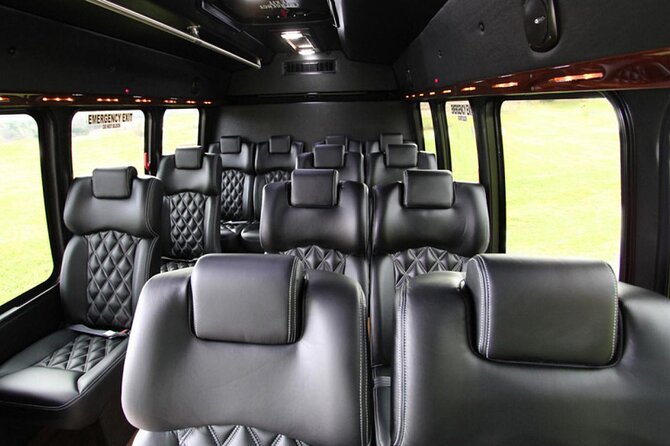
- Air-conditioned vehicle and luggage support, helpful if you’re headed straight to a cruise
Why a private pre-cruise tour makes NYC feel less chaotic
Pre-cruise day is weird. You’re tired, you’ve got bags, and you’re trying to see New York without turning it into a full-time job. That’s why this format works: it’s a half-day private tour built around classic landmarks and neighborhood highlights, with fewer “figure it out yourself” moments.
You’ll start with pickup from wherever you’re staying (hotel, airport, or residence). From there, the guide becomes your navigator. The city is big, but your plan stays simple: drive time where it saves energy, then short walking/photo stops where it pays off. You’re not trying to “win” NYC in one go—you’re getting bearings fast, and that makes everything you do later in the trip easier.
You can also read our reviews of more boat tours in New York City

Price and what feels like real value here
At $1,275 per group (up to 12 people), the cost is not “cheap.” But in New York, private transportation + a dedicated guide + port transfer add up quickly if you try to assemble it on your own.
Here’s where the value is: you’re essentially buying two things.
First, you’re buying time management. A pre-cruise schedule is unforgiving, so having pickup and drop-off handled matters. Second, you’re buying interpretation. When a guide explains what you’re seeing—like why Fifth Avenue is famous for retail rents or why Grand Central’s design is a big deal—it turns “I saw it” into “I understand it.”
If you’re traveling solo or as a couple, I’d treat this as a splurge only if you really want a guided route and zero hassle. If you have a small group and can split the per-person cost, it starts to look more reasonable.
The guide matters: names you’ll hear and why it changes everything
The biggest praise for this tour centers on the guide experience. Guides such as Laurie, Isaac, and James are described as highly cooperative, strong on local context, and ready with recommendations for what to do next.
That matters because NYC is full of “pretty-but-blank” sights if nobody connects them for you. With a private guide, you can ask:
Why is this area important?
What’s the smart way to photograph this?
What should I do if I only have one more hour tomorrow?
I like this style of touring because it reduces the usual frustration. Instead of a big bus tour where you have to smile and move on, you get a slower pace inside a short day. You’re still time-smart; you just aren’t rushed.
Midtown highlights: St. Patrick’s Cathedral, Empire State area energy, and Fifth Avenue
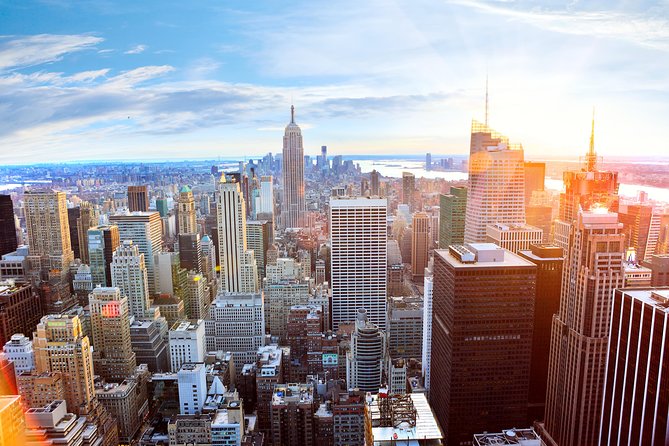
Midtown is the part of Manhattan that feels like a business postcard—skyscrapers, major stations, and neighborhoods where tourists and commuters blend in. Your tour starts here, including landmarks around major transit and skyline landmarks.
One key stop is St. Patrick’s Cathedral, the Catholic cathedral that serves as the seat of the Archbishop of New York. It takes up an entire city block between 5th Avenue, Madison Avenue, and 50th/51st Streets, directly across from Rockefeller Center. If you’re wondering why people call it the largest Gothic Revival Catholic cathedral in North America, the scale hits you fast once you’re standing near it.
From there, you’ll spend time around the Empire State Building, the 102-story Art Deco tower designed by Shreve, Lamb & Harmon (built 1930–1931). It was the tallest building in the world until 1970, then regained that title after September 11, 2001, before One World Trade Center surpassed it in 2012. Your guide can point out the meaning behind the skyline changes you see today—because NYC’s “tallest” titles tell a story.
If your group enjoys iconic exteriors and quick orientation, Midtown is a strong start. If you want deep museum time, keep expectations realistic: this is a route with multiple stops, not one long sit-down visit.
Grand Central Terminal: more than a pretty station
Next comes Grand Central Terminal, the huge commuter hub and Metro-North terminus. It’s the third-busiest station in North America, after New York Penn Station and Toronto Union Station. The building’s Beaux-Arts design and interior layout have earned major landmark status, and it’s the kind of place that looks even better once you slow down enough to notice the details.
Grand Central draws over 21 million visitors annually (not counting transit passengers), and it’s been a backdrop for countless films and TV shows. That’s not just trivia—if you’ve watched New York on screen, the place feels familiar even when you’ve never been there.
The nice part of including it in a pre-cruise day is that you’re not just seeing the city’s landmarks. You’re also seeing how New York moves. A quick stop here gives you a better sense of direction and timing, which helps if you plan to explore further on your own later.
The Flatiron angle and Washington Square’s street-level magic
The route then heads toward the Flatiron District, including the triangular Fuller Building at 175 Fifth Avenue. It was completed in 1902 and originally nicknamed Burnham’s Folly, which is exactly the sort of name you can appreciate once you see how unusual the building is for its time. The triangular shape is the whole point—it resembles a cast-iron clothes iron, and that nickname stuck because it’s visually obvious.
After that, you’ll be in Washington Square Park, a 9.75-acre Greenwich Village hub. There’s the Washington Square Arch at the northern entrance, fountains people gather around, and buildings tied to artists’ homes and studios in earlier eras. It also connects to New York University’s academic and residential presence, which gives the park a constant “student + street life” energy.
One travel tip: if you’re even slightly photogenic, this area rewards casual walking. You don’t need a checklist—just wander two or three blocks off the main pedestrian flow and you’ll find small scenes that feel like New York, not like a museum.
Greenwich Village to Meatpacking: cobblestones, history layers, and smart photo spots
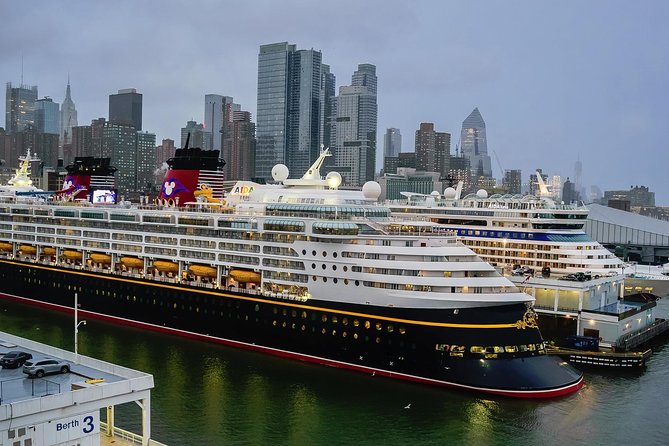
From Washington Square, the tour shifts into Greenwich Village (West Village). This is where cobblestone streets, Federal-style townhouses, and public squares create a quieter feel than Midtown. It’s also closely tied to iconic cultural history, including places associated with music and nightlife like Village Vanguard and the Stonewall Inn.
Next you’ll pass through the Meatpacking District, on the far west side near some of NYC’s most photogenic walks. The area includes the Whitney Museum of American Art, designer boutiques, and scenic parts of the High Line with connections toward Little Island. The streets are busy enough to feel alive, but this is still a good match for a short, guided route because you get the shape of the neighborhood without needing hours to explore.
For many people, Village + Meatpacking is the “NYC feels real” portion of a pre-cruise day. You’re less focused on super-tall skylines and more focused on streets, faces, storefronts, and that distinct feeling that every block has a story.
SoHo cast-iron streets and Tribeca’s comeback story
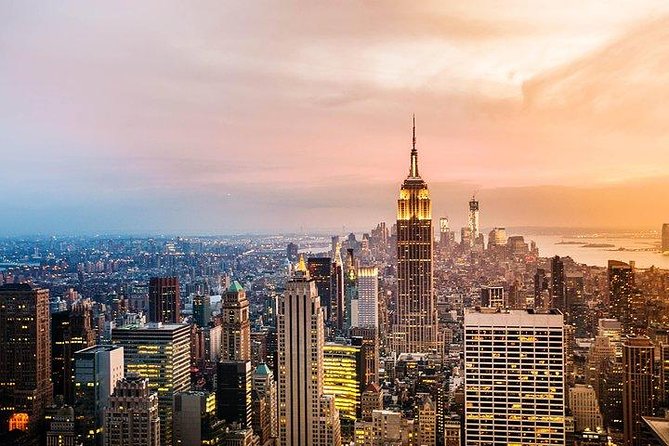
Then comes SoHo, short for South of Houston Street, a name that traces to Chester Rapkin’s 1962 urban planning report (the Rapkin Report). SoHo is packed into the SoHo–Cast Iron Historic District, designated in 1973, expanded in 2010, and listed as a National Historic Landmark in 1978. The district covers 26 blocks and includes about 500 buildings, many built with cast-iron architecture.
If you like architecture, SoHo pays you back quickly. You’ll see how the cast-iron design makes facades look detailed and structured even at street level. Even some side streets are paved with Belgian blocks, which gives the whole place a slightly different texture underfoot.
Just after this, your route takes you through Tribeca, a neighborhood with a different origin story. It started as farmland, became a mercantile produce and dry-goods hub in the early 1800s, and later shifted toward artists and creative types, followed by actors, models, entrepreneurs, and more. It also hosts the TriBeCa Festival, created after September 11, 2001 to help revitalize Lower Manhattan.
SoHo and Tribeca together give your day balance. Midtown gives you scale. Village gives you soul. SoHo and Tribeca show you NYC changing over time—new uses, new communities, old buildings adapting.
Lower Manhattan essentials: 9/11 Memorial, The Battery, FiDi, Chinatown, and Little Italy
Lower Manhattan is where the tour becomes emotionally and visually intense. First is the National 9/11 Memorial & Museum at the World Trade Center complex. This stop is designed to honor the victims of the September 11, 2001 attacks and the 1993 World Trade Center bombing. The memorial and museum are not “checklist stops.” Even in a short time, the setting makes it hard to treat it like just another photo.
Then you’ll head to The Battery area, at the southern tip of Manhattan, for a Statue of Liberty view point. This is one of those NYC moments where distance still feels dramatic. From here, you can take in views across New York Harbor, toward Brooklyn and New Jersey, plus the Verrazano Bridge.
After that you move into FiDi (Financial District). Your guide can point out the historic overlaps: the modern financial district sits where New Amsterdam was once located (late 17th century). This is also the home of major institutions, including the New York Stock Exchange and the Federal Reserve Bank of New York. The NYSE is the world’s largest stock exchange, so it’s not just a landmark—it’s a global operation.
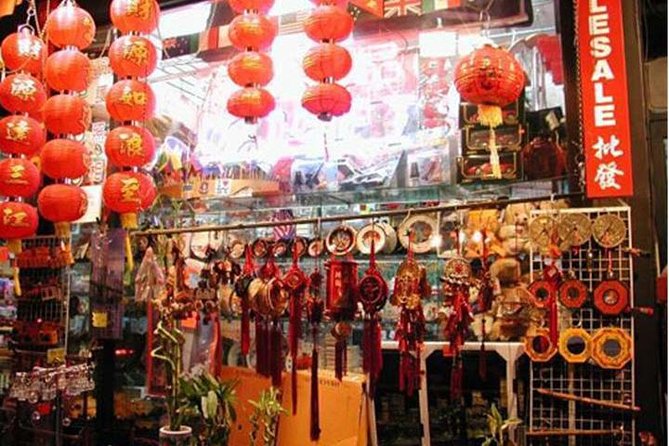
Next comes Chinatown, one of NYC’s oldest Chinese enclaves. The area is bordered by the Lower East Side, Little Italy, Civic Center, and Tribeca. It has one of the highest concentrations of Chinese people in the Western Hemisphere, with 90,000–100,000 residents mentioned for the neighborhood. It’s a place where you’ll feel layers—immigration waves, businesses, family-run shops, and street life all at once.
Finally, you’ll touch Little Italy. Historically it covered much more of Lower Manhattan, but today it’s about five blocks along Mulberry Street north of Canal Street. Knowing that context helps you see why the neighborhood is smaller than many first-time visitors expect—yet still worth the walk because the street scale stays intimate.
A practical note: this portion of the day is where walking and crowds add up. Wear comfortable shoes. If you’re prone to sensory overload, tell your guide. Private tours are flexible enough to slow down or pause.
Brooklyn Bridge and the Brooklyn Heights Promenade: the big skyline payoff
The tour finishes in Brooklyn-style perspective with the Brooklyn Bridge crossing and then the Brooklyn Heights Promenade.
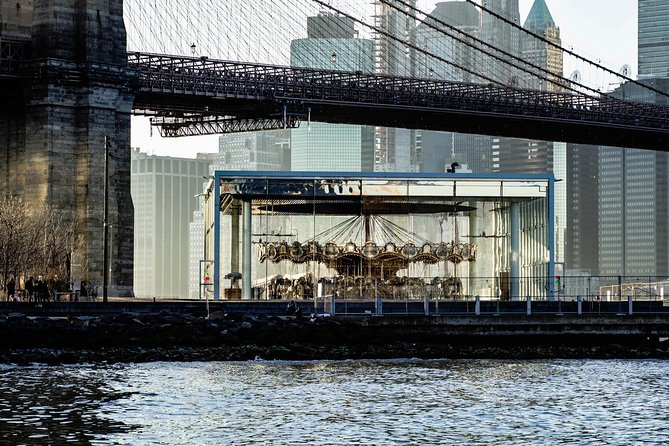
The Brooklyn Bridge is a world-famous suspension bridge that opened in 1883. The engineering is impressive, but what you’ll really remember is the feeling of moving through it: views opening up, streets changing character below you, and the Manhattan skyline framed in a way that’s different from street-level viewpoints.
After the bridge, you’ll reach the Brooklyn Heights Promenade, also called the Esplanade. It’s a pedestrian walkway cantilevered out over the Brooklyn-Queens Expressway, 1,826 feet long. It offers sweeping views of Lower Manhattan and New York Harbor. The promenade’s story is also interesting: it was shaped by compromises during WWII about how the highway route would cut through the neighborhood. Construction happened postwar, and the structure is owned by NYC DOT, with NYC Parks maintaining the space.
This is a strong ending for pre-cruise tours because it gives you payoff without needing a long standalone excursion. You leave with photos that don’t look like they were taken from a tour bus window.
How to pace yourself in a 3 to 5 hour window
This tour covers a lot of neighborhoods in a limited time. That doesn’t mean it’s rushed in a rude way—it means your guide is doing smart routing so you don’t waste your shore day stuck in transit.
Here’s how I’d plan your mindset:
Think in photo stops and orientation moments, not deep museum time everywhere.
Expect short windows where you’ll see the landmark, learn the context, and move on.
If you want souvenirs, plan to grab them quickly during neighborhood transitions rather than saving shopping for the end.
Also, because this is a shore excursion style day, the day supports cruise needs. Luggage can be stored and transported, and port drop-off is included—both details that take stress out of the afternoon.
Should you book this private pre-cruise NYC tour?
Book it if you want the smart version of NYC: private guide, pickup, and a tight route that covers Midtown icons plus major Downtown landmarks and Brooklyn skyline views. It’s especially good for first-time visitors who want bearings fast before a cruise, or for families/friends splitting up guide costs because up to 12 people can join the same group price.
Skip it (or adjust expectations) if you’re looking for a slow, neighborhood-by-neighborhood day with long museum time, or if the per-person cost feels too high for your group size. In a short window, you’ll see highlights rather than settle in for deep dives.
If you want a pre-cruise day that feels organized and human—where a guide helps you understand what you’re looking at—this is a solid choice.
FAQ
What’s the duration of the pre-cruise private tour?
It runs about 3 to 5 hours.
How many people can be in the private group?
The tour is priced per group and is up to 12 people.
Do you get pickup, and where can pickup be arranged?
Pickup is offered from any airport, hotel, residence, or Air BnB within New York City.
Is port drop-off included?
Yes. Port drop-off is included.
Do I get a mobile ticket?
Yes, the tour offers a mobile ticket.
What languages are available for the guide?
You can choose either an English-speaking or Spanish-speaking guide at booking.
Is a car provided, and is it air-conditioned?
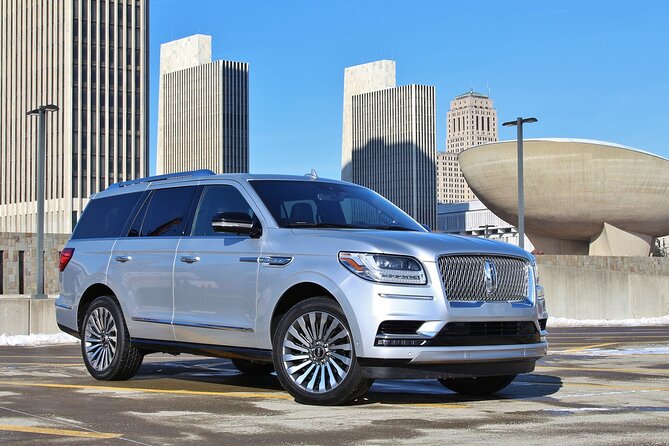
Yes. You’ll use an air-conditioned vehicle, and the type depends on the number of travelers.
Are food and drinks included?
No. Food and drinks are not included.
Can I bring children, and are child seats provided?
It is not recommended for children aged 2 and under, and child or baby seats are not provided.
What if the weather is bad?
It won’t be conducted during severely inclement weather, and if it needs to cancel on the day, you may be rescheduled to another convenient time.